



Artificial Intelligence (AI) in Healthcare Market
Report Code
HIT 9226
Published in
Jun, 2026, By MarketsandMarkets™
Artificial Intelligence (AI) in Healthcare Market By Function (Imaging, Robotics, AI Scribe, Telehealth, CDS, Precision Medicine, Radiation, RCM, Cybersecurity), Tools (ML, NLP, Computer Vision), End User (Hospital, ASC, Payer) - Global Forecast to 2031

$36.67B
MARKET SIZE, 2026
$194.79B
MARKET SIZE, 2031

39.7%
CAGR (2026-2031)

2026-2031
FORECAST PERIOD
ARTIFICIAL INTELLIGENCE IN HEALTHCARE MARKET SIZE, SHARE & GROWTH SNAPSHOT
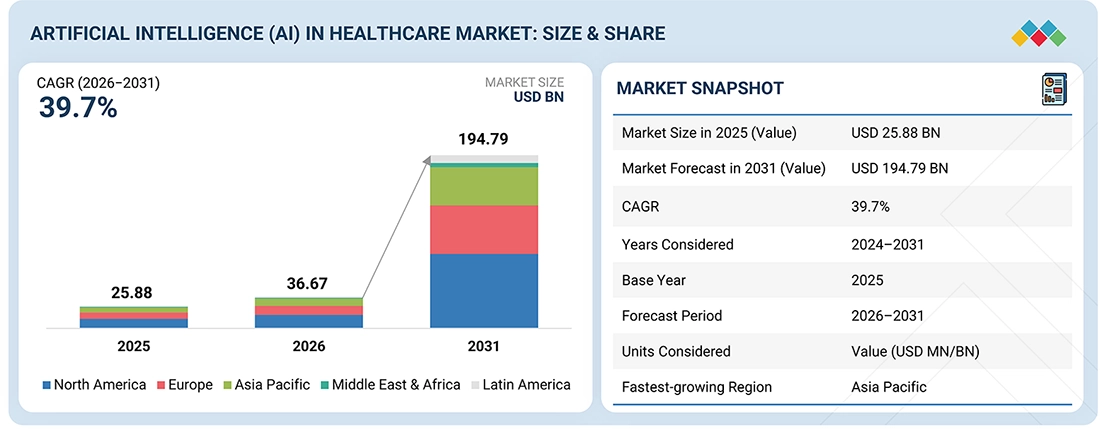
Source: Secondary Research, Interviews with Experts, MarketsandMarkets Analysis
The global artificial intelligence (AI) in healthcare market is projected to grow from USD 36.67 billion in 2026 to USD 194.79 billion by 2031, at a CAGR of 39.7% during the forecast period. The market was valued at USD 25.88 billion in 2025. Market growth is driven by rising provider demand for automation, nationwide labor shortages, increasing clinical complexity, and strong investment in predictive analytics, imaging AI, and GenAI. Expanding regulatory support, deeper EHR AI integration, and the shift toward value-based care are further accelerating large-scale uptake.
KEY TAKEAWAYS
-
MARKET SNAPSHOT:
Market Size (2025): USD 25.88 Billion
Market Size (2026): USD 36.67 Billion
Projected Market Size (2031): USD 194.79 Billion
CAGR (2026–2031): 39.7% -
SEGMENT LEADERSHIP:
Regional Leader: North America accounted for the largest share of 42.4% in 2025.
Fastest-Growing Offering: The integrated solutions segment is expected to register the highest CAGR during the forecast period.
Fastest-Growing Function: The AI Scribe segment is projected to grow at the fastest rate from 2026 to 2031.
Fastest-Growing Application: The clinical applications segment is expected to register the highest CAGR of 41.4% during the forecast period.
Deployment Model Leader: The cloud-based models segment held the largest share of 63.2% in 2025.
Tool Leader: The machine learning segment is expected to dominate the market during the forecast period.
End User Leader: The healthcare providers segment accounted for the largest share of the artificial intelligence in healthcare market. -
MARKET OUTLOOK & COMPETITIVE LANDSCAPE:
Microsoft Corporation, NVIDIA Corporation, and GE HealthCare were identified as the star players in the artificial intelligence (AI) in healthcare market, given their strong market share and product footprint.
Qventus, Qure.AI, and Segmed have distinguished themselves among startups and SMEs by securing strong footholds in specialized niche areas, underscoring their potential as emerging market leaders.
The artificial intelligence (AI) in healthcare market is experiencing significant growth, driven by the increasing adoption of artificial intelligence technologies across diagnostics, medical imaging, drug discovery, clinical decision support, remote patient monitoring, and healthcare workflow automation. Healthcare organizations are leveraging AI to improve diagnostic accuracy, reduce administrative burden, optimize resource utilization, and enhance patient outcomes.
TRENDS & DISRUPTIONS IMPACTING CUSTOMERS' CUSTOMERS
The artificial intelligence (AI) in healthcare market is shifting as providers, payers, and diagnostics networks adopt AI to improve efficiency, precision, and patient experience. Rising client needs for automation, advanced analytics, and clinical augmentation are driving clear results, including faster decision-making, reduced operational burden, and improved financial performance. The industry is also moving from rule-based tools to cloud-native, predictive, and generative AI platforms. This shift is reshaping the revenue mix and positioning AI as a core enabler of next-generation care delivery.
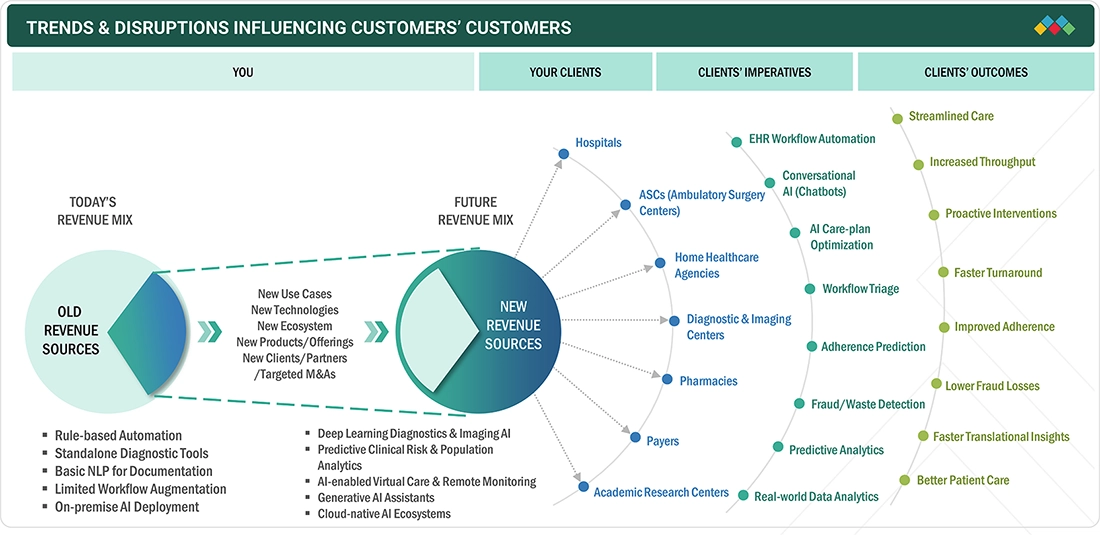
Source: Secondary Research, Interviews with Experts, MarketsandMarkets Analysis
MARKET DYNAMICS

Drivers
Impact
Level
Level
-
Rapid proliferation of AI in healthcare sector

-
Growing need for improved healthcare services


RESTRAINTS
Impact
Level
Level
-
Shortage of skilled AI professionals handling AI-powered solutions

-
Lack of standardized frameworks for AI and ML technologies


OPPORTUNITIES
Impact
Level
Level
-
Strategic partnerships and collaborations among healthcare companies and AI technology providers

-
Increase in focus on developing human-aware AI systems


CHALLENGES
Impact
Level
Level
-
Concerns regarding data privacy

-
Lack of interoperability

Source: Secondary Research, Interviews with Experts, MarketsandMarkets Analysis
Driver: Rapid proliferation of AI in healthcare sector
The development and implementation of artificial intelligence in the healthcare industry are among the main drivers of market growth, fueled by growing government interest in accelerating AI adoption. AI technologies are being implemented in healthcare for various uses, including imaging services, drug development, clinical documentation, disease monitoring, personalized treatment programs, and telemedicine. For example, in April 2026, the UK's Medicines and Healthcare Products Regulatory Agency added USD 4.1 million to the budget of the existing AI Airlock regulatory sandbox project, aimed at supporting the implementation of innovative AI medical devices. All these developments are expected to accelerate the implementation of AI in clinics, thereby supporting further growth in the market.
Restraint: Shortage of skilled AI professionals handling AI-powered solutions
The shortage of experienced AI experts is a restraint to the AI in healthcare market. The development, implementation, and further operation of AI technology demands knowledge and skills in artificial intelligence, data science, machine learning, health information technology, and the regulatory aspects of using AI in healthcare. A lack of highly skilled personnel with adequate experience implementing AI within health information processes can complicate deployment and increase the costs of deploying AI solutions. For example, CDC's 2026 AI Strategy identifies workforce development to ensure the readiness of personnel to adopt AI in disease detection and prevention as one of the organization's key priorities.
Opportunity: Strategic partnerships and collaborations among healthcare companies and AI technology providers
Strategic alliances between healthcare institutions and AI companies represent an opportunity in the AI in healthcare market. Collaborations will lead to the development of new products, faster deployment of technology, and the application of artificial intelligence to diagnostics, treatment, drug development, patient monitoring, and various healthcare operations. Collaboration among players helps harness the benefits of combining clinical knowledge, healthcare data, and artificial intelligence to achieve positive results. For instance, in June 2026, NVIDIA, Foxconn, and major Taiwanese medical institutions partnered on the "Healthy Taiwan" initiative, which aims to introduce agentic AI technologies in hospitals to boost clinical decision-making, coordination, documentation, and operations. The initiative is funded by a USD 1.5 billion investment to advance AI-native infrastructure.
Challenge: Concerns regarding data privacy
Data privacy and security are among the issues that have posed challenges in the AI in healthcare industry, as it involves a large volume of confidential patient data, including electronic medical records, medical imaging, genomics, and monitoring data. With cloud-based computing becoming more common today and healthcare systems more connected than ever, there is a risk of data breaches, cyberattacks, unauthorized access, and even noncompliance. This sector has to adhere to strict data security laws such as HIPAA in the US and the GDPR in Europe, among other regional laws, which makes compliance costly and difficult. For instance, in January 2025, the European Commission initiated an action plan to enhance cybersecurity in all healthcare facilities.
ARTIFICIAL INTELLIGENCE IN HEALTHCARE MARKET: COMMERCIAL USE CASES ACROSS INDUSTRIES
| COMPANY | USE CASE DESCRIPTION | BENEFITS |
|---|---|---|
 |
Cloud-based AI platforms enabling clinical analytics, NLP-driven documentation, predictive risk modeling, and interoperable EHR-integrated AI workflows. | Improved decision-making, scalable AI deployment, enhanced interoperability, and streamlined clinical workflows. |
 |
GPU-accelerated AI for imaging, digital twins, drug discovery, and real-time inference through NVIDIA Clara and MONAI ecosystems. | Faster diagnostics, accelerated model training, improved precision medicine, and reduced latency. |
 |
AI-enabled imaging interpretation, ICU and patient monitoring intelligence, and workflow orchestration across radiology and cardiology environments. | Higher diagnostic accuracy, faster reporting cycles, better care coordination, and reduced clinician burden. |
 |
AI-driven imaging acquisition, patient monitoring analytics, and predictive maintenance through the Edison AI platform. | Quicker image processing, lower workload, improved equipment uptime, and enhanced operational reliability. |
 |
AI-based diagnostic imaging, clinical decision support, and pathway optimization via AI-Rad Companion and digital twin technologies. | Standardized diagnostic quality, optimized care pathways, more personalized treatment planning, and greater clinical consistency. |
Logos and trademarks shown above are the property of their respective owners. Their use here is for informational and illustrative purposes only.
MARKET ECOSYSTEM
The artificial intelligence in healthcare market operates within an interconnected ecosystem that includes technology leaders, health systems, payers, pharmacies, ASCs, home health networks, and research institutions. Enterprise cloud adoption, coupled with strong federal incentives for digital modernization, is accelerating AI integration across clinical, operational, and financial workflows. Providers aim for efficiency, payers focus on cost control, and vendors expand AI-driven platforms. This ecosystem is becoming a mature, innovation-driven market that supports nationwide change in care delivery and healthcare economics.
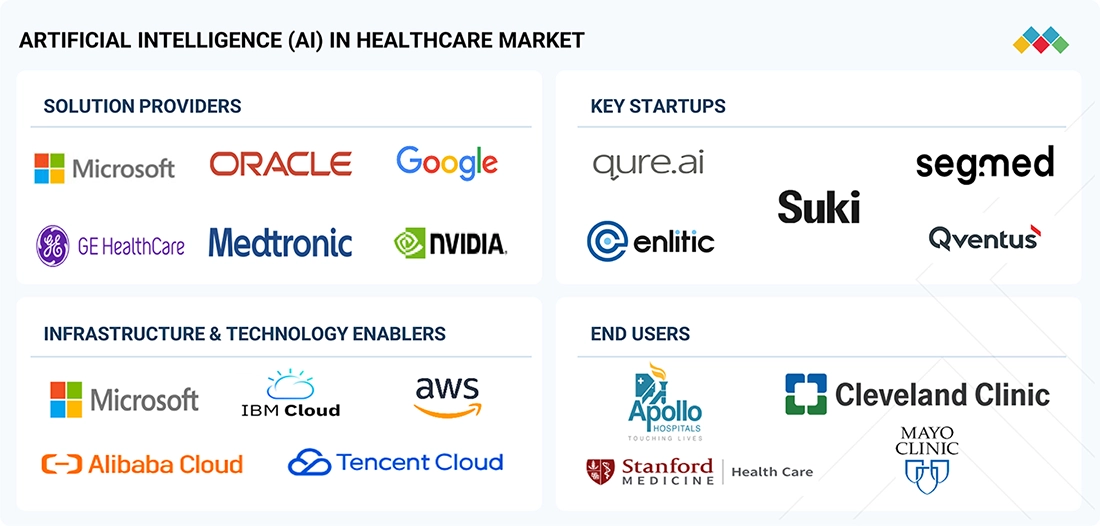
Logos and trademarks shown above are the property of their respective owners. Their use here is for informational and illustrative purposes only.
MARKET SEGMENTS
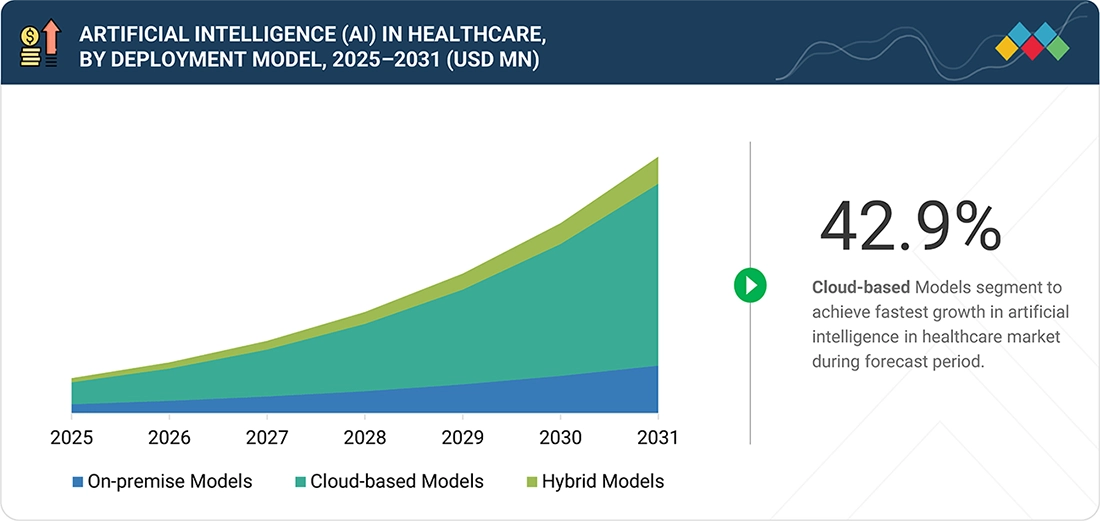
Source: Secondary Research, Interviews with Experts, MarketsandMarkets Analysis
Artificial Intelligence (AI) in Healthcare Market, By Offering
Based on offerings, the market is segmented into integrated solutions, niche/point solutions, AI technologies, and services. In 2025, integrated solutions held the largest share due to the growing need for interoperability and seamless data sharing in the healthcare sector to improve administrative and healthcare provision management processes. The preference by healthcare organizations for integrated software that integrates electronic health records (EHR), revenue cycle management, imaging, patient engagement, and analytics platforms to create an ecosystem has increased significantly. An integrated system also simplifies IT operations and ensures that healthcare organizations adopt a value-based approach. For example, in May 2026, Fujitsu and IBM Japan partnered to create a sovereign cloud that facilitates the integration and application of artificial intelligence in the management of healthcare data across multiple healthcare facilities.
Artificial Intelligence (AI) in Healthcare Market, By Function
Based on function, the market is segmented into diagnosis & early detection, treatment planning & personalization, patient engagement & remote monitoring, post-treatment surveillance & survivorship care, pharmacy management, data management & analytics, AI Scribe, CDSS, and administrative functions. In 2025, diagnosis & early detection held the largest share due to the growing use of artificial intelligence-based technologies in medical imaging, disease diagnosis, risk assessment, and clinical decision-making. The use of AI-based algorithms helps healthcare professionals detect diseases at an early stage, enhance diagnostic accuracy, reduce the time required to interpret images, and make prompt decisions about intervention. The rise in the prevalence of chronic diseases, the growing need for personalized medicine, and the use of AI in medical specialties such as radiology, pathology, cardiology, and oncology are also expected to fuel segment growth. For instance, in April 2026, the European Commission launched programs to fund pilot projects that use AI in medical imaging.
Artificial Intelligence (AI) in Healthcare Market, By Application
Based on applications, the market is segmented into clinical applications and non-clinical applications. In 2025, clinical applications accounted for the largest share due to the rising use of artificial intelligence (AI)-based technologies in medical diagnostics, healthcare imaging, clinical decision-making, medical prognosis, treatment planning, and patient monitoring. Healthcare organizations are using AI technology to provide accurate diagnoses, make evidence-based medical decisions, and improve treatment outcomes while reducing the burden on clinicians. Other factors such as the rising incidence of chronic diseases and the need for personalized medicines are also driving the market’s expansion.
Artificial Intelligence (AI) in Healthcare Market, By Deployment Model
Based on deployment models, the market is segmented into on-premise, cloud-based, and hybrid models. Cloud-based deployments held the largest share, driven by their scalability, affordability, flexibility, and capabilities that allow for storing and processing vast amounts of healthcare information. Cloud computing enables healthcare companies to quickly implement AI applications, provide immediate access to data, promote interoperability, and collaborate more effectively across healthcare networks. The growing use of EHRs, telehealth platforms, remote patient monitoring tools, and advanced AI-powered analytics software has driven demand for cloud-based healthcare infrastructure.
Artificial Intelligence (AI) in Healthcare Market, By Tool
Based on tools, the market is segmented into machine learning, natural language processing, context-aware computing, generative AI, computer vision, and image analysis. In 2025, machine learning accounted for a significant share, driven by its broad applications in medical imaging, disease diagnosis, clinical decision-making, predictive analytics, drug discovery, and personalized medicine. By applying machine learning approaches, healthcare companies can analyze large, complex data, identify patterns, predict disease risk, and make data-driven decisions that improve their effectiveness and patients' health. Machine learning technologies' ability to continually learn from new information and develop prediction algorithms enables their wide application across all kinds of healthcare projects. For example, in February 2026, the US Department of Health and Human Services' ARPA-H announced the launch of the Intelligent Generator of Research (IGoR) program, which uses AI techniques to accelerate research and disease modeling.
Artificial Intelligence (AI) in Healthcare Market, By End User
Based on end users, the market is segmented into healthcare providers, healthcare payers, patients, and other end users. In 2025, healthcare providers held the largest share as more AI-driven innovations are deployed for diagnostics, medical imaging, clinical decision support, patient monitoring, workflow management, and clinical documentation purposes. Healthcare institutions are increasingly adopting AI technologies to improve their operations and provide more accurate diagnoses. The rising volume of health-related information, the growing prevalence of chronic conditions, and the emphasis on value-based care practices are all contributing to the increasing adoption of AI in the healthcare sector. For example, in February 2026, M Health Fairview opted for Nabla’s Ambient AI Assistant and Dictation to deploy them systemwide across its network.
REGION
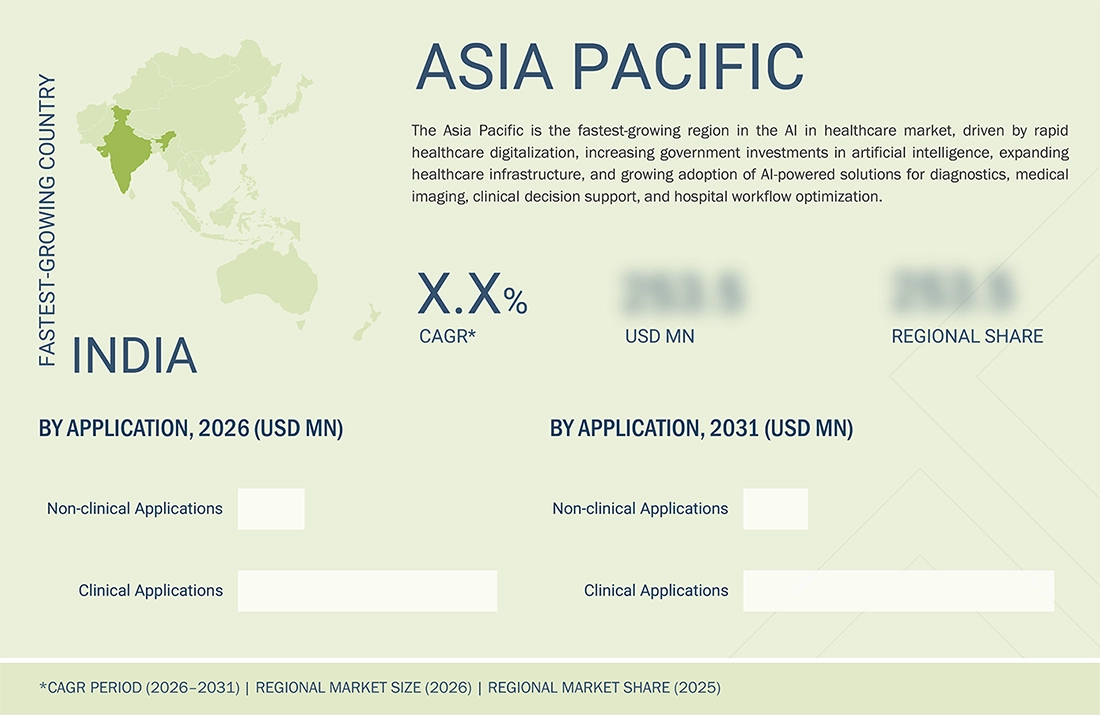
Asia Pacific is fastest-growing region in artificial intelligence (AI) in healthcare market
The Asia Pacific region is the fastest-growing in the AI in healthcare market due to healthcare digitization, increased funding for AI, growth in healthcare infrastructure, and the adoption of AI-based technologies in diagnostics, clinical decision-making, and workflow management in healthcare operations. Also, the region has been supported by favorable government policies and an increased need for effective healthcare. For instance, in March 2026, the Indian Government introduced the Strategy for AI in Healthcare for India (SAHI) and the Benchmarking Open Data Platform for Health AI (BODH), aiming at fostering the safe and ethical implementation of AI at scale in healthcare while validating and scaling the use of AI-driven healthcare innovations.
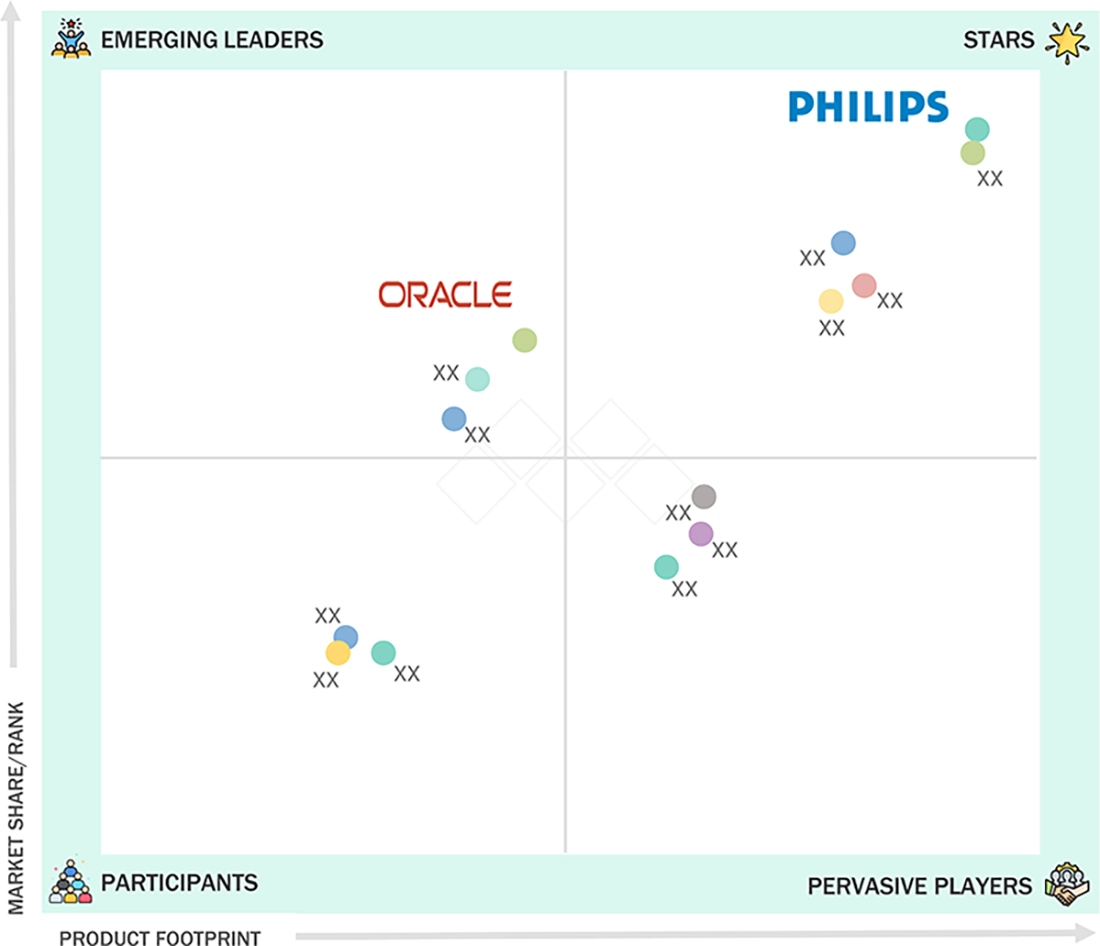
ARTIFICIAL INTELLIGENCE IN HEALTHCARE MARKET: COMPANY EVALUATION MATRIX
Koninklijke Philips N.V. is positioned as a Star in the artificial intelligence in healthcare market based on the scale of its installed base in imaging, monitoring, and clinical informatics. This reach allows broad integration of AI across diagnostic and acute care workflows. Its strong alignment with hospital modernization priorities and its ability to embed AI within enterprise platforms support sustained market leadership. Oracle is emerging as a leader due to its investments in health-focused foundation models, cloud infrastructure, and data management capabilities. Its growing collaborations with research institutions and life sciences organizations are strengthening its role in advancing next-generation clinical and analytical AI applications.
Source: Secondary Research, Interviews with Experts, MarketsandMarkets Analysis
KEY MARKET PLAYERS
- Koninklijke Philips N.V. (Netherlands)
- Microsoft Corporation (US)
- Siemens Healthineers AG (Germany)
- NVIDIA Corporation (US)
- GE Healthcare (US)
- Epic Systems Corporation (US)
- Medtronic (US)
- Oracle (US)
- Veradigm LLC (US)
- Merative (US)
- Google (US)
- Cognizant (US)
- Johnson & Johnson (US)
- Amazon Web Services, Inc. (US)
- SOPHiA GENETICS (US)
- Riverian Technologies (US)
- Terarecon (ConcertAI) (US)
- Solventum Corporation (US)
- Tempus (US)
- Viz.ai (US)
- IBM (US)
MARKET SCOPE
| REPORT METRIC | DETAILS |
|---|---|
| Market Size in 2025 (Value) | USD 25.88 Billion |
| Market Forecast in 2026 (Value) | USD 36.67 Billion |
| Market Forecast in 2031 (Value) | USD 194.79 Billion |
| CAGR | 39.7% |
| Years Considered | 2024–2031 |
| Base Year | 2025 |
| Forecast Period | 2026–2031 |
| Units Considered | USD Million/Billion |
| Report Coverage | Revenue Forecast, Company Ranking, Competitive Landscape, Growth Factors, and Trends |
| Segments Covered |
|
| Regions Covered | North America, Asia Pacific, Europe, Latin America, Middle East & Africa |
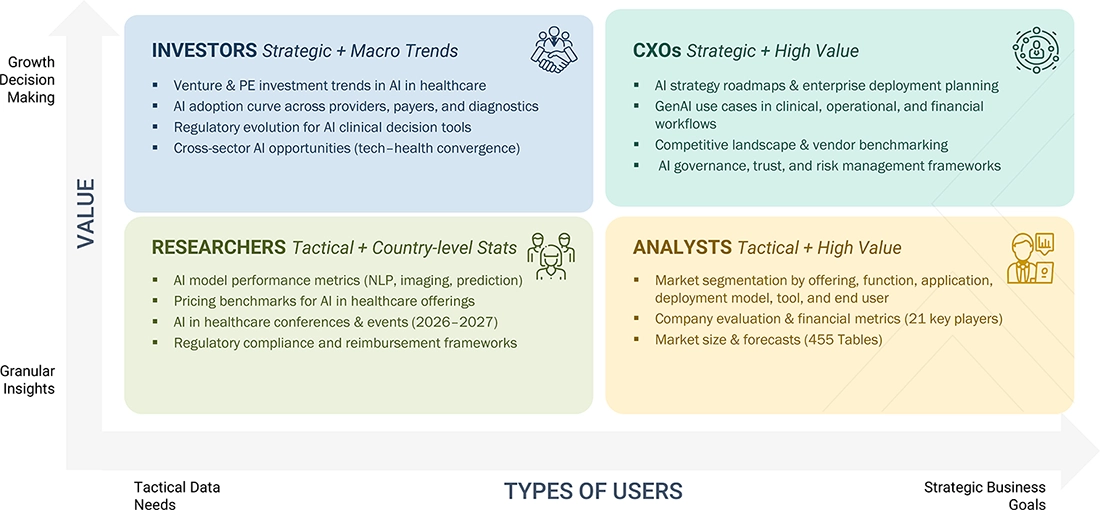
WHAT IS IN IT FOR YOU: ARTIFICIAL INTELLIGENCE IN HEALTHCARE MARKET REPORT CONTENT GUIDE
DELIVERED CUSTOMIZATIONS
We have successfully delivered the following deep-dive customizations:
| CLIENT REQUEST | CUSTOMIZATION DELIVERED | VALUE ADDS |
|---|---|---|
| Map the AI healthcare ecosystem | Comprehensive ecosystem mapping across vendors, providers, payers, pharmacies, ASCs, home health, research bodies, and regulators | Clear visibility into market structure and interaction points to guide partnerships and investment decisions |
| Understand AI integration with healthcare infrastructure | Deep analysis of AI–EHR interoperability, cloud deployment models, data-sharing frameworks, and compliance requirements (HIPAA, ONC, CMS) | Reduces integration risk and informs technology roadmap aligned to regulatory and data ecosystem |
| Identify high-ROI AI use cases for providers and payers | Prioritize use-case assessment across clinical, operational, financial, and patient-experience domains | Enables targeted product development and stronger go-to-market focus in high-value segments |
| Benchmark competitors in the AI landscape | Capability benchmarking across major AI vendors (Microsoft, NVIDIA, Oracle Health, GE, Philips, AWS, Google) | Strengthens competitive positioning and identifies whitespace opportunities for differentiation |
| Assess policy, reimbursement, and regulatory impacts on AI adoption | Analysis of FDA AI/ML SaMD guidelines, CMS reimbursement pathways, Medicare Advantage analytics trends | Improves product compliance strategy and enhances commercialization feasibility |
RECENT DEVELOPMENTS
- April 2026 : GE HealthCare and DeepHealth partnered to deliver AI-powered breast cancer screening solutions to healthcare providers worldwide via mammography and imaging platforms.
- March 2026 : Philips and Amazon Web Services expanded cloud-enabled digital pathology and AI diagnostics capabilities through HealthSuite, enabling scalable AI-powered pathology workflows.
- February 2026 : Siemens Healthineers and Mayo Clinic expanded their collaboration to advance AI-enabled MRI protocols and imaging technologies for neurodegenerative disease and oncology applications.
Table of Contents
 Exclusive indicates content/data unique to MarketsandMarkets and not available with any competitors.
TITLE
PAGE NO
1
INTRODUCTION
66
2
EXECUTIVE SUMMARY
73
3
PREMIUM INSIGHTS
79
4
MARKET OVERVIEW
AI revolutionizes healthcare with precision medicine, despite data challenges and practitioner reluctance.
81
4.1
INTRODUCTION
4.2
MARKET DYNAMICS
4.2.1
DRIVERS
4.2.1.1
INCREASING NEED FOR EARLY DETECTION AND DIAGNOSIS OF DISEASES
4.2.1.2
EXPONENTIAL GROWTH IN DATA VOLUME AND COMPLEXITY DUE TO SURGING ADOPTION OF DIGITAL TECHNOLOGIES
4.2.1.3
SIGNIFICANT COST PRESSURE ON HEALTHCARE SERVICE PROVIDERS WITH INCREASING PREVALENCE OF CHRONIC DISEASES
4.2.1.4
RAPID PROLIFERATION OF AI IN HEALTHCARE SECTOR
4.2.1.5
GROWING INCLINATION TOWARD PRECISION MEDICINE AND PERSONALIZED CARE
4.2.2
RESTRAINTS
4.2.2.1
RELUCTANCE AMONG MEDICAL PRACTITIONERS TO ADOPT AI-BASED TECHNOLOGIES
4.2.2.2
SHORTAGE OF SKILLED AI PROFESSIONALS HANDLING AI-POWERED SOLUTIONS
4.2.2.3
LACK OF STANDARDIZED FRAMEWORKS FOR AI AND ML TECHNOLOGIES
4.2.3
OPPORTUNITIES
4.2.3.1
RISING DEMAND FOR AI-DRIVEN CLINICAL DECISION SUPPORT SYSTEMS
4.2.3.2
INCREASING FOCUS ON DEVELOPING HUMAN-AWARE AI SYSTEMS
4.2.3.3
STRATEGIC PARTNERSHIPS AND COLLABORATIONS AMONG HEALTHCARE COMPANIES AND AI TECHNOLOGY PROVIDERS
4.2.3.4
RISING ADOPTION OF AI-ENABLED MEDICAL IMAGING AND DIAGNOSTICS
4.2.4
CHALLENGES
4.2.4.1
INACCURATE PREDICTIONS DUE TO SCARCITY OF HIGH-QUALITY HEALTHCARE DATA
4.2.4.2
CONCERNS REGARDING DATA PRIVACY
4.2.4.3
LACK OF INTEROPERABILITY BETWEEN AI SOLUTIONS OFFERED BY DIFFERENT VENDORS
4.3
UNMET NEEDS AND WHITE SPACES
4.4
INTERCONNECTED MARKETS AND CROSS-SECTOR OPPORTUNITIES
4.5
STRATEGIC MOVES BY TIER 1/2/3 PLAYERS
5
INDUSTRY TRENDS
Navigate competitive healthcare IT landscape with strategic insights on AI pricing and investment trends.
94
5.1
PORTER’S FIVE FORCES ANALYSIS
5.1.1
THREAT OF NEW ENTRANTS
5.1.2
THREAT OF SUBSTITUTES
5.1.3
BARGAINING POWER OF SUPPLIERS
5.1.4
BARGAINING POWER OF BUYERS
5.1.5
INTENSITY OF COMPETITIVE RIVALRY
5.2
MACROECONOMIC OUTLOOK
5.2.1
INTRODUCTION
5.2.2
GDP TRENDS AND FORECAST
5.2.3
TRENDS IN GLOBAL HEALTHCARE IT INDUSTRY
5.3
VALUE CHAIN ANALYSIS
5.4
ECOSYSTEM ANALYSIS
5.5
PRICING ANALYSIS
5.5.1
INDICATIVE PRICING FOR AI IN HEALTHCARE, BY APPLICATION (2025)
5.5.2
INDICATIVE PRICING FOR AI IN HEALTHCARE MARKET, BY REGION (2025)
5.6
KEY CONFERENCES AND EVENTS, 2026–2027
5.7
TRENDS/DISRUPTIONS IMPACTING CUSTOMER BUSINESS
5.8
INVESTMENT AND FUNDING SCENARIO
5.9
CASE STUDY ANALYSIS
5.9.1
ACCELERATING LUNG CANCER DIAGNOSIS THROUGH AI ACROSS NHS HOSPITALS
5.9.2
STRENGTHENING PATIENT TRUST THROUGH DIGITAL PATIENT ENGAGEMENT SOLUTIONS
5.9.3
OPTIMIZING PATIENT ENGAGEMENT AND COMMUNICATION WITH TRUBRIDGE PATIENT CONNECT
5.10
IMPACT OF US TARIFF – OVERVIEW
5.10.1
INTRODUCTION
5.10.2
KEY TARIFF RATES
5.10.3
PRICE IMPACT ANALYSIS
5.10.4
IMPACT ON COUNTRIES/REGIONS
5.10.4.1
US
5.10.4.2
EUROPE
5.10.4.3
ASIA PACIFIC
5.10.5
IMPACT ON END USERS
6
TECHNOLOGICAL ADVANCEMENTS, AI-DRIVEN IMPACT, PATENTS, INNOVATIONS, AND FUTURE APPLICATIONS
AI innovations revolutionize healthcare with precision medicine, predictive analytics, and autonomous workflow automation.
111
6.1
KEY EMERGING TECHNOLOGIES
6.1.1
MACHINE LEARNING AND DEEP LEARNING
6.1.2
NATURAL LANGUAGE PROCESSING
6.1.3
COMPUTER VISION
6.2
COMPLEMENTARY TECHNOLOGIES
6.2.1
CLOUD COMPUTING
6.2.2
DIGITAL TWINS
6.2.3
ROBOTIC PROCESS AUTOMATION
6.3
ADJACENT TECHNOLOGIES
6.3.1
BLOCKCHAIN
6.3.2
AUGMENTED REALITY AND VIRTUAL REALITY
6.3.3
INTERNET OF THINGS
6.4
PATENT ANALYSIS
6.4.1
PATENT PUBLICATION TRENDS FOR AI IN HEALTHCARE LANDSCAPE
6.4.2
INSIGHTS: JURISDICTION AND TOP APPLICANT ANALYSIS
6.5
FUTURE APPLICATIONS
6.5.1
AI-DRIVEN PRECISION MEDICINE
6.5.2
REAL-TIME CLINICAL DECISION SUPPORT WITH GENERATIVE AI
6.5.3
DISEASE PREDICTION AND EARLY INTERVENTION THROUGH PREDICTIVE ANALYTICS
6.5.4
AI-POWERED VIRTUAL HEALTH ASSISTANTS AND DIGITAL CARE NAVIGATION
6.5.5
ADVANCING AUTONOMOUS AI AGENTS FOR HEALTHCARE WORKFLOW AUTOMATION
7
REGULATORY LANDSCAPE
Navigate complex global regulations with insights into key regional compliance frameworks and authorities.
118
7.1
REGIONAL REGULATIONS AND COMPLIANCE
7.1.1
REGULATORY BODIES, GOVERNMENT AGENCIES, AND OTHER ORGANIZATIONS
7.1.2
REGULATORY FRAMEWORK
8
CUSTOMER LANDSCAPE AND BUYER BEHAVIOR
Discover how unmet needs and stakeholder influence shape buying behavior in AI healthcare markets.
124
8.1
INTRODUCTION
8.2
DECISION-MAKING PROCESS
8.3
KEY STAKEHOLDERS INVOLVED IN BUYING PROCESS AND THEIR EVALUATION CRITERIA
8.3.1
KEY STAKEHOLDERS IN BUYING PROCESS
8.3.2
BUYING CRITERIA
8.4
ADOPTION BARRIERS AND INTERNAL CHALLENGES
8.5
UNMET NEEDS OF VARIOUS END USERS
8.5.1
UNMET NEEDS
8.5.2
END-USER EXPECTATIONS
8.6
MARKET PROFITABILITY
8.7
IMPACT ON COUNTRIES/REGIONS
8.7.1
US
8.7.2
EUROPE
8.7.3
ASIA PACIFIC
8.8
IMPACT ON END USERS
9
AI IN HEALTHCARE MARKET, BY FUNCTION
Market Size & Growth Rate Forecast Analysis to 2031 in USD Million | 99 Data Tables
133
9.1
INTRODUCTION
9.2
DIAGNOSIS & EARLY DETECTION
9.2.1
PRE-SCREENING
9.2.1.1
EARLY DETECTION, BETTER OUTCOMES, AND COST-EFFECTIVE CARE ASSOCIATED WITH PRE-SCREENING TO BOOST MARKET
9.2.2
IVD
9.2.2.1
IVD MARKET, BY TECHNOLOGY
9.2.2.1.1
IMMUNOASSAYS
9.2.2.1.2
CLINICAL CHEMISTRY
9.2.2.1.3
MOLECULAR DIAGNOSTICS
9.2.2.2
IVD MARKET, BY APPLICATION
9.2.2.2.1
IMAGE ANALYSIS & INTERPRETATION
9.2.2.2.2
BIOMARKER DISCOVERY & ANALYSIS
9.2.2.2.3
OTHER IVD APPLICATIONS
9.2.3
DIAGNOSTIC IMAGING
9.2.3.1
DIAGNOSTIC IMAGING MARKET, BY APPLICATION
9.2.3.1.1
DISEASE INTERPRETATION & REPORT ANALYSIS
9.2.3.1.2
IMAGE CAPTIONING & ANNOTATION
9.2.3.1.3
IMAGE RECONSTRUCTION
9.2.3.1.4
OTHER DIAGNOSTIC IMAGING APPLICATIONS
9.2.3.2
DIAGNOSTIC IMAGING MARKET, BY MODALITY
9.2.3.2.1
MAGNETIC RESONANCE IMAGING
9.2.3.2.2
COMPUTED TOMOGRAPHY
9.2.3.2.3
X-RAY IMAGING
9.2.3.2.4
ULTRASOUND
9.2.3.2.5
NUCLEAR IMAGING
9.2.3.2.6
OTHER DIAGNOSTIC IMAGING MODALITIES
9.2.4
RISK ASSESSMENT & PATIENT STRATIFICATION
9.2.4.1
CRITICAL NEED TO IDENTIFY HIGH-RISK PATIENTS AND PREDICT THEIR DISEASE PROGRESSION RISKS TO BOOST DEMAND
9.2.5
DRUG ALLERGY ALERTING
9.2.5.1
SIGNIFICANT FOCUS ON IMPROVING ACCURACY AND SPEED OF IDENTIFYING ALLERGIC REACTIONS TO CONTRIBUTE TO MARKET GROWTH
9.2.6
OTHER DIAGNOSIS & EARLY DETECTION FUNCTIONS
9.3
TREATMENT PLANNING & PERSONALIZATION
9.3.1
PERSONALIZED TREATMENT PLANNING
9.3.1.1
PRECISION MEDICINE & GENOMIC ANALYSIS
9.3.1.1.1
ADOPTION OF AI-BASED SOFTWARE FOR PERSONALIZED TREATMENT DECISIONS AND IMPROVED OUTCOMES TO PROPEL MARKET
9.3.1.2
PREDICTIVE MODELS FOR TREATMENT RESPONSE
9.3.1.2.1
ABILITY TO PERSONALIZE THERAPIES, IMPROVE OUTCOMES, AND MINIMIZE ADVERSE EFFECTS TO FUEL GROWTH
9.3.1.3
TREATMENT RECOMMENDATION SYSTEMS
9.3.1.3.1
COMPETENCY IN OFFERING PERSONALIZED, EVIDENCE-BASED TREATMENT OPTIONS TO SPIKE DEMAND
9.3.2
PHARMACOLOGICAL THERAPY
9.3.2.1
DRUG RESPONSE PREDICTION
9.3.2.1.1
INCREASING USE OF AI-POWERED DRUG RESPONSE PREDICTION IN ONCOLOGY AND CHRONIC DISEASE MANAGEMENT TO DRIVE MARKET
9.3.2.2
DOSING & ADMINISTRATION
9.3.2.2.1
CAPABILITY OF AI-BASED DOSING MODELS TO ADJUST DOSES IN REAL-TIME BASED ON INDIVIDUAL PATIENT RESPONSES TO SPUR DEMAND
9.3.2.3
OTHER PHARMACOLOGICAL THERAPY FUNCTIONS
9.3.3
SURGICAL THERAPY
9.3.3.1
PREOPERATIVE IMAGING & 3D MODELING
9.3.3.1.1
WIDENING USE OF AI-DRIVEN 3D MODELING IN ORTHOPEDIC, CARDIOVASCULAR, NEUROLOGICAL SURGERIES TO FUEL MARKET GROWTH
9.3.3.2
INTRAOPERATIVE GUIDANCE & ROBOTICS
9.3.3.2.1
INCLINATION TOWARD MINIMALLY INVASIVE SURGERIES AND FASTER PATIENT RECOVERY TO BOOST IMPLEMENTATION
9.3.3.3
POSTOPERATIVE ANALYSIS & RECOVERY
9.3.3.3.1
ABILITY TO PREDICT RECOVERY PATTERNS, IDENTIFY RISKS, AND PROVIDE PERSONALIZED REHABILITATION PLANS TO BOOST DEMAND
9.3.4
RADIATION THERAPY
9.3.4.1
MOTION SYNCHRONIZATION & AUTO CONTOURING
9.3.4.1.1
NEED FOR PRECISE DELIVERY OF RADIATION AND MINIMUM EXPOSURE TO SURROUNDING HEALTHY TISSUES TO REINFORCE SEGMENTAL GROWTH
9.3.4.2
REAL-TIME ADAPTIVE TREATMENT DELIVERY
9.3.4.2.1
GROWING FOCUS ON CONSISTENT TREATMENT ACCURACY AND CLINICAL OUTCOME OPTIMIZATION TO STRENGTHEN DEMAND
9.3.4.3
RESPONSE ASSESSMENT & QUALITY ASSURANCE
9.3.4.3.1
ABILITY OF AI SOLUTIONS TO ANALYZE MEDICAL IMAGES, TREATMENT PLANS, AND DOSIMETRIC DATA TO ACCELERATE DEMAND
9.3.4.4
OTHER RADIATION THERAPY FUNCTIONS
9.3.5
BEHAVIORAL THERAPY & PSYCHOTHERAPY
9.3.5.1
VIRTUAL COUNSELING & CHATBOTS
9.3.5.1.1
POTENTIAL TO IMPROVE PATIENT COMMUNICATION, ENGAGEMENT, AND SERVICE EFFICIENCY TO EXPAND IMPLEMENTATION
9.3.5.2
PROGRESS MONITORING & FEEDBACK
9.3.5.2.1
INCREASING USE OF SMART WEARABLES AND MOBILE HEALTH APPS TO DRIVE MARKET
9.3.5.3
FOLLOW-UP & LONG-TERM SUPPORT
9.3.5.3.1
WIDESPREAD ADOPTION OF TELEMEDICINE PLATFORMS TO DRIVE MARKET EXPANSION
9.3.6
IMMUNOTHERAPY
9.3.6.1
REAL-TIME PATIENT DATA MONITORING
9.3.6.1.1
HIGH DEMAND FOR PROACTIVE HEALTHCARE MANAGEMENT TO FOSTER SEGMENTAL GROWTH
9.3.6.2
RESPONSE & SIDE-EFFECT PREDICTION
9.3.6.2.1
NEED FOR EARLIER DETECTION OF TREATMENT-RELATED RISKS ACROSS DRUGS AND VACCINES TO SUPPORT SEGMENTAL GROWTH
9.3.6.3
RELAPSE PREDICTION & LONG-TERM MANAGEMENT
9.3.6.3.1
NECESSITY FOR CONTINUOUS PATIENT MONITORING AND RISK STRATIFICATION TO FUEL DEMAND
9.3.7
OTHER TREATMENT PLANNING & PERSONALIZATION FUNCTIONS
9.4
PATIENT ENGAGEMENT & REMOTE MONITORING
9.4.1
SYMPTOM MANAGEMENT & VIRTUAL ASSISTANCE
9.4.1.1
CONSTANT REQUIREMENT FOR SYMPTOM MANAGEMENT IN CHRONIC DISEASES TO ACCELERATE ADOPTION OF AI-POWERED APPS
9.4.2
TELEHEALTH & REMOTE PATIENT MONITORING
9.4.2.1
INCREASING ADOPTION OF MOBILE HEALTH APPS AND WEARABLE DEVICES TO AUGMENT SEGMENTAL GROWTH
9.4.3
HEALTHCARE ASSISTANCE ROBOTS
9.4.3.1
COMPETENCY IN IMPROVING QUALITY OF CARE AND REDUCING BURDEN ON HEALTHCARE WORKERS TO PROMOTE ADOPTION
9.4.4
MEDICATION REMINDERS
9.4.4.1
CAPABILITY TO DELIVER MEDICATION GUIDANCE, PERSONALIZED HEALTH COACHING, AND CARE COORDINATION TO FOSTER DEMAND
9.4.5
PATIENT EDUCATION & EMPOWERMENT
9.4.5.1
NEED TO IMPROVE TREATMENT ADHERENCE AND ENHANCE SELF-MANAGEMENT TO DRIVE MARKET
9.4.6
OTHER PATIENT ENGAGEMENT & REMOTE MONITORING FUNCTIONS
9.5
POST-TREATMENT SURVEILLANCE & SURVIVORSHIP CARE
9.5.1
RECURRENCE MONITORING
9.5.1.1
ADVANCING POST-TREATMENT CARE THROUGH INTELLIGENT RECURRENCE MONITORING TO SUPPORT MARKET GROWTH
9.5.2
LONG-TERM OUTCOME PREDICTION
9.5.2.1
GREATER EMPHASIS ON PREDICTING DISEASE RECURRENCE AND SURVIVAL CHANCES TO IMPROVE UPTAKE OF AI-POWERED MEDICAL DEVICES
9.5.3
MENTAL HEALTH & SUPPORT SYSTEMS
9.5.3.1
RISING FOCUS ON EMOTIONAL WELL-BEING OF PATIENTS WITH CRITICAL ILLNESS TO SUPPORT SEGMENTAL GROWTH
9.6
PHARMACY MANAGEMENT
9.6.1
EPRESCRIBING
9.6.1.1
URGENT NEED TO REPLACE PAPER-BASED PRESCRIPTION TO ELECTRONIC PLATFORM TO EXPEDITE ADOPTION OF EPRESCRIBING SOLUTIONS
9.6.2
MEDICATION MANAGEMENT
9.6.2.1
INNOVATIVE MEDICATION MANAGEMENT PROGRAMS BETWEEN HEALTHCARE PROFESSIONALS AND PHARMACISTS TO ENCOURAGE SEGMENTAL GROWTH
9.6.3
PHARMACY AUDIT & ANALYSIS
9.6.3.1
DEMAND FOR OPERATIONAL EXCELLENCE AND IMPROVED PATIENT CARE OUTCOMES ACROSS PHARMACIES TO CREATE GROWTH OPPORTUNITIES
9.6.4
OTHER PHARMACY MANAGEMENT FUNCTIONS
9.7
DATA MANAGEMENT & ANALYTICS
9.7.1
RISING FOCUS OF HEALTHCARE ORGANIZATIONS ON DEVELOPING PERSONALIZED TREATMENT PLANS TO SUPPORT SEGMENTAL GROWTH
9.8
AI SCRIBE
9.8.1
GROWING NEED TO IMPROVE CLINICIAN PRODUCTIVITY AND REDUCE DOCUMENTATION TIME TO STRENGTHEN AI SCRIBE DEPLOYMENT
9.9
CLINICAL DECISION SUPPORT SYSTEMS
9.9.1
INCREASING NEED FOR EVIDENCE-BASED CLINICAL DECISION-MAKING TO SPIKE ADOPTION
9.10
ADMINISTRATIVE
9.10.1
PATIENT REGISTRATION & SCHEDULING
9.10.1.1
RISING ADOPTION OF SELF-SERVICE PATIENT REGISTRATION SOLUTIONS TO CONTRIBUTE TO SEGMENTAL GROWTH
9.10.2
PATIENT ELIGIBILITY & AUTHORIZATION
9.10.2.1
GROWING DEMAND FOR FASTER PRIOR AUTHORIZATION WORKFLOWS TO FACILITATE MARKET GROWTH
9.10.3
REVENUE CYCLE MANAGEMENT
9.10.3.1
SIGNIFICANT NEED TO REDUCE CLAIM DENIALS AND REIMBURSEMENT DELAYS TO REINFORCE DEMAND
9.10.4
WORKFORCE MANAGEMENT
9.10.4.1
GROWING NEED TO OPTIMIZE HEALTHCARE WORKFORCE UTILIZATION TO CREATE LUCRATIVE OPPORTUNITIES
9.10.5
SUPPLY CHAIN & INVENTORY MANAGEMENT
9.10.5.1
STRONG FOCUS ON REDUCING INVENTORY COSTS AND WASTE TO BOLSTER MARKET GROWTH
9.10.6
COMPLIANCE & DOCUMENTATION
9.10.6.1
INCREASING REGULATORY COMPLIANCE REQUIREMENTS IN HEALTHCARE TO ESCALATE DEMAND FOR AI-BASED COMPLIANCE & DOCUMENTATION
9.10.7
HEALTHCARE WORKFLOW MANAGEMENT
9.10.7.1
SURGING NEED FOR END-TO-END WORKFLOW AUTOMATION TO FOSTER SEGMENTAL GROWTH
9.10.8
ASSET MANAGEMENT
9.10.8.1
PRESSING NEED TO IMPROVE EQUIPMENT AVAILABILITY AND REDUCE DOWNTIME TO HEIGHTEN DEMAND FOR AI-BASED ASSET MANAGEMENT
9.10.9
CUSTOMER RELATIONSHIP MANAGEMENT
9.10.9.1
GROWING FOCUS ON PERSONALIZED PATIENT ENGAGEMENT TO BOOST SEGMENTAL GROWTH
9.10.10
FRAUD DETECTION & RISK MANAGEMENT
9.10.10.1
RISING FINANCIAL LOSSES TO DRIVE INVESTMENT IN AI-BASED PROACTIVE RISK MANAGEMENT SOLUTIONS
9.10.11
CYBERSECURITY
9.10.11.1
CRITICAL REQUIREMENT TO PROTECT SENSITIVE PATIENT DATA TO PROPEL DEMAND FOR AI-POWERED THREAT DETECTION SOLUTIONS
9.10.12
OTHER ADMINISTRATIVE FUNCTIONS
10
AI IN HEALTHCARE MARKET, BY OFFERING
Market Size & Growth Rate Forecast Analysis to 2031 in USD Million | 5 Data Tables
211
10.1
INTRODUCTION
10.2
INTEGRATED SOLUTIONS
10.2.1
ESCALATING DEPLOYMENT OF ENTERPRISE-WIDE AI PLATFORMS TO CONTRIBUTE TO SEGMENTAL GROWTH
10.3
NICHE/POINT SOLUTIONS
10.3.1
GROWING ADOPTION OF SPECIALIZED AI APPLICATIONS FOR TARGETED CLINICAL AND ADMINISTRATIVE TASKS TO DRIVE MARKET
10.4
AI TECHNOLOGIES
10.4.1
HARNESSING AI FOR IMPROVED PATIENT OUTCOMES AND OPERATIONAL EFFICIENCY TO SUPPORT MARKET GROWTH
10.5
SERVICES
10.5.1
INCREASING FOCUS ON SEAMLESS AI DEPLOYMENT AND ONGOING SUPPORT TO FACILITATE SEGMENTAL GROWTH
11
AI IN HEALTHCARE MARKET, BY APPLICATION
Market Size & Growth Rate Forecast Analysis to 2031 in USD Million | 3 Data Tables
217
11.1
INTRODUCTION
11.2
CLINICAL APPLICATIONS
11.2.1
NECESSITY TO ENHANCE PATIENT MONITORING AND CLINICAL DECISION-MAKING ABILITY TO SPUR DEMAND
11.3
NON-CLINICAL APPLICATIONS
11.3.1
REQUIREMENT TO ENHANCE OPERATIONAL EFFICIENCY, REDUCE ADMINISTRATIVE BURDEN, AND ENSURE BETTER RESOURCE ALLOCATION TO FOSTER MARKET GROWTH
12
AI IN HEALTHCARE MARKET, BY DEPLOYMENT MODEL
Market Size & Growth Rate Forecast Analysis to 2031 in USD Million | 4 Data Tables
222
12.1
INTRODUCTION
12.2
ON-PREMISES MODEL
12.2.1
CRITICALITY OF DATA PRIVACY AND SECURITY TO SUPPORT DEPLOYMENT OF ON-PREMISES HEALTHCARE INFRASTRUCTURE
12.3
CLOUD-BASED MODEL
12.3.1
RAPID SCALABILITY AND SECURE DATA HANDLING AND INTEGRATION ATTRIBUTES TO ELEVATE DEMAND FOR CLOUD-BASED AI SOLUTIONS IN HEALTHCARE
12.4
HYBRID MODEL
12.4.1
FOCUS OF HEALTHCARE ORGANIZATIONS ON PROTECTING DATA WITHOUT SACRIFICING SCALABILITY TO DRIVE SEGMENTAL GROWTH
13
AI IN HEALTHCARE MARKET, BY TOOL
Market Size & Growth Rate Forecast Analysis to 2031 in USD Million | 30 Data Tables
227
13.1
INTRODUCTION
13.2
MACHINE LEARNING
13.2.1
DEEP LEARNING
13.2.1.1
CONVOLUTIONAL NEURAL NETWORKS
13.2.1.1.1
ABILITY TO ANALYZE X-RAYS, CT SCANS, AND MRIS WITH HIGH PRECISION TO ELEVATE ADOPTION
13.2.1.2
RECURRENT NEURAL NETWORKS
13.2.1.2.1
COMPETENCY IN ANALYZING SEQUENTIAL DATA TO PREDICT DISEASE PROGRESSION AND TREATMENT EFFICACY TO BOOST DEPLOYMENT
13.2.1.3
GENERATIVE ADVERSARIAL NETWORKS
13.2.1.3.1
CAPABILITY TO GENERATE SYNTHETIC DATA TO TRAIN AI MODELS AND ADDRESS DATA SCARCITY AND PRIVACY ISSUES TO PROPEL DEMAND
13.2.1.4
GRAPH NEURAL NETWORKS
13.2.1.4.1
ABILITY TO RECOMMEND PERSONALIZED TREATMENT TO STIMULATE ADOPTION
13.2.1.5
OTHER DEEP LEARNING TOOLS
13.2.2
SUPERVISED LEARNING
13.2.2.1
GROWING IMPORTANCE OF EVIDENCE-BASED DECISION-MAKING IN PREDICTIVE AND DIAGNOSTIC TASKS TO SPUR DEMAND
13.2.3
REINFORCEMENT LEARNING
13.2.3.1
SIGNIFICANCE OF PRECISION MEDICINE, VALUE-BASED CARE, AND INTELLIGENT CLINICAL DECISION SUPPORT TO ACCELERATE DEMAND
13.2.4
UNSUPERVISED LEARNING
13.2.4.1
INCREASING NEED TO UNCOVER HIDDEN INSIGHTS FROM UNSTRUCTURED HEALTHCARE DATA TO BOOST ADOPTION
13.2.5
OTHER MACHINE LEARNING TOOLS
13.3
NATURAL LANGUAGE PROCESSING
13.3.1
SENTIMENT ANALYSIS
13.3.1.1
INCREASING ADOPTION OF AI FOR PATIENT FEEDBACK ANALYSIS TO CONTRIBUTE TO MARKET GROWTH
13.3.2
PATTERN & IMAGE RECOGNITION
13.3.2.1
GROWING UTILIZATION OF AI FOR EARLY DISEASE DETECTION AND PERSONALIZED TREATMENT PLANNING TO FACILITATE MARKET EXPANSION
13.3.3
AUTO CODING
13.3.3.1
ELEVATING USE OF AI TOOLS TO IMPROVE CLAIM REIMBURSEMENT PROCESS TO FUEL MARKET GROWTH
13.3.4
CLASSIFICATION & CATEGORIZATION
13.3.4.1
BUSINESS NEED TO ORGANIZE AND CLASSIFY HEALTHCARE DATA EFFICIENTLY TO EXPAND AI IMPLEMENTATION
13.3.5
TEXT ANALYTICS
13.3.5.1
NECESSITY TO DERIVE INSIGHTS FROM UNSTRUCTURED CLINICAL TEXT TO ENHANCE USE OF TEXT ANALYTICS
13.3.6
SPEECH RECOGNITION
13.3.6.1
RISING FOCUS ON REDUCING PHYSICIAN ADMINISTRATIVE BURDEN TO ACCELERATE DEMAND
13.4
CONTEXT-AWARE COMPUTING
13.4.1
DEVICE CONTEXT
13.4.1.1
INTEGRATION OF CONNECTED MEDICAL DEVICES TO BOOST DEMAND FOR INTELLIGENT DEVICE-AWARE HEALTHCARE APPLICATIONS
13.4.2
USER CONTEXT
13.4.2.1
RISING FOCUS ON INDIVIDUALIZED CLINICAL DECISION SUPPORT TO SPIKE DEMAND
13.4.3
PHYSICAL CONTEXT
13.4.3.1
INCREASING ADOPTION OF AI FOR REAL-TIME ENVIRONMENTAL AND PATIENT CONTEXT MONITORING TO GENERATE DEMAND
13.5
GENERATIVE AI
13.5.1
INCREASING USE OF GENERATIVE MODELS TO OFFER TAILORED INTERVENTIONS TO DRIVE MARKET
13.6
COMPUTER VISION
13.6.1
ABILITY TO DETECT ABNORMALITIES SUCH AS TUMORS AND FRACTURES TO FUEL ADOPTION
13.7
IMAGE ANALYSIS
13.7.1
GROWING ADOPTION OF AI FOR EARLY DISEASE DETECTION AND DIAGNOSIS TO CONTRIBUTE TO MARKT GROWTH
14
AI IN HEALTHCARE MARKET, BY END USER
Market Size & Growth Rate Forecast Analysis to 2031 in USD Million | 15 Data Tables
252
14.1
INTRODUCTION
14.2
HEALTHCARE PROVIDERS
14.2.1
HOSPITALS & CLINICS
14.2.1.1
INCREASING FOCUS ON ENHANCING PATIENT OUTCOMES THROUGH AI TO EXPEDITE MARKET EXPANSION
14.2.2
AMBULATORY CARE CENTERS
14.2.2.1
RISING ADOPTION OF AI TO REDUCE CARE DELIVERY COSTS TO REINFORCE MARKET GROWTH
14.2.3
HOME HEALTHCARE AGENCIES & ASSISTED-LIVING FACILITIES
14.2.3.1
ESCALATING DEMAND FOR PERSONALIZED AND CONTINUOUS PATIENT CARE TO ACCELERATE MARKET GROWTH
14.2.4
DIAGNOSTIC & IMAGING CENTERS
14.2.4.1
INCREASING PARTNERSHIPS BETWEEN HOSPITALS AND IMAGING CENTERS TO DEVELOP REGULATORY-CLEARED AI TOOLS TO SUPPORT MARKET GROWTH
14.2.5
PHARMACIES
14.2.5.1
HEIGHTENED NEED FOR AI-DRIVEN INVENTORY OPTIMIZATION TO UNLOCK OPPORTUNITIES
14.2.6
OTHER HEALTHCARE PROVIDERS
14.3
HEALTHCARE PAYERS
14.3.1
PUBLIC PAYERS
14.3.1.1
INCREASING FOCUS ON COST OPTIMIZATION AND FRAUD PREVENTION TO PROMOTE ADOPTION OF AI BY PUBLIC PAYERS
14.3.2
PRIVATE PAYERS
14.3.2.1
LEVERAGING AI TO OPTIMIZE CLAIMS MANAGEMENT, MEMBER ENGAGEMENT, AND VALUE-BASED CARE PROGRAMS TO DRIVE MARKET
14.4
PATIENTS
14.4.1
INCREASING ADOPTION OF AI FOR PATIENT ENGAGEMENT AND SELF-CARE TO FACILITATE MARKET GROWTH
14.5
OTHER END USERS
15
AI IN HEALTHCARE MARKET, BY REGION
Comprehensive coverage of 8 Regions with country-level deep-dive of 17 Countries | 791 Data Tables.
266
15.1
INTRODUCTION
15.2
NORTH AMERICA
15.2.1
MACROECONOMIC OUTLOOK FOR NORTH AMERICA
15.2.2
US
15.2.2.1
INCREASING FOCUS ON PERSONALIZED MEDICINE AND PRECISION HEALTHCARE TO DRIVE MARKET
15.2.3
CANADA
15.2.3.1
RISING USE OF AI TO IMPROVE DISEASE CARE AND PATIENT SURVIVAL AND CLINICAL WORKFLOWS TO DRIVE MARKET
15.3
EUROPE
15.3.1
MACROECONOMIC OUTLOOK FOR EUROPE
15.3.2
GERMANY
15.3.2.1
COLLABORATIVE HEALTH-RELATED RESEARCH AND INNOVATION PROGRAMS AND INITIATIVES TO CONTRIBUTE TO MARKET GROWTH
15.3.3
UK
15.3.3.1
SIGNIFICANT FOCUS OF GOVERNMENT ON EARLY DIAGNOSIS, PERSONALIZED TREATMENTS, AND RAPID DRUG DEVELOPMENT TO BOOST AI DEMAND
15.3.4
FRANCE
15.3.4.1
EXPANDING AI-ENABLED DIGITAL HEALTHCARE AND PATIENT SERVICES TO FOSTER MARKET GROWTH
15.3.5
ITALY
15.3.5.1
GROWING DEPLOYMENT OF AI INFRASTRUCTURE TO ENSURE TRANSPARENCY, DATA PROTECTION, AND PATIENT SAFETY TO FACILITATE MARKET GROWTH
15.3.6
SPAIN
15.3.6.1
PARTNERSHIPS BETWEEN SCIENTISTS, MEDICAL PROFESSIONALS, AND AI EXPERTS TO DEVELOP INNOVATIVE DIAGNOSTIC TOOLS TO DRIVE MARKET
15.3.7
REST OF EUROPE
15.4
ASIA PACIFIC
15.4.1
MACROECONOMIC OUTLOOK FOR ASIA PACIFIC
15.4.2
CHINA
15.4.2.1
GROWING FOCUS ON HEALTHCARE INNOVATION THROUGH NATIONAL AI INITIATIVES TO ACCELERATE MARKET GROWTH
15.4.3
JAPAN
15.4.3.1
STRONG HEALTHCARE INFRASTRUCTURE TO DRIVE ADOPTION OF ADVANCED AI
15.4.4
INDIA
15.4.4.1
STRONG GOVERNMENT SUPPORT FOR DIGITAL HEALTH INITIATIVES TO CREATE LUCRATIVE OPPORTUNITIES
15.4.5
AUSTRALIA
15.4.5.1
STRONG RESEARCH ECOSYSTEM AND NATIONAL DIGITAL HEALTH INITIATIVES TO DRIVE MARKET
15.4.6
SOUTH KOREA
15.4.6.1
NATIONAL STRATEGY FOR ARTIFICIAL INTELLIGENCE AND DIGITAL HEALTHCARE INNOVATION PLAN INITIATIVES TO SUPPORT MARKET GROWTH
15.4.7
REST OF ASIA PACIFIC
15.5
LATIN AMERICA
15.5.1
MACROECONOMIC OUTLOOK FOR LATIN AMERICA
15.5.2
BRAZIL
15.5.2.1
EXPANDING DIGITAL HEALTH INFRASTRUCTURE AND GROWING ADOPTION OF AI-ENABLED HEALTHCARE TECHNOLOGIES TO FOSTER MARKET GROWTH
15.5.3
MEXICO
15.5.3.1
GROWING ADOPTION OF AI-DRIVEN CHRONIC DISEASE MANAGEMENT PLATFORMS TO STIMULATE MARKET GROWTH
15.5.4
REST OF LATIN AMERICA
15.6
MIDDLE EAST & AFRICA
15.6.1
MACROECONOMIC OUTLOOK FOR MIDDLE EAST & AFRICA
15.6.2
GCC
15.6.2.1
SAUDI ARABIA
15.6.2.1.1
ACCELERATING AI-DRIVEN HEALTHCARE TRANSFORMATION UNDER SAUDI VISION 2030 TO CONTRIBUTE TO MARKET GROWTH
15.6.2.2
UAE
15.6.2.2.1
RISING FOCUS ON IMPROVING HEALTHCARE QUALITY AND DELIVERING PERSONALIZED PATIENT CARE TO REINFORCE MARKET GROWTH
15.6.2.3
REST OF GCC
15.6.3
SOUTH AFRICA
15.6.3.1
EXPANDING USE OF AI TO ENHANCE MEDICAL IMAGING, CLINICAL DECISION SUPPORT, AND DISEASE SURVEILLANCE TO DRIVE MARKET
15.6.4
REST OF MIDDLE EAST & AFRICA
16
COMPETITIVE LANDSCAPE
Discover strategic insights and market dominance tactics of key players and emerging competitors.
649
16.1
INTRODUCTION
16.2
KEY PLAYER COMPETITIVE STRATEGY/RIGHT TO WIN, JANUARY 2023 TO JUNE 2026
16.3
REVENUE ANALYSIS, 2021–2025
16.4
MARKET SHARE ANALYSIS, 2025
16.5
COMPANY EVALUATION MATRIX: KEY PLAYERS, 2025
16.5.1
STARS
16.5.2
EMERGING LEADERS
16.5.3
PERVASIVE PLAYERS
16.5.4
PARTICIPANTS
16.5.5
COMPANY FOOTPRINT: KEY PLAYERS, 2025
16.5.5.1
COMPANY FOOTPRINT
16.5.5.2
REGION FOOTPRINT
16.5.5.3
APPLICATION FOOTPRINT
16.5.5.4
TOOL FOOTPRINT
16.5.5.5
FUNCTION FOOTPRINT
16.5.5.6
OFFERING FOOTPRINT
16.5.5.7
DEPLOYMENT FOOTPRINT
16.5.5.8
END USER FOOTPRINT
16.6
COMPANY EVALUATION MATRIX: STARTUPS/SMES, 2025
16.6.1
PROGRESSIVE COMPANIES
16.6.2
RESPONSIVE COMPANIES
16.6.3
DYNAMIC COMPANIES
16.6.4
STARTING BLOCKS
16.6.5
COMPETITIVE BENCHMARKING: STARTUPS/SMES, 2025
16.6.5.1
DETAILED LIST OF KEY STARTUPS/SMES
16.6.5.2
COMPANY FOOTPRINT (STARTUPS/SMES)
16.7
COMPANY VALUATION AND FINANCIAL METRICS
16.7.1
FINANCIAL METRICS
16.7.2
COMPANY VALUATION
16.8
BRAND/PRODUCT COMPARISON
16.9
COMPETITIVE SCENARIO
16.9.1
PRODUCT LAUNCHES/ENHANCEMENTS/APPROVALS
16.9.2
DEALS
16.9.3
OTHER DEVELOPMENTS
17
COMPANY PROFILES
In-depth Company Profiles of Leading Market Players with detailed Business Overview, Product and Service Portfolio, Recent Developments, and Unique Analyst Perspective (MnM View)
673
17.1
KEY PLAYERS
17.1.1
KONINKLIJKE PHILIPS N.V.
17.1.1.1
BUSINESS OVERVIEW
17.1.1.2
PRODUCTS & SERVICES OFFERED
17.1.1.3
RECENT DEVELOPMENTS
17.1.1.3.1
PRODUCT LAUNCHES/ENHANCEMENTS/APPROVALS
17.1.1.3.2
DEALS
17.1.1.3.3
EXPANSIONS
17.1.1.3.4
OTHER DEVELOPMENTS
17.1.1.4
MNM VIEW
17.1.1.4.1
RIGHT TO WIN
17.1.1.4.2
STRATEGIC CHOICES
17.1.1.4.3
WEAKNESSES & COMPETITIVE THREATS
17.1.2
MICROSOFT CORPORATION
17.1.3
NVIDIA CORPORATION
17.1.4
SIEMENS HEALTHINEERS AG
17.1.5
GE HEALTHCARE
17.1.6
EPIC SYSTEMS CORPORATION
17.1.7
ORACLE
17.1.8
VERADIGM INC.
17.1.9
AMAZON WEB SERVICES, INC.
17.1.10
MERATIVE
17.1.11
IBM
17.1.12
MEDTRONIC
17.1.13
GOOGLE
17.1.14
SOPHIA GENETICS
17.1.15
JOHNSON & JOHNSON SERVICES, INC.
17.1.16
TEMPUS AI, INC.
17.1.17
CONCERTAI
17.1.18
SOLVENTUM CORPORATION
17.1.19
COGNIZANT
17.1.20
VIZ.AI, INC.
17.1.21
RIVERAIN TECHNOLOGIES
17.2
OTHER PLAYERS
17.2.1
QVENTUS
17.2.2
QURE.AI
17.2.3
SUKI AI, INC.
17.2.4
ENLITIC
17.2.5
SEGMED
18
RESEARCH METHODOLOGY
774
18.1
RESEARCH DATA
18.1.1
SECONDARY DATA
18.1.1.1
KEY DATA FROM SECONDARY SOURCES
18.1.2
PRIMARY DATA
18.1.2.1
KEY DATA FROM PRIMARY SOURCES
18.1.2.2
KEY INDUSTRY INSIGHTS
18.2
MARKET SIZE ESTIMATION
18.3
DATA TRIANGULATION
18.4
MARKET SHARE ESTIMATION
18.5
RESEARCH ASSUMPTIONS
18.6
RESEARCH LIMITATIONS
18.6.1
METHODOLOGY-RELATED LIMITATIONS
18.6.2
SCOPE-RELATED LIMITATIONS
18.7
RISK ASSESSMENT
19
APPENDIX
787
19.1
DISCUSSION GUIDE
19.2
KNOWLEDGESTORE: MARKETSANDMARKETS’ SUBSCRIPTION PORTAL
19.3
CUSTOMIZATION OPTIONS
19.4
RELATED REPORTS
19.5
AUTHOR DETAILS
LIST OF TABLES
TABLE 1
INCLUSIONS AND EXCLUSIONS
TABLE 2
EXCHANGE RATES UTILIZED FOR CONVERSION TO USD
TABLE 3
AI IN HEALTHCARE MARKET: IMPACT ANALYSIS
TABLE 4
ARTIFICIAL INTELLIGENCE IN HEALTHCARE MARKET: PORTER’S FIVE FORCES ANALYSIS
TABLE 5
AI IN HEALTHCARE MARKET: ROLE IN ECOSYSTEM
TABLE 6
INDICATIVE PRICING FOR AI IN HEALTHCARE, BY NON-CLINICAL APPLICATION (2025)
TABLE 7
INDICATIVE PRICING FOR AI IN HEALTHCARE, BY CLINICAL APPLICATION (2025)
TABLE 8
CASE 1: AI-ENABLED LUNG CANCER DIAGNOSIS IN NHS HOSPITALS
TABLE 9
CASE 2: AI-DRIVEN PATIENT ENGAGEMENT IN CHILDREN'S HEALTHCARE
TABLE 10
CASE 3: DIGITAL PATIENT ENGAGEMENT AT SPARTA COMMUNITY HOSPITAL
TABLE 11
US-ADJUSTED RECIPROCAL TARIFF RATES
TABLE 12
EXPECTED CHANGE IN PRICES AND LIKELY IMPACT ON END-USE MARKET DUE TO TARIFF IMPACT
TABLE 13
JURISDICTION ANALYSIS OF TOP APPLICANT COUNTRIES FOR AI IN HEALTHCARE SECTOR
TABLE 14
AI IN HEALTHCARE MARKET: LIST OF PATENTS/PATENT APPLICATIONS, 2022–2024
TABLE 15
NORTH AMERICA: LIST OF REGULATORY BODIES, GOVERNMENT AGENCIES, AND OTHER ORGANIZATIONS
TABLE 16
EUROPE: LIST OF REGULATORY BODIES, GOVERNMENT AGENCIES, AND OTHER ORGANIZATIONS
TABLE 17
ASIA PACIFIC: LIST OF REGULATORY BODIES, GOVERNMENT AGENCIES, AND OTHER ORGANIZATIONS
TABLE 18
NORTH AMERICA
TABLE 19
EUROPE
TABLE 20
ASIA PACIFIC
TABLE 21
MIDDLE EAST & AFRICA
TABLE 22
LATIN AMERICA
TABLE 23
INFLUENCE OF STAKEHOLDERS ON BUYING PROCESS OF TOP 3 END USERS (%)
TABLE 24
KEY BUYING CRITERIA FOR TOP 3 END USERS
TABLE 25
UNMET NEEDS IN AI IN HEALTHCARE MARKET
TABLE 26
END-USER EXPECTATIONS IN AI IN HEALTHCARE MARKET
TABLE 27
EXPECTED CHANGE IN PRICES AND ANTICIPATED IMPACT ON END USERS DUE TO TARIFF IMPACT
TABLE 28
AI IN HEALTHCARE MARKET, BY FUNCTION, 2024–2031 (USD MILLION)
TABLE 29
AI IN HEALTHCARE MARKET FOR DIAGNOSIS & EARLY DETECTION, BY TYPE, 2024–2031 (USD MILLION)
TABLE 30
AI IN HEALTHCARE MARKET FOR DIAGNOSIS & EARLY DETECTION, BY REGION, 2024–2031 (USD MILLION)
TABLE 31
AI IN HEALTHCARE MARKET FOR PRE-SCREENING, BY REGION, 2024–2031 (USD MILLION)
TABLE 32
AI IN HEALTHCARE MARKET FOR IVD, BY REGION, 2024–2031 (USD MILLION)
TABLE 33
AI IN HEALTHCARE MARKET FOR IVD, BY TECHNOLOGY, 2024–2031 (USD MILLION)
TABLE 34
AI IN HEALTHCARE MARKET FOR IMMUNOASSAYS, BY REGION, 2024–2031 (USD MILLION)
TABLE 35
AI IN HEALTHCARE MARKET FOR CLINICAL CHEMISTRY, BY REGION, 2024–2031 (USD MILLION)
TABLE 36
AI IN HEALTHCARE MARKET FOR MOLECULAR DIAGNOSTICS, BY REGION, 2024–2031 (USD MILLION)
TABLE 37
AI IN HEALTHCARE MARKET FOR IVD, BY APPLICATION, 2024–2031 (USD MILLION)
TABLE 38
AI IN HEALTHCARE MARKET FOR IMAGE ANALYSIS & INTERPRETATION, BY REGION, 2024–2031 (USD MILLION)
TABLE 39
AI IN HEALTHCARE MARKET FOR BIOMARKER DISCOVERY & ANALYSIS, BY REGION, 2024–2031 (USD MILLION)
TABLE 40
AI IN HEALTHCARE MARKET FOR OTHER IVD APPLICATIONS, BY REGION, 2024–2031 (USD MILLION)
TABLE 41
AI IN HEALTHCARE MARKET FOR DIAGNOSTIC IMAGING, BY REGION, 2024–2031 (USD MILLION)
TABLE 42
AI IN HEALTHCARE MARKET FOR DIAGNOSTIC IMAGING, BY APPLICATION, 2024–2031 (USD MILLION)
TABLE 43
AI IN HEALTHCARE MARKET FOR DISEASE INTERPRETATION & REPORT ANALYSIS, BY REGION, 2024–2031 (USD MILLION)
TABLE 44
AI IN HEALTHCARE MARKET FOR IMAGE CAPTIONING & ANNOTATION, BY REGION, 2024–2031 (USD MILLION)
TABLE 45
AI IN HEALTHCARE MARKET FOR IMAGE RECONSTRUCTION, BY REGION, 2024–2031 (USD MILLION)
TABLE 46
AI IN HEALTHCARE MARKET FOR OTHER DIAGNOSTIC IMAGING, BY REGION, 2024–2031 (USD MILLION)
TABLE 47
AI IN HEALTHCARE MARKET FOR DIAGNOSTIC IMAGING, BY MODALITY, 2024–2031 (USD MILLION)
TABLE 48
AI IN HEALTHCARE MARKET FOR MAGNETIC RESONANCE IMAGING, BY REGION, 2024–2031 (USD MILLION)
TABLE 49
AI IN HEALTHCARE MARKET FOR COMPUTED TOMOGRAPHY, BY REGION, 2024–2031 (USD MILLION)
TABLE 50
AI IN HEALTHCARE MARKET FOR X-RAY IMAGING, BY REGION, 2024–2031 (USD MILLION)
TABLE 51
AI IN HEALTHCARE MARKET FOR ULTRASOUND, BY REGION, 2024–2031 (USD MILLION)
TABLE 52
AI IN HEALTHCARE MARKET FOR NUCLEAR IMAGING, BY REGION, 2024–2031 (USD MILLION)
TABLE 53
AI IN HEALTHCARE MARKET FOR OTHER DIAGNOSTIC IMAGING MODALITIES, BY REGION, 2024–2031 (USD MILLION)
TABLE 54
AI IN HEALTHCARE MARKET FOR RISK ASSESSMENT & PATIENT STRATIFICATION, BY REGION, 2024–2031 (USD MILLION)
TABLE 55
AI IN HEALTHCARE MARKET FOR DRUG ALLERGY ALERTING, BY REGION, 2024–2031 (USD MILLION)
TABLE 56
AI IN HEALTHCARE MARKET FOR OTHER DIAGNOSIS & EARLY DETECTION FUNCTIONS, BY REGION, 2024–2031 (USD MILLION)
TABLE 57
AI IN HEALTHCARE MARKET FOR TREATMENT PLANNING & PERSONALIZATION, BY TYPE, 2024–2031 (USD MILLION)
TABLE 58
AI IN HEALTHCARE MARKET FOR TREATMENT PLANNING & PERSONALIZATION, BY REGION, 2024–2031 (USD MILLION)
TABLE 59
AI IN HEALTHCARE MARKET FOR PERSONALIZED TREATMENT PLANNING, BY TYPE, 2024–2031 (USD MILLION)
TABLE 60
AI IN HEALTHCARE MARKET FOR PERSONALIZED TREATMENT PLANNING, BY REGION, 2024–2031 (USD MILLION)
TABLE 61
AI IN HEALTHCARE MARKET FOR PRECISION MEDICINE & GENOMIC ANALYSIS, BY REGION, 2024–2031 (USD MILLION)
TABLE 62
AI IN HEALTHCARE MARKET FOR PREDICTIVE MODELS FOR TREATMENT RESPONSE, BY REGION, 2024–2031 (USD MILLION)
TABLE 63
AI IN HEALTHCARE MARKET FOR TREATMENT RECOMMENDATION SYSTEMS, BY REGION, 2024–2031 (USD MILLION)
TABLE 64
AI IN HEALTHCARE MARKET FOR PHARMACOLOGICAL THERAPY, BY TYPE, 2024–2031 (USD MILLION)
TABLE 65
AI IN HEALTHCARE MARKET FOR PHARMACOLOGICAL THERAPY, BY REGION, 2024–2031 (USD MILLION)
TABLE 66
AI IN HEALTHCARE MARKET FOR DRUG RESPONSE PREDICTION, BY REGION, 2024–2031 (USD MILLION)
TABLE 67
AI IN HEALTHCARE MARKET FOR DOSING & ADMINISTRATION, BY REGION, 2024–2031 (USD MILLION)
TABLE 68
AI IN HEALTHCARE MARKET FOR OTHER PHARMACOLOGICAL THERAPY FUNCTIONS, BY REGION, 2024–2031 (USD MILLION)
TABLE 69
AI IN HEALTHCARE MARKET FOR SURGICAL THERAPY, BY TYPE, 2024–2031 (USD MILLION)
TABLE 70
AI IN HEALTHCARE MARKET FOR SURGICAL THERAPY, BY REGION, 2024–2031 (USD MILLION)
TABLE 71
AI IN HEALTHCARE MARKET FOR PREOPERATIVE IMAGING & 3D MODELING, BY REGION, 2024–2031 (USD MILLION)
TABLE 72
AI IN HEALTHCARE MARKET FOR INTRAOPERATIVE GUIDANCE & ROBOTICS, BY REGION, 2024–2031 (USD MILLION)
TABLE 73
AI IN HEALTHCARE MARKET FOR POSTOPERATIVE ANALYSIS & RECOVERY, BY REGION, 2024–2031 (USD MILLION)
TABLE 74
AI IN HEALTHCARE MARKET FOR RADIATION THERAPY, BY TYPE, 2024–2031 (USD MILLION)
TABLE 75
AI IN HEALTHCARE MARKET FOR RADIATION THERAPY, BY REGION, 2024–2031 (USD MILLION)
TABLE 76
AI IN HEALTHCARE MARKET FOR MOTION SYNCHRONIZATION & AUTO CONTOURING, BY REGION, 2024–2031 (USD MILLION)
TABLE 77
AI IN HEALTHCARE MARKET FOR REAL-TIME ADAPTIVE TREATMENT DELIVERY, BY REGION, 2024–2031 (USD MILLION)
TABLE 78
AI IN HEALTHCARE MARKET FOR RESPONSE ASSESSMENT & QUALITY ASSURANCE, BY REGION, 2024–2031 (USD MILLION)
TABLE 79
AI IN HEALTHCARE MARKET FOR OTHER RADIATION THERAPY FUNCTIONS, BY REGION, 2024–2031 (USD MILLION)
TABLE 80
AI IN HEALTHCARE MARKET FOR BEHAVIORAL THERAPY & PSYCHOTHERAPY, BY TYPE, 2024–2031 (USD MILLION)
TABLE 81
AI IN HEALTHCARE MARKET FOR BEHAVIORAL THERAPY & PSYCHOTHERAPY, BY REGION, 2024–2031 (USD MILLION)
TABLE 82
AI IN HEALTHCARE MARKET FOR VIRTUAL COUNSELING & CHATBOTS, BY REGION, 2024–2031 (USD MILLION)
TABLE 83
AI IN HEALTHCARE MARKET FOR PROGRESS MONITORING & FEEDBACK, BY REGION, 2024–2031 (USD MILLION)
TABLE 84
AI IN HEALTHCARE MARKET FOR FOLLOW-UP & LONG-TERM SUPPORT, BY REGION, 2024–2031 (USD MILLION)
TABLE 85
AI IN HEALTHCARE MARKET FOR IMMUNOTHERAPY, BY TYPE, 2024–2031 (USD MILLION)
TABLE 86
AI IN HEALTHCARE MARKET FOR IMMUNOTHERAPY, BY REGION, 2024–2031 (USD MILLION)
TABLE 87
AI IN HEALTHCARE MARKET FOR REAL-TIME PATIENT DATA MONITORING, BY REGION, 2024–2031 (USD MILLION)
TABLE 88
AI IN HEALTHCARE MARKET FOR RESPONSE & SIDE-EFFECT PREDICTION, BY REGION, 2024–2031 (USD MILLION)
TABLE 89
AI IN HEALTHCARE MARKET FOR RELAPSE PREDICTION & LONG-TERM MANAGEMENT, BY REGION, 2024–2031 (USD MILLION)
TABLE 90
AI IN HEALTHCARE MARKET FOR OTHER TREATMENT PLANNING & PERSONALIZATION FUNCTIONS, BY REGION, 2024–2031 (USD MILLION)
TABLE 91
AI IN HEALTHCARE MARKET FOR PATIENT ENGAGEMENT & REMOTE MONITORING, BY TYPE, 2024–2031 (USD MILLION)
TABLE 92
AI IN HEALTHCARE MARKET FOR PATIENT ENGAGEMENT & REMOTE MONITORING, BY REGION, 2024–2031 (USD MILLION)
TABLE 93
AI IN HEALTHCARE MARKET FOR SYMPTOM MANAGEMENT & VIRTUAL ASSISTANCE, BY REGION, 2024–2031 (USD MILLION)
TABLE 94
AI IN HEALTHCARE MARKET FOR TELEHEALTH & REMOTE PATIENT MONITORING, BY REGION, 2024–2031 (USD MILLION)
TABLE 95
AI IN HEALTHCARE MARKET FOR HEALTHCARE ASSISTANCE ROBOTS, BY REGION, 2024–2031 (USD MILLION)
TABLE 96
AI IN HEALTHCARE MARKET FOR MEDICATION REMINDERS, BY REGION, 2024–2031 (USD MILLION)
TABLE 97
AI IN HEALTHCARE MARKET FOR PATIENT EDUCATION & EMPOWERMENT, BY REGION, 2024–2031 (USD MILLION)
TABLE 98
AI IN HEALTHCARE MARKET FOR OTHER PATIENT ENGAGEMENT & REMOTE MONITORING FUNCTIONS, BY REGION, 2024–2031 (USD MILLION)
TABLE 99
AI IN HEALTHCARE MARKET FOR POST-TREATMENT SURVEILLANCE & SURVIVORSHIP CARE, BY TYPE, 2024–2031 (USD MILLION)
TABLE 100
AI IN HEALTHCARE MARKET FOR POST-TREATMENT SURVEILLANCE & SURVIVORSHIP CARE, BY REGION, 2024–2031 (USD MILLION)
TABLE 101
AI IN HEALTHCARE MARKET FOR RECURRENCE MONITORING, BY REGION, 2024–2031 (USD MILLION)
TABLE 102
AI IN HEALTHCARE MARKET FOR LONG-TERM OUTCOME PREDICTION, BY REGION, 2024–2031 (USD MILLION)
TABLE 103
AI IN HEALTHCARE MARKET FOR MENTAL HEALTH & SUPPORT SYSTEMS, BY REGION, 2024–2031 (USD MILLION)
TABLE 104
AI IN HEALTHCARE MARKET FOR PHARMACY MANAGEMENT, BY TYPE, 2024–2031 (USD MILLION)
TABLE 105
AI IN HEALTHCARE MARKET FOR PHARMACY MANAGEMENT, BY REGION, 2 024–2031 (USD MILLION)
TABLE 106
AI IN HEALTHCARE MARKET FOR EPRESCRIBING, BY REGION, 2024–2031 (USD MILLION)
TABLE 107
AI IN HEALTHCARE MARKET FOR MEDICATION MANAGEMENT, BY REGION, 2024–2031 (USD MILLION)
TABLE 108
AI IN HEALTHCARE MARKET FOR PHARMACY AUDIT & ANALYSIS, BY REGION, 2024–2031 (USD MILLION)
TABLE 109
AI IN HEALTHCARE MARKET FOR OTHER PHARMACY MANAGEMENT FUNCTIONS, BY REGION, 2024–2031 (USD MILLION)
TABLE 110
AI IN HEALTHCARE MARKET FOR DATA MANAGEMENT & ANALYTICS FUNCTIONS, BY REGION, 2024–2031 (USD MILLION)
TABLE 111
AI IN HEALTHCARE MARKET FOR AI SCRIBE, BY REGION, 2024–2031 (USD MILLION)
TABLE 112
AI IN HEALTHCARE MARKET FOR CLINICAL DECISION SUPPORT SYSTEMS, BY REGION, 2024–2031 (USD MILLION)
TABLE 113
AI IN HEALTHCARE MARKET FOR ADMINISTRATIVE, BY TYPE, 2024–2031 (USD MILLION)
TABLE 114
AI IN HEALTHCARE MARKET FOR ADMINISTRATIVE, BY REGION, 2024–2031 (USD MILLION)
TABLE 115
AI IN HEALTHCARE MARKET FOR PATIENT REGISTRATION & SCHEDULING, BY REGION, 2024–2031 (USD MILLION)
TABLE 116
AI IN HEALTHCARE MARKET FOR PATIENT ELIGIBILITY & AUTHORIZATION, BY REGION, 2024–2031 (USD MILLION)
TABLE 117
AI IN HEALTHCARE MARKET FOR REVENUE CYCLE MANAGEMENT, BY REGION, 2024–2031 (USD MILLION)
TABLE 118
AI IN HEALTHCARE MARKET FOR WORKFORCE MANAGEMENT, BY REGION, 2024–2031 (USD MILLION)
TABLE 119
AI IN HEALTHCARE MARKET FOR SUPPLY CHAIN & INVENTORY MANAGEMENT, BY REGION, 2024–2031 (USD MILLION)
TABLE 120
AI IN HEALTHCARE MARKET FOR COMPLIANCE & DOCUMENTATION, BY REGION, 2024–2031 (USD MILLION)
TABLE 121
AI IN HEALTHCARE MARKET FOR HEALTHCARE WORKFLOW MANAGEMENT, BY REGION, 2024–2031 (USD MILLION)
TABLE 122
AI IN HEALTHCARE MARKET FOR ASSET MANAGEMENT, BY REGION, 2024–2031 (USD MILLION)
TABLE 123
AI IN HEALTHCARE MARKET FOR CUSTOMER RELATIONSHIP MANAGEMENT, BY REGION, 2024–2031 (USD MILLION)
TABLE 124
AI IN HEALTHCARE MARKET FOR FRAUD DETECTION & RISK MANAGEMENT, BY REGION, 2024–2031 (USD MILLION)
TABLE 125
AI IN HEALTHCARE MARKET FOR CYBERSECURITY, BY REGION, 2024–2031 (USD MILLION)
TABLE 126
AI IN HEALTHCARE MARKET FOR OTHER ADMINISTRATIVE FUNCTIONS, BY REGION, 2024–2031 (USD MILLION)
TABLE 127
AI IN HEALTHCARE MARKET, BY OFFERING, 2024–2031 (USD MILLION)
TABLE 128
AI IN HEALTHCARE MARKET FOR INTEGRATED SOLUTIONS, BY REGION, 2024–2031 (USD MILLION)
TABLE 129
AI IN HEALTHCARE MARKET FOR NICHE/POINT SOLUTIONS, BY REGION, 2024–2031 (USD MILLION)
TABLE 130
AI IN HEALTHCARE MARKET FOR AI TECHNOLOGIES, BY REGION, 2024–2031 (USD MILLION)
TABLE 131
AI IN HEALTHCARE MARKET FOR SERVICES, BY REGION, 2024–2031 (USD MILLION)
TABLE 132
AI IN HEALTHCARE MARKET, BY APPLICATION, 2024–2031 (USD MILLION)
TABLE 133
AI IN HEALTHCARE MARKET FOR CLINICAL APPLICATIONS, BY REGION, 2024–2031 (USD MILLION)
TABLE 134
AI IN HEALTHCARE MARKET FOR NON-CLINICAL APPLICATIONS, BY REGION, 2024–2031 (USD MILLION)
TABLE 135
AI IN HEALTHCARE MARKET, BY DEPLOYMENT MODEL, 2024–2031 (USD MILLION)
TABLE 136
AI IN HEALTHCARE MARKET FOR ON-PREMISES MODEL, BY REGION, 2024–2031 (USD MILLION)
TABLE 137
AI IN HEALTHCARE MARKET FOR CLOUD-BASED MODEL, BY REGION, 2024–2031 (USD MILLION)
TABLE 138
AI IN HEALTHCARE MARKET FOR HYBRID MODEL, BY REGION, 2024–2031 (USD MILLION)
TABLE 139
AI IN HEALTHCARE MARKET, BY TOOL, 2024–2031 (USD MILLION)
TABLE 140
AI IN HEALTHCARE MARKET FOR MACHINE LEARNING, BY TYPE, 2024–2031 (USD MILLION)
TABLE 141
AI IN HEALTHCARE MARKET FOR MACHINE LEARNING, BY REGION, 2024–2031 (USD MILLION)
TABLE 142
AI IN HEALTHCARE MARKET FOR DEEP LEARNING, BY TYPE, 2024–2031 (USD MILLION)
TABLE 143
AI IN HEALTHCARE MARKET FOR DEEP LEARNING, BY REGION, 2024–2031 (USD MILLION)
TABLE 144
AI IN HEALTHCARE MARKET FOR CONVOLUTIONAL NEURAL NETWORKS, BY REGION, 2024–2031 (USD MILLION)
TABLE 145
AI IN HEALTHCARE MARKET FOR RECURRENT NEURAL NETWORKS, BY REGION, 2024–2031 (USD MILLION)
TABLE 146
AI IN HEALTHCARE MARKET FOR GENERATIVE ADVERSARIAL NETWORKS, BY REGION, 2024–2031 (USD MILLION)
TABLE 147
AI IN HEALTHCARE MARKET FOR GRAPH NEURAL NETWORKS, BY REGION, 2024–2031 (USD MILLION)
TABLE 148
AI IN HEALTHCARE MARKET FOR OTHER DEEP LEARNING TOOLS, BY REGION, 2024–2031 (USD MILLION)
TABLE 149
AI IN HEALTHCARE MARKET FOR SUPERVISED LEARNING, BY REGION, 2024–2031 (USD MILLION)
TABLE 150
AI IN HEALTHCARE MARKET FOR REINFORCEMENT LEARNING, BY REGION, 2024–2031 (USD MILLION)
TABLE 151
AI IN HEALTHCARE MARKET FOR UNSUPERVISED LEARNING, BY REGION, 2024–2031 (USD MILLION)
TABLE 152
AI IN HEALTHCARE MARKET FOR OTHER MACHINE LEARNING TOOLS, BY REGION, 2024–2031 (USD MILLION)
TABLE 153
AI IN HEALTHCARE MARKET FOR NATURAL LANGUAGE PROCESSING, BY TYPE, 2024–2031 (USD MILLION)
TABLE 154
AI IN HEALTHCARE MARKET FOR NATURAL LANGUAGE PROCESSING, BY REGION, 2024–2031 (USD MILLION)
TABLE 155
AI IN HEALTHCARE MARKET FOR SENTIMENT ANALYSIS, BY REGION, 2024–2031 (USD MILLION)
TABLE 156
AI IN HEALTHCARE MARKET FOR PATTERN & IMAGE RECOGNITION, BY REGION, 2024–2031 (USD MILLION)
TABLE 157
AI IN HEALTHCARE MARKET FOR AUTO CODING, BY REGION, 2024–2031 (USD MILLION)
TABLE 158
AI IN HEALTHCARE MARKET FOR CLASSIFICATION & CATEGORIZATION, BY REGION, 2024–2031 (USD MILLION)
TABLE 159
AI IN HEALTHCARE MARKET FOR TEXT ANALYTICS, BY REGION, 2024–2031 (USD MILLION)
TABLE 160
AI IN HEALTHCARE MARKET FOR SPEECH RECOGNITION, BY REGION, 2024–2031 (USD MILLION)
TABLE 161
AI IN HEALTHCARE MARKET FOR CONTEXT-AWARE COMPUTING, BY TYPE, 2024–2031 (USD MILLION)
TABLE 162
AI IN HEALTHCARE MARKET FOR CONTEXT-AWARE COMPUTING, BY REGION, 2024–2031 (USD MILLION)
TABLE 163
AI IN HEALTHCARE MARKET FOR DEVICE CONTEXT, BY REGION, 2024–2031 (USD MILLION)
TABLE 164
AI IN HEALTHCARE MARKET FOR USER CONTEXT, BY REGION, 2024–2031 (USD MILLION)
TABLE 165
AI IN HEALTHCARE MARKET FOR PHYSICAL CONTEXT, BY REGION, 2024–2031 (USD MILLION)
TABLE 166
AI IN HEALTHCARE MARKET FOR GENERATIVE AI, BY REGION, 2024–2031 (USD MILLION)
TABLE 167
AI IN HEALTHCARE MARKET FOR COMPUTER VISION, BY REGION, 2024–2031 (USD MILLION)
TABLE 168
AI IN HEALTHCARE MARKET FOR IMAGE ANALYSIS, BY REGION, 2024–2031 (USD MILLION)
TABLE 169
AI IN HEALTHCARE MARKET, BY END USER, 2024–2031 (USD MILLION)
TABLE 170
AI IN HEALTHCARE MARKET FOR HEALTHCARE PROVIDERS, BY TYPE, 2024–2031 (USD MILLION)
TABLE 171
AI IN HEALTHCARE MARKET FOR HEALTHCARE PROVIDERS, BY REGION, 2024–2031 (USD MILLION)
TABLE 172
AI IN HEALTHCARE MARKET FOR HOSPITALS & CLINICS, BY REGION, 2024–2031 (USD MILLION)
TABLE 173
AI IN HEALTHCARE MARKET FOR AMBULATORY CARE CENTERS, BY REGION, 2024–2031 (USD MILLION)
TABLE 174
AI IN HEALTHCARE MARKET FOR HOME HEALTHCARE AGENCIES & ASSISTED-LIVING FACILITIES, BY REGION, 2024–2031 (USD MILLION)
TABLE 175
AI IN HEALTHCARE MARKET FOR DIAGNOSTIC & IMAGING CENTERS, BY REGION, 2024–2031 (USD MILLION)
TABLE 176
AI IN HEALTHCARE MARKET FOR PHARMACIES, BY REGION, 2024–2031 (USD MILLION)
TABLE 177
AI IN HEALTHCARE MARKET FOR OTHER HEALTHCARE PROVIDERS, BY REGION, 2024–2031 (USD MILLION)
TABLE 178
AI IN HEALTHCARE MARKET FOR HEALTHCARE PAYERS, BY TYPE, 2024–2031 (USD MILLION)
TABLE 179
AI IN HEALTHCARE MARKET FOR HEALTHCARE PAYERS, BY REGION, 2024–2031 (USD MILLION)
TABLE 180
AI IN HEALTHCARE MARKET FOR PUBLIC PAYERS, BY REGION, 2024–2031 (USD MILLION)
TABLE 181
AI IN HEALTHCARE MARKET FOR PRIVATE PAYERS, BY REGION, 2024–2031 (USD MILLION)
TABLE 182
AI IN HEALTHCARE MARKET FOR PATIENTS, BY REGION, 2024–2031 (USD MILLION)
TABLE 183
AI IN HEALTHCARE MARKET FOR OTHER END USERS, BY REGION, 2024–2031 (USD MILLION)
TABLE 184
AI IN HEALTHCARE MARKET, BY REGION, 2024–2031 (USD MILLION)
TABLE 185
NORTH AMERICA: AI IN HEALTHCARE MARKET, BY COUNTRY, 2024–2031 (USD MILLION)
TABLE 186
NORTH AMERICA: AI IN HEALTHCARE MARKET, BY OFFERING, 2024–2031 (USD MILLION)
TABLE 187
NORTH AMERICA: AI IN HEALTHCARE MARKET, BY FUNCTION, 2024–2031 (USD MILLION)
TABLE 188
NORTH AMERICA: AI IN HEALTHCARE MARKET FOR DIAGNOSIS & EARLY DETECTION, BY TYPE, 2024–2031 (USD MILLION)
TABLE 189
NORTH AMERICA: AI IN HEALTHCARE MARKET FOR IVD, BY TECHNOLOGY, 2024–2031 (USD MILLION)
TABLE 190
NORTH AMERICA: AI IN HEALTHCARE MARKET FOR IVD, BY APPLICATION, 2024–2031 (USD MILLION)
TABLE 191
NORTH AMERICA: AI IN HEALTHCARE MARKET FOR DIAGNOSTIC IMAGING, BY APPLICATION, 2024–2031 (USD MILLION)
TABLE 192
NORTH AMERICA: AI IN HEALTHCARE MARKET FOR DIAGNOSTIC IMAGING, BY MODALITY, 2024–2031 (USD MILLION)
TABLE 193
NORTH AMERICA: AI IN HEALTHCARE MARKET FOR TREATMENT PLANNING & PERSONALIZATION, BY TYPE, 2024–2031 (USD MILLION)
TABLE 194
NORTH AMERICA: AI IN HEALTHCARE MARKET FOR PERSONALIZED TREATMENT PLANNING, BY TYPE, 2024–2031 (USD MILLION)
TABLE 195
NORTH AMERICA: AI IN HEALTHCARE MARKET FOR PHARMACOLOGICAL THERAPY, BY TYPE, 2024–2031 (USD MILLION)
TABLE 196
NORTH AMERICA: AI IN HEALTHCARE MARKET FOR SURGICAL THERAPY, BY TYPE, 2024–2031 (USD MILLION)
TABLE 197
NORTH AMERICA: AI IN HEALTHCARE MARKET FOR RADIATION THERAPY, BY TYPE, 2024–2031 (USD MILLION)
TABLE 198
NORTH AMERICA: AI IN HEALTHCARE MARKET FOR BEHAVIORAL THERAPY & PSYCHOTHERAPY, BY TYPE, 2024–2031 (USD MILLION)
TABLE 199
NORTH AMERICA: AI IN HEALTHCARE MARKET FOR IMMUNOTHERAPY, BY TYPE, 2024–2031 (USD MILLION)
TABLE 200
NORTH AMERICA: AI IN HEALTHCARE MARKET FOR PATIENT ENGAGEMENT & REMOTE MONITORING, BY TYPE, 2024–2031 (USD MILLION)
TABLE 201
NORTH AMERICA: AI IN HEALTHCARE MARKET FOR POST-TREATMENT SURVEILLANCE & SURVIVORSHIP CARE, BY TYPE, 2024–2031 (USD MILLION)
TABLE 202
NORTH AMERICA: AI IN HEALTHCARE MARKET FOR PHARMACY MANAGEMENT, BY TYPE, 2024–2031 (USD MILLION)
TABLE 203
NORTH AMERICA: AI IN HEALTHCARE MARKET FOR ADMINISTRATIVE, BY TYPE, 2024–2031 (USD MILLION)
TABLE 204
NORTH AMERICA: AI IN HEALTHCARE MARKET, BY APPLICATION, 2024–2031 (USD MILLION)
TABLE 205
NORTH AMERICA: AI IN HEALTHCARE MARKET, BY DEPLOYMENT MODEL, 2024–2031 (USD MILLION)
TABLE 206
NORTH AMERICA: AI IN HEALTHCARE MARKET, BY TOOL, 2024–2031 (USD MILLION)
TABLE 207
NORTH AMERICA: AI IN HEALTHCARE MARKET FOR MACHINE LEARNING, BY TYPE, 2024–2031 (USD MILLION)
TABLE 208
NORTH AMERICA: AI IN HEALTHCARE MARKET FOR DEEP LEARNING, BY TYPE, 2024–2031 (USD MILLION)
TABLE 209
NORTH AMERICA: AI IN HEALTHCARE MARKET FOR NATURAL LANGUAGE PROCESSING, BY TYPE, 2024–2031 (USD MILLION)
TABLE 210
NORTH AMERICA: AI IN HEALTHCARE MARKET FOR CONTEXT-AWARE COMPUTING, BY TYPE, 2024–2031 (USD MILLION)
TABLE 211
NORTH AMERICA: AI IN HEALTHCARE MARKET, BY END USER, 2024–2031 (USD MILLION)
TABLE 212
NORTH AMERICA: AI IN HEALTHCARE MARKET FOR HEALTHCARE PROVIDERS, BY TYPE, 2024–2031 (USD MILLION)
TABLE 213
NORTH AMERICA: AI IN HEALTHCARE MARKET FOR HEALTHCARE PAYERS, BY TYPE, 2024–2031 (USD MILLION)
TABLE 214
US: AI IN HEALTHCARE MARKET, BY OFFERING, 2024–2031 (USD MILLION)
TABLE 215
US: AI IN HEALTHCARE MARKET, BY FUNCTION, 2024–2031 (USD MILLION)
TABLE 216
US: AI IN HEALTHCARE MARKET FOR DIAGNOSIS & EARLY DETECTION, BY TYPE, 2024–2031 (USD MILLION)
TABLE 217
US: AI IN HEALTHCARE MARKET FOR IVD, BY TECHNOLOGY, 2024–2031 (USD MILLION)
TABLE 218
US: AI IN HEALTHCARE MARKET FOR IVD, BY APPLICATION, 2024–2031 (USD MILLION)
TABLE 219
US: AI IN HEALTHCARE MARKET FOR DIAGNOSTIC IMAGING, BY APPLICATION, 2024–2031 (USD MILLION)
TABLE 220
US: AI IN HEALTHCARE MARKET FOR DIAGNOSTIC IMAGING, BY MODALITY, 2024–2031 (USD MILLION)
TABLE 221
US: AI IN HEALTHCARE MARKET FOR TREATMENT PLANNING & PERSONALIZATION, BY TYPE, 2024–2031 (USD MILLION)
TABLE 222
US: AI IN HEALTHCARE MARKET FOR PERSONALIZED TREATMENT PLANNING, BY TYPE, 2024–2031 (USD MILLION)
TABLE 223
US: AI IN HEALTHCARE MARKET FOR PHARMACOLOGICAL THERAPY, BY TYPE, 2024–2031 (USD MILLION)
TABLE 224
US: AI IN HEALTHCARE MARKET FOR SURGICAL THERAPY, BY TYPE, 2024–2031 (USD MILLION)
TABLE 225
US: AI IN HEALTHCARE MARKET FOR RADIATION THERAPY, BY TYPE, 2024–2031 (USD MILLION)
TABLE 226
US: AI IN HEALTHCARE MARKET FOR BEHAVIORAL THERAPY & PSYCHOTHERAPY, BY TYPE, 2024–2031 (USD MILLION)
TABLE 227
US: AI IN HEALTHCARE MARKET FOR IMMUNOTHERAPY, BY TYPE, 2024–2031 (USD MILLION)
TABLE 228
US: AI IN HEALTHCARE MARKET FOR PATIENT ENGAGEMENT & REMOTE MONITORING, BY TYPE, 2024–2031 (USD MILLION)
TABLE 229
US: AI IN HEALTHCARE MARKET FOR POST-TREATMENT SURVEILLANCE & SURVIVORSHIP CARE, BY TYPE, 2024–2031 (USD MILLION)
TABLE 230
US: AI IN HEALTHCARE MARKET FOR PHARMACY MANAGEMENT, BY TYPE, 2024–2031 (USD MILLION)
TABLE 231
US: AI IN HEALTHCARE MARKET FOR ADMINISTRATIVE, BY TYPE, 2024–2031 (USD MILLION)
TABLE 232
US: AI IN HEALTHCARE MARKET, BY APPLICATION, 2024–2031 (USD MILLION)
TABLE 233
US: AI IN HEALTHCARE MARKET, BY DEPLOYMENT MODEL, 2024–2031 (USD MILLION)
TABLE 234
US: AI IN HEALTHCARE MARKET, BY TOOL, 2024–2031 (USD MILLION)
TABLE 235
US: AI IN HEALTHCARE MARKET FOR MACHINE LEARNING, BY TYPE, 2024–2031 (USD MILLION)
TABLE 236
US: AI IN HEALTHCARE MARKET FOR DEEP LEARNING, BY TYPE, 2024–2031 (USD MILLION)
TABLE 237
US: AI IN HEALTHCARE MARKET FOR NATURAL LANGUAGE PROCESSING, BY TYPE, 2024–2031 (USD MILLION)
TABLE 238
US: AI IN HEALTHCARE MARKET FOR CONTEXT-AWARE COMPUTING, BY TYPE, 2024–2031 (USD MILLION)
TABLE 239
US: AI IN HEALTHCARE MARKET, BY END USER, 2024–2031 (USD MILLION)
TABLE 240
US: AI IN HEALTHCARE MARKET FOR HEALTHCARE PROVIDERS, BY TYPE, 2024–2031 (USD MILLION)
TABLE 241
US: AI IN HEALTHCARE MARKET FOR HEALTHCARE PAYERS, BY TYPE, 2024–2031 (USD MILLION)
TABLE 242
CANADA: AI IN HEALTHCARE MARKET, BY OFFERING, 2024–2031 (USD MILLION)
TABLE 243
CANADA: AI IN HEALTHCARE MARKET, BY FUNCTION, 2024–2031 (USD MILLION)
TABLE 244
CANADA: AI IN HEALTHCARE MARKET FOR DIAGNOSIS & EARLY DETECTION, BY TYPE, 2024–2031 (USD MILLION)
TABLE 245
CANADA: AI IN HEALTHCARE MARKET FOR IVD, BY TECHNOLOGY, 2024–2031 (USD MILLION)
TABLE 246
CANADA: AI IN HEALTHCARE MARKET FOR IVD, BY APPLICATION, 2024–2031 (USD MILLION)
TABLE 247
CANADA: AI IN HEALTHCARE MARKET FOR DIAGNOSTIC IMAGING, BY APPLICATION, 2024–2031 (USD MILLION)
TABLE 248
CANADA: AI IN HEALTHCARE MARKET FOR DIAGNOSTIC IMAGING, BY MODALITY, 2024–2031 (USD MILLION)
TABLE 249
CANADA: AI IN HEALTHCARE MARKET FOR TREATMENT PLANNING & PERSONALIZATION, BY TYPE, 2024–2031 (USD MILLION)
TABLE 250
CANADA: AI IN HEALTHCARE MARKET FOR PERSONALIZED TREATMENT PLANNING, BY TYPE, 2024–2031 (USD MILLION)
TABLE 251
CANADA: AI IN HEALTHCARE MARKET FOR PHARMACOLOGICAL THERAPY, BY TYPE, 2024–2031 (USD MILLION)
TABLE 252
CANADA: AI IN HEALTHCARE MARKET FOR SURGICAL THERAPY, BY TYPE, 2024–2031 (USD MILLION)
TABLE 253
CANADA: AI IN HEALTHCARE MARKET FOR RADIATION THERAPY, BY TYPE, 2024–2031 (USD MILLION)
TABLE 254
CANADA: AI IN HEALTHCARE MARKET FOR BEHAVIORAL THERAPY & PSYCHOTHERAPY, BY TYPE, 2024–2031 (USD MILLION)
TABLE 255
CANADA: AI IN HEALTHCARE MARKET FOR IMMUNOTHERAPY, BY TYPE, 2024–2031 (USD MILLION)
TABLE 256
CANADA: AI IN HEALTHCARE MARKET FOR PATIENT ENGAGEMENT & REMOTE MONITORING, BY TYPE, 2024–2031 (USD MILLION)
TABLE 257
CANADA: AI IN HEALTHCARE MARKET FOR POST-TREATMENT SURVEILLANCE & SURVIVORSHIP CARE, BY TYPE, 2024–2031 (USD MILLION)
TABLE 258
CANADA: AI IN HEALTHCARE MARKET FOR PHARMACY MANAGEMENT, BY TYPE, 2024–2031 (USD MILLION)
TABLE 259
CANADA: AI IN HEALTHCARE MARKET FOR ADMINISTRATIVE, BY TYPE, 2024–2031 (USD MILLION)
TABLE 260
CANADA: AI IN HEALTHCARE MARKET, BY APPLICATION, 2024–2031 (USD MILLION)
TABLE 261
CANADA: AI IN HEALTHCARE MARKET, BY DEPLOYMENT MODEL, 2024–2031 (USD MILLION)
TABLE 262
CANADA: AI IN HEALTHCARE MARKET, BY TOOL, 2024–2031 (USD MILLION)
TABLE 263
CANADA: AI IN HEALTHCARE MARKET FOR MACHINE LEARNING, BY TYPE, 2024–2031 (USD MILLION)
TABLE 264
CANADA: AI IN HEALTHCARE MARKET FOR DEEP LEARNING, BY TYPE, 2024–2031 (USD MILLION)
TABLE 265
CANADA: AI IN HEALTHCARE MARKET FOR NATURAL LANGUAGE PROCESSING, BY TYPE, 2024–2031 (USD MILLION)
TABLE 266
CANADA: AI IN HEALTHCARE MARKET FOR CONTEXT-AWARE COMPUTING, BY TYPE, 2024–2031 (USD MILLION)
TABLE 267
CANADA: AI IN HEALTHCARE MARKET, BY END USER, 2024–2031 (USD MILLION)
TABLE 268
CANADA: AI IN HEALTHCARE MARKET FOR HEALTHCARE PROVIDERS, BY TYPE, 2024–2031 (USD MILLION)
TABLE 269
CANADA: AI IN HEALTHCARE MARKET FOR HEALTHCARE PAYERS, BY TYPE, 2024–2031 (USD MILLION)
TABLE 270
EUROPE: AI IN HEALTHCARE MARKET, BY COUNTRY, 2024–2031 (USD MILLION)
TABLE 271
EUROPE: AI IN HEALTHCARE MARKET, BY OFFERING, 2024–2031 (USD MILLION)
TABLE 272
EUROPE: AI IN HEALTHCARE MARKET, BY FUNCTION, 2024–2031 (USD MILLION)
TABLE 273
EUROPE: AI IN HEALTHCARE MARKET FOR DIAGNOSIS & EARLY DETECTION, BY TYPE, 2024–2031 (USD MILLION)
TABLE 274
EUROPE: AI IN HEALTHCARE MARKET FOR IVD, BY TECHNOLOGY, 2024–2031 (USD MILLION)
TABLE 275
EUROPE: AI IN HEALTHCARE MARKET FOR IVD, BY APPLICATION, 2024–2031 (USD MILLION)
TABLE 276
EUROPE: AI IN HEALTHCARE MARKET FOR DIAGNOSTIC IMAGING, BY APPLICATION, 2024–2031 (USD MILLION)
TABLE 277
EUROPE: AI IN HEALTHCARE MARKET FOR DIAGNOSTIC IMAGING, BY MODALITY, 2024–2031 (USD MILLION)
TABLE 278
EUROPE: AI IN HEALTHCARE MARKET FOR TREATMENT PLANNING & PERSONALIZATION, BY TYPE, 2024–2031 (USD MILLION)
TABLE 279
EUROPE: AI IN HEALTHCARE MARKET FOR PERSONALIZED TREATMENT PLANNING, BY TYPE, 2024–2031 (USD MILLION)
TABLE 280
EUROPE: AI IN HEALTHCARE MARKET FOR PHARMACOLOGICAL THERAPY, BY TYPE, 2024–2031 (USD MILLION)
TABLE 281
EUROPE: AI IN HEALTHCARE MARKET FOR SURGICAL THERAPY, BY TYPE, 2024–2031 (USD MILLION)
TABLE 282
EUROPE: AI IN HEALTHCARE MARKET FOR RADIATION THERAPY, BY TYPE, 2024–2031 (USD MILLION)
TABLE 283
EUROPE: AI IN HEALTHCARE MARKET FOR BEHAVIORAL THERAPY & PSYCHOTHERAPY, BY TYPE, 2024–2031 (USD MILLION)
TABLE 284
EUROPE: AI IN HEALTHCARE MARKET FOR IMMUNOTHERAPY, BY TYPE, 2024–2031 (USD MILLION)
TABLE 285
EUROPE: AI IN HEALTHCARE MARKET FOR PATIENT ENGAGEMENT & REMOTE MONITORING, BY TYPE, 2024–2031 (USD MILLION)
TABLE 286
EUROPE: AI IN HEALTHCARE MARKET FOR POST-TREATMENT SURVEILLANCE & SURVIVORSHIP CARE, BY TYPE, 2024–2031 (USD MILLION)
TABLE 287
EUROPE: AI IN HEALTHCARE MARKET FOR PHARMACY MANAGEMENT, BY TYPE, 2024–2031 (USD MILLION)
TABLE 288
EUROPE: AI IN HEALTHCARE MARKET FOR ADMINISTRATIVE, BY TYPE, 2024–2031 (USD MILLION)
TABLE 289
EUROPE: AI IN HEALTHCARE MARKET, BY APPLICATION, 2024–2031 (USD MILLION)
TABLE 290
EUROPE: AI IN HEALTHCARE MARKET, BY DEPLOYMENT MODEL, 2024–2031 (USD MILLION)
TABLE 291
EUROPE: AI IN HEALTHCARE MARKET, BY TOOL, 2024–2031 (USD MILLION)
TABLE 292
EUROPE: AI IN HEALTHCARE MARKET FOR MACHINE LEARNING, BY TYPE, 2024–2031 (USD MILLION)
TABLE 293
EUROPE: AI IN HEALTHCARE MARKET FOR DEEP LEARNING, BY TYPE, 2024–2031 (USD MILLION)
TABLE 294
EUROPE: AI IN HEALTHCARE MARKET FOR NATURAL LANGUAGE PROCESSING, BY TYPE, 2024–2031 (USD MILLION)
TABLE 295
EUROPE: AI IN HEALTHCARE MARKET FOR CONTEXT-AWARE COMPUTING, BY TYPE, 2024–2031 (USD MILLION)
TABLE 296
EUROPE: AI IN HEALTHCARE MARKET, BY END USER, 2024–2031 (USD MILLION)
TABLE 297
EUROPE: AI IN HEALTHCARE MARKET FOR HEALTHCARE PROVIDERS, BY TYPE, 2024–2031 (USD MILLION)
TABLE 298
EUROPE: AI IN HEALTHCARE MARKET FOR HEALTHCARE PAYERS, BY TYPE, 2024–2031 (USD MILLION)
TABLE 299
GERMANY: AI IN HEALTHCARE MARKET, BY OFFERING, 2024–2031 (USD MILLION)
TABLE 300
GERMANY: AI IN HEALTHCARE MARKET, BY FUNCTION, 2024–2031 (USD MILLION)
TABLE 301
GERMANY: AI IN HEALTHCARE MARKET FOR DIAGNOSIS & EARLY DETECTION, BY TYPE, 2024–2031 (USD MILLION)
TABLE 302
GERMANY: AI IN HEALTHCARE MARKET FOR IVD, BY TECHNOLOGY, 2024–2031 (USD MILLION)
TABLE 303
GERMANY: AI IN HEALTHCARE MARKET FOR IVD, BY APPLICATION, 2024–2031 (USD MILLION)
TABLE 304
GERMANY: AI IN HEALTHCARE MARKET FOR DIAGNOSTIC IMAGING, BY APPLICATION, 2024–2031 (USD MILLION)
TABLE 305
GERMANY: AI IN HEALTHCARE MARKET FOR DIAGNOSTIC IMAGING, BY MODALITY, 2024–2031 (USD MILLION)
TABLE 306
GERMANY: AI IN HEALTHCARE MARKET FOR TREATMENT PLANNING & PERSONALIZATION, BY TYPE, 2024–2031 (USD MILLION)
TABLE 307
GERMANY: AI IN HEALTHCARE MARKET FOR PERSONALIZED TREATMENT PLANNING, BY TYPE, 2024–2031 (USD MILLION)
TABLE 308
GERMANY: AI IN HEALTHCARE MARKET FOR PHARMACOLOGICAL THERAPY, BY TYPE, 2024–2031 (USD MILLION)
TABLE 309
GERMANY: AI IN HEALTHCARE MARKET FOR SURGICAL THERAPY, BY TYPE, 2024–2031 (USD MILLION)
TABLE 310
GERMANY: AI IN HEALTHCARE MARKET FOR RADIATION THERAPY, BY TYPE, 2024–2031 (USD MILLION)
TABLE 311
GERMANY: AI IN HEALTHCARE MARKET FOR BEHAVIORAL THERAPY & PSYCHOTHERAPY, BY TYPE, 2024–2031 (USD MILLION)
TABLE 312
GERMANY: AI IN HEALTHCARE MARKET FOR IMMUNOTHERAPY, BY TYPE, 2024–2031 (USD MILLION)
TABLE 313
GERMANY: AI IN HEALTHCARE MARKET FOR PATIENT ENGAGEMENT & REMOTE MONITORING, BY TYPE, 2024–2031 (USD MILLION)
TABLE 314
GERMANY: AI IN HEALTHCARE MARKET FOR POST-TREATMENT SURVEILLANCE & SURVIVORSHIP CARE, BY TYPE, 2024–2031 (USD MILLION)
TABLE 315
GERMANY: AI IN HEALTHCARE MARKET FOR PHARMACY MANAGEMENT, BY TYPE, 2024–2031 (USD MILLION)
TABLE 316
GERMANY: AI IN HEALTHCARE MARKET FOR ADMINISTRATIVE, BY TYPE, 2024–2031 (USD MILLION)
TABLE 317
GERMANY: AI IN HEALTHCARE MARKET, BY APPLICATION, 2024–2031 (USD MILLION)
TABLE 318
GERMANY: AI IN HEALTHCARE MARKET, BY DEPLOYMENT MODEL, 2024–2031 (USD MILLION)
TABLE 319
GERMANY: AI IN HEALTHCARE MARKET, BY TOOL, 2024–2031 (USD MILLION)
TABLE 320
GERMANY: AI IN HEALTHCARE MARKET FOR MACHINE LEARNING, BY TYPE, 2024–2031 (USD MILLION)
TABLE 321
GERMANY: AI IN HEALTHCARE MARKET FOR DEEP LEARNING, BY TYPE, 2024–2031 (USD MILLION)
TABLE 322
GERMANY: AI IN HEALTHCARE MARKET FOR NATURAL LANGUAGE PROCESSING, BY TYPE, 2024–2031 (USD MILLION)
TABLE 323
GERMANY: AI IN HEALTHCARE MARKET FOR CONTEXT-AWARE COMPUTING, BY TYPE, 2024–2031 (USD MILLION)
TABLE 324
GERMANY: AI IN HEALTHCARE MARKET, BY END USER, 2024–2031 (USD MILLION)
TABLE 325
GERMANY: AI IN HEALTHCARE MARKET FOR HEALTHCARE PROVIDERS, BY TYPE, 2024–2031 (USD MILLION)
TABLE 326
GERMANY: AI IN HEALTHCARE MARKET FOR HEALTHCARE PAYERS, BY TYPE, 2024–2031 (USD MILLION)
TABLE 327
UK: AI IN HEALTHCARE MARKET, BY OFFERING, 2024–2031 (USD MILLION)
TABLE 328
UK: AI IN HEALTHCARE MARKET, BY FUNCTION, 2024–2031 (USD MILLION)
TABLE 329
UK: AI IN HEALTHCARE MARKET FOR DIAGNOSIS & EARLY DETECTION, BY TYPE, 2024–2031 (USD MILLION)
TABLE 330
UK: AI IN HEALTHCARE MARKET FOR IVD, BY TECHNOLOGY, 2024–2031 (USD MILLION)
TABLE 331
UK: AI IN HEALTHCARE MARKET FOR IVD, BY APPLICATION, 2024–2031 (USD MILLION)
TABLE 332
UK: AI IN HEALTHCARE MARKET FOR DIAGNOSTIC IMAGING, BY APPLICATION, 2024–2031 (USD MILLION)
TABLE 333
UK: AI IN HEALTHCARE MARKET FOR DIAGNOSTIC IMAGING, BY MODALITY, 2024–2031 (USD MILLION)
TABLE 334
UK: AI IN HEALTHCARE MARKET FOR TREATMENT PLANNING & PERSONALIZATION, BY TYPE, 2024–2031 (USD MILLION)
TABLE 335
UK: AI IN HEALTHCARE MARKET FOR PERSONALIZED TREATMENT PLANNING, BY TYPE, 2024–2031 (USD MILLION)
TABLE 336
UK: AI IN HEALTHCARE MARKET FOR PHARMACOLOGICAL THERAPY, BY TYPE, 2024–2031 (USD MILLION)
TABLE 337
UK: AI IN HEALTHCARE MARKET FOR SURGICAL THERAPY, BY TYPE, 2024–2031 (USD MILLION)
TABLE 338
UK: AI IN HEALTHCARE MARKET FOR RADIATION THERAPY, BY TYPE, 2024–2031 (USD MILLION)
TABLE 339
UK: AI IN HEALTHCARE MARKET FOR BEHAVIORAL THERAPY & PSYCHOTHERAPY, BY TYPE, 2024–2031 (USD MILLION)
TABLE 340
UK: AI IN HEALTHCARE MARKET FOR IMMUNOTHERAPY, BY TYPE, 2024–2031 (USD MILLION)
TABLE 341
UK: AI IN HEALTHCARE MARKET FOR PATIENT ENGAGEMENT & REMOTE MONITORING, BY TYPE, 2024–2031 (USD MILLION)
TABLE 342
UK: AI IN HEALTHCARE MARKET FOR POST-TREATMENT SURVEILLANCE & SURVIVORSHIP CARE, BY TYPE, 2024–2031 (USD MILLION)
TABLE 343
UK: AI IN HEALTHCARE MARKET FOR PHARMACY MANAGEMENT, BY TYPE, 2024–2031 (USD MILLION)
TABLE 344
UK: AI IN HEALTHCARE MARKET FOR ADMINISTRATIVE, BY TYPE, 2024–2031 (USD MILLION)
TABLE 345
UK: AI IN HEALTHCARE MARKET, BY APPLICATION, 2024–2031 (USD MILLION)
TABLE 346
UK: AI IN HEALTHCARE MARKET, BY DEPLOYMENT MODEL, 2024–2031 (USD MILLION)
TABLE 347
UK: AI IN HEALTHCARE MARKET, BY TOOL, 2024–2031 (USD MILLION)
TABLE 348
UK: AI IN HEALTHCARE MARKET FOR MACHINE LEARNING, BY TYPE, 2024–2031 (USD MILLION)
TABLE 349
UK: AI IN HEALTHCARE MARKET FOR DEEP LEARNING, BY TYPE, 2024–2031 (USD MILLION)
TABLE 350
UK: AI IN HEALTHCARE MARKET FOR NATURAL LANGUAGE PROCESSING, BY TYPE, 2024–2031 (USD MILLION)
TABLE 351
UK: AI IN HEALTHCARE MARKET FOR CONTEXT-AWARE COMPUTING, BY TYPE, 2024–2031 (USD MILLION)
TABLE 352
UK: AI IN HEALTHCARE MARKET, BY END USER, 2024–2031 (USD MILLION)
TABLE 353
UK: AI IN HEALTHCARE MARKET FOR HEALTHCARE PROVIDERS, BY TYPE, 2024–2031 (USD MILLION)
TABLE 354
UK: AI IN HEALTHCARE MARKET FOR HEALTHCARE PAYERS, BY TYPE, 2024–2031 (USD MILLION)
TABLE 355
FRANCE: AI IN HEALTHCARE MARKET, BY OFFERING, 2024–2031 (USD MILLION)
TABLE 356
FRANCE: AI IN HEALTHCARE MARKET, BY FUNCTION, 2024–2031 (USD MILLION)
TABLE 357
FRANCE: AI IN HEALTHCARE MARKET FOR DIAGNOSIS & EARLY DETECTION, BY TYPE, 2024–2031 (USD MILLION)
TABLE 358
FRANCE: AI IN HEALTHCARE MARKET FOR IVD, BY TECHNOLOGY, 2024–2031 (USD MILLION)
TABLE 359
FRANCE: AI IN HEALTHCARE MARKET FOR IVD, BY APPLICATION, 2024–2031 (USD MILLION)
TABLE 360
FRANCE: AI IN HEALTHCARE MARKET FOR DIAGNOSTIC IMAGING, BY APPLICATION, 2024–2031 (USD MILLION)
TABLE 361
FRANCE: AI IN HEALTHCARE MARKET FOR DIAGNOSTIC IMAGING, BY MODALITY, 2024–2031 (USD MILLION)
TABLE 362
FRANCE: AI IN HEALTHCARE MARKET FOR TREATMENT PLANNING & PERSONALIZATION, BY TYPE, 2024–2031 (USD MILLION)
TABLE 363
FRANCE: AI IN HEALTHCARE MARKET FOR PERSONALIZED TREATMENT PLANNING, BY TYPE, 2024–2031 (USD MILLION)
TABLE 364
FRANCE: AI IN HEALTHCARE MARKET FOR PHARMACOLOGICAL THERAPY, BY TYPE, 2024–2031 (USD MILLION)
TABLE 365
FRANCE: AI IN HEALTHCARE MARKET FOR SURGICAL THERAPY, BY TYPE, 2024–2031 (USD MILLION)
TABLE 366
FRANCE: AI IN HEALTHCARE MARKET FOR RADIATION THERAPY, BY TYPE, 2024–2031 (USD MILLION)
TABLE 367
FRANCE: AI IN HEALTHCARE MARKET FOR BEHAVIORAL THERAPY & PSYCHOTHERAPY, BY TYPE, 2024–2031 (USD MILLION)
TABLE 368
FRANCE: AI IN HEALTHCARE MARKET FOR IMMUNOTHERAPY, BY TYPE, 2024–2031 (USD MILLION)
TABLE 369
FRANCE: AI IN HEALTHCARE MARKET FOR PATIENT ENGAGEMENT & REMOTE MONITORING, BY TYPE, 2024–2031 (USD MILLION)
TABLE 370
FRANCE: AI IN HEALTHCARE MARKET FOR POST-TREATMENT SURVEILLANCE & SURVIVORSHIP CARE, BY TYPE, 2024–2031 (USD MILLION)
TABLE 371
FRANCE: AI IN HEALTHCARE MARKET FOR PHARMACY MANAGEMENT, BY TYPE, 2024–2031 (USD MILLION)
TABLE 372
FRANCE: AI IN HEALTHCARE MARKET FOR ADMINISTRATIVE, BY TYPE, 2024–2031 (USD MILLION)
TABLE 373
FRANCE: AI IN HEALTHCARE MARKET, BY APPLICATION, 2024–2031 (USD MILLION)
TABLE 374
FRANCE: AI IN HEALTHCARE MARKET, BY DEPLOYMENT MODEL, 2024–2031 (USD MILLION)
TABLE 375
FRANCE: AI IN HEALTHCARE MARKET, BY TOOL, 2024–2031 (USD MILLION)
TABLE 376
FRANCE: AI IN HEALTHCARE MARKET FOR MACHINE LEARNING, BY TYPE, 2024–2031 (USD MILLION)
TABLE 377
FRANCE: AI IN HEALTHCARE MARKET FOR DEEP LEARNING, BY TYPE, 2024–2031 (USD MILLION)
TABLE 378
FRANCE: AI IN HEALTHCARE MARKET FOR NATURAL LANGUAGE PROCESSING, BY TYPE, 2024–2031 (USD MILLION)
TABLE 379
FRANCE: AI IN HEALTHCARE MARKET FOR CONTEXT-AWARE COMPUTING, BY TYPE, 2024–2031 (USD MILLION)
TABLE 380
FRANCE: AI IN HEALTHCARE MARKET, BY END USER, 2024–2031 (USD MILLION)
TABLE 381
FRANCE: AI IN HEALTHCARE MARKET FOR HEALTHCARE PROVIDERS, BY TYPE, 2024–2031 (USD MILLION)
TABLE 382
FRANCE: AI IN HEALTHCARE MARKET FOR HEALTHCARE PAYERS, BY TYPE, 2024–2031 (USD MILLION)
TABLE 383
ITALY: AI IN HEALTHCARE MARKET, BY OFFERING, 2024–2031 (USD MILLION)
TABLE 384
ITALY: AI IN HEALTHCARE MARKET, BY FUNCTION, 2024–2031 (USD MILLION)
TABLE 385
ITALY: AI IN HEALTHCARE MARKET FOR DIAGNOSIS & EARLY DETECTION, BY TYPE, 2024–2031 (USD MILLION)
TABLE 386
ITALY: AI IN HEALTHCARE MARKET FOR IVD, BY TECHNOLOGY, 2024–2031 (USD MILLION)
TABLE 387
ITALY: AI IN HEALTHCARE MARKET FOR IVD, BY APPLICATION, 2024–2031 (USD MILLION)
TABLE 388
ITALY: AI IN HEALTHCARE MARKET FOR DIAGNOSTIC IMAGING, BY APPLICATION, 2024–2031 (USD MILLION)
TABLE 389
ITALY: AI IN HEALTHCARE MARKET FOR DIAGNOSTIC IMAGING, BY MODALITY, 2024–2031 (USD MILLION)
TABLE 390
ITALY: AI IN HEALTHCARE MARKET FOR TREATMENT PLANNING & PERSONALIZATION, BY TYPE, 2024–2031 (USD MILLION)
TABLE 391
ITALY: AI IN HEALTHCARE MARKET FOR PERSONALIZED TREATMENT PLANNING, BY TYPE, 2024–2031 (USD MILLION)
TABLE 392
ITALY: AI IN HEALTHCARE MARKET FOR PHARMACOLOGICAL THERAPY, BY TYPE, 2024–2031 (USD MILLION)
TABLE 393
ITALY: AI IN HEALTHCARE MARKET FOR SURGICAL THERAPY, BY TYPE, 2024–2031 (USD MILLION)
TABLE 394
ITALY: AI IN HEALTHCARE MARKET FOR RADIATION THERAPY, BY TYPE, 2024–2031 (USD MILLION)
TABLE 395
ITALY: AI IN HEALTHCARE MARKET FOR BEHAVIORAL THERAPY & PSYCHOTHERAPY, BY TYPE, 2024–2031 (USD MILLION)
TABLE 396
ITALY: AI IN HEALTHCARE MARKET FOR IMMUNOTHERAPY, BY TYPE, 2024–2031 (USD MILLION)
TABLE 397
ITALY: AI IN HEALTHCARE MARKET FOR PATIENT ENGAGEMENT & REMOTE MONITORING, BY TYPE, 2024–2031 (USD MILLION)
TABLE 398
ITALY: AI IN HEALTHCARE MARKET FOR POST-TREATMENT SURVEILLANCE & SURVIVORSHIP CARE, BY TYPE, 2024–2031 (USD MILLION)
TABLE 399
ITALY: AI IN HEALTHCARE MARKET FOR PHARMACY MANAGEMENT, BY TYPE, 2024–2031 (USD MILLION)
TABLE 400
ITALY: AI IN HEALTHCARE MARKET FOR ADMINISTRATIVE, BY TYPE, 2024–2031 (USD MILLION)
TABLE 401
ITALY: AI IN HEALTHCARE MARKET, BY APPLICATION, 2024–2031 (USD MILLION)
TABLE 402
ITALY: AI IN HEALTHCARE MARKET, BY DEPLOYMENT MODEL, 2024–2031 (USD MILLION)
TABLE 403
ITALY: AI IN HEALTHCARE MARKET, BY TOOL, 2024–2031 (USD MILLION)
TABLE 404
ITALY: AI IN HEALTHCARE MARKET FOR MACHINE LEARNING, BY TYPE, 2024–2031 (USD MILLION)
TABLE 405
ITALY: AI IN HEALTHCARE MARKET FOR DEEP LEARNING, BY TYPE, 2024–2031 (USD MILLION)
TABLE 406
ITALY: AI IN HEALTHCARE MARKET FOR NATURAL LANGUAGE PROCESSING, BY TYPE, 2024–2031 (USD MILLION)
TABLE 407
ITALY: AI IN HEALTHCARE MARKET FOR CONTEXT-AWARE COMPUTING, BY TYPE, 2024–2031 (USD MILLION)
TABLE 408
ITALY: AI IN HEALTHCARE MARKET, BY END USER, 2024–2031 (USD MILLION)
TABLE 409
ITALY: AI IN HEALTHCARE MARKET FOR HEALTHCARE PROVIDERS, BY TYPE, 2024–2031 (USD MILLION)
TABLE 410
ITALY: AI IN HEALTHCARE MARKET FOR HEALTHCARE PAYERS, BY TYPE, 2024–2031 (USD MILLION)
TABLE 411
SPAIN: AI IN HEALTHCARE MARKET, BY OFFERING, 2024–2031 (USD MILLION)
TABLE 412
SPAIN: AI IN HEALTHCARE MARKET, BY FUNCTION, 2024–2031 (USD MILLION)
TABLE 413
SPAIN: AI IN HEALTHCARE MARKET FOR DIAGNOSIS & EARLY DETECTION, BY TYPE, 2024–2031 (USD MILLION)
TABLE 414
SPAIN: AI IN HEALTHCARE MARKET FOR IVD, BY TECHNOLOGY, 2024–2031 (USD MILLION)
TABLE 415
SPAIN: AI IN HEALTHCARE MARKET FOR IVD, BY APPLICATION, 2024–2031 (USD MILLION)
TABLE 416
SPAIN: AI IN HEALTHCARE MARKET FOR DIAGNOSTIC IMAGING, BY APPLICATION, 2024–2031 (USD MILLION)
TABLE 417
SPAIN: AI IN HEALTHCARE MARKET FOR DIAGNOSTIC IMAGING, BY MODALITY, 2024–2031 (USD MILLION)
TABLE 418
SPAIN: AI IN HEALTHCARE MARKET FOR TREATMENT PLANNING & PERSONALIZATION, BY TYPE, 2024–2031 (USD MILLION)
TABLE 419
SPAIN: AI IN HEALTHCARE MARKET FOR PERSONALIZED TREATMENT PLANNING, BY TYPE, 2024–2031 (USD MILLION)
TABLE 420
SPAIN: AI IN HEALTHCARE MARKET FOR PHARMACOLOGICAL THERAPY, BY TYPE, 2024–2031 (USD MILLION)
TABLE 421
SPAIN: AI IN HEALTHCARE MARKET FOR SURGICAL THERAPY, BY TYPE, 2024–2031 (USD MILLION)
TABLE 422
SPAIN: AI IN HEALTHCARE MARKET FOR RADIATION THERAPY, BY TYPE, 2024–2031 (USD MILLION)
TABLE 423
SPAIN: AI IN HEALTHCARE MARKET FOR BEHAVIORAL THERAPY & PSYCHOTHERAPY, BY TYPE, 2024–2031 (USD MILLION)
TABLE 424
SPAIN: AI IN HEALTHCARE MARKET FOR IMMUNOTHERAPY, BY TYPE, 2024–2031 (USD MILLION)
TABLE 425
SPAIN: AI IN HEALTHCARE MARKET FOR PATIENT ENGAGEMENT & REMOTE MONITORING, BY TYPE, 2024–2031 (USD MILLION)
TABLE 426
SPAIN: AI IN HEALTHCARE MARKET FOR POST-TREATMENT SURVEILLANCE & SURVIVORSHIP CARE, BY TYPE, 2024–2031 (USD MILLION)
TABLE 427
SPAIN: AI IN HEALTHCARE MARKET FOR PHARMACY MANAGEMENT, BY TYPE, 2024–2031 (USD MILLION)
TABLE 428
SPAIN: AI IN HEALTHCARE MARKET FOR ADMINISTRATIVE, BY TYPE, 2024–2031 (USD MILLION)
TABLE 429
SPAIN: AI IN HEALTHCARE MARKET, BY APPLICATION, 2024–2031 (USD MILLION)
TABLE 430
SPAIN: AI IN HEALTHCARE MARKET, BY DEPLOYMENT MODEL, 2024–2031 (USD MILLION)
TABLE 431
SPAIN: AI IN HEALTHCARE MARKET, BY TOOL, 2024–2031 (USD MILLION)
TABLE 432
SPAIN: AI IN HEALTHCARE MARKET FOR MACHINE LEARNING, BY TYPE, 2024–2031 (USD MILLION)
TABLE 433
SPAIN: AI IN HEALTHCARE MARKET FOR DEEP LEARNING, BY TYPE, 2024–2031 (USD MILLION)
TABLE 434
SPAIN: AI IN HEALTHCARE MARKET FOR NATURAL LANGUAGE PROCESSING, BY TYPE, 2024–2031 (USD MILLION)
TABLE 435
SPAIN: AI IN HEALTHCARE MARKET FOR CONTEXT-AWARE COMPUTING, BY TYPE, 2024–2031 (USD MILLION)
TABLE 436
SPAIN: AI IN HEALTHCARE MARKET, BY END USER, 2024–2031 (USD MILLION)
TABLE 437
SPAIN: AI IN HEALTHCARE MARKET FOR HEALTHCARE PROVIDERS, BY TYPE, 2024–2031 (USD MILLION)
TABLE 438
SPAIN: AI IN HEALTHCARE MARKET FOR HEALTHCARE PAYERS, BY TYPE, 2024–2031 (USD MILLION)
TABLE 439
REST OF EUROPE: AI IN HEALTHCARE MARKET, BY OFFERING, 2024–2031 (USD MILLION)
TABLE 440
REST OF EUROPE: AI IN HEALTHCARE MARKET, BY FUNCTION, 2024–2031 (USD MILLION)
TABLE 441
REST OF EUROPE: AI IN HEALTHCARE MARKET FOR DIAGNOSIS & EARLY DETECTION, BY TYPE, 2024–2031 (USD MILLION)
TABLE 442
REST OF EUROPE: AI IN HEALTHCARE MARKET FOR IVD, BY TECHNOLOGY, 2024–2031 (USD MILLION)
TABLE 443
REST OF EUROPE: AI IN HEALTHCARE MARKET FOR IVD, BY APPLICATION, 2024–2031 (USD MILLION)
TABLE 444
REST OF EUROPE: AI IN HEALTHCARE MARKET FOR DIAGNOSTIC IMAGING, BY APPLICATION, 2024–2031 (USD MILLION)
TABLE 445
REST OF EUROPE: AI IN HEALTHCARE MARKET FOR DIAGNOSTIC IMAGING, BY MODALITY, 2024–2031 (USD MILLION)
TABLE 446
REST OF EUROPE: AI IN HEALTHCARE MARKET FOR TREATMENT PLANNING & PERSONALIZATION, BY TYPE, 2024–2031 (USD MILLION)
TABLE 447
REST OF EUROPE: AI IN HEALTHCARE MARKET FOR PERSONALIZED TREATMENT PLANNING, BY TYPE, 2024–2031 (USD MILLION)
TABLE 448
REST OF EUROPE: AI IN HEALTHCARE MARKET FOR PHARMACOLOGICAL THERAPY, BY TYPE, 2024–2031 (USD MILLION)
TABLE 449
REST OF EUROPE: AI IN HEALTHCARE MARKET FOR SURGICAL THERAPY, BY TYPE, 2024–2031 (USD MILLION)
TABLE 450
REST OF EUROPE: AI IN HEALTHCARE MARKET FOR RADIATION THERAPY, BY TYPE, 2024–2031 (USD MILLION)
TABLE 451
REST OF EUROPE: AI IN HEALTHCARE MARKET FOR BEHAVIORAL THERAPY & PSYCHOTHERAPY, BY TYPE, 2024–2031 (USD MILLION)
TABLE 452
REST OF EUROPE: AI IN HEALTHCARE MARKET FOR IMMUNOTHERAPY, BY TYPE, 2024–2031 (USD MILLION)
TABLE 453
REST OF EUROPE: AI IN HEALTHCARE MARKET FOR PATIENT ENGAGEMENT & REMOTE MONITORING, BY TYPE, 2024–2031 (USD MILLION)
TABLE 454
REST OF EUROPE: AI IN HEALTHCARE MARKET FOR POST-TREATMENT SURVEILLANCE & SURVIVORSHIP CARE, BY TYPE, 2024–2031 (USD MILLION)
TABLE 455
REST OF EUROPE: AI IN HEALTHCARE MARKET FOR PHARMACY MANAGEMENT, BY TYPE, 2024–2031 (USD MILLION)
TABLE 456
REST OF EUROPE: AI IN HEALTHCARE MARKET FOR ADMINISTRATIVE, BY TYPE, 2024–2031 (USD MILLION)
TABLE 457
REST OF EUROPE: AI IN HEALTHCARE MARKET, BY APPLICATION, 2024–2031 (USD MILLION)
TABLE 458
REST OF EUROPE: AI IN HEALTHCARE MARKET, BY DEPLOYMENT MODEL, 2024–2031 (USD MILLION)
TABLE 459
REST OF EUROPE: AI IN HEALTHCARE MARKET, BY TOOL, 2024–2031 (USD MILLION)
TABLE 460
REST OF EUROPE: AI IN HEALTHCARE MARKET FOR MACHINE LEARNING, BY TYPE, 2024–2031 (USD MILLION)
TABLE 461
REST OF EUROPE: AI IN HEALTHCARE MARKET FOR DEEP LEARNING, BY TYPE, 2024–2031 (USD MILLION)
TABLE 462
REST OF EUROPE: AI IN HEALTHCARE MARKET FOR NATURAL LANGUAGE PROCESSING, BY TYPE, 2024–2031 (USD MILLION)
TABLE 463
REST OF EUROPE: AI IN HEALTHCARE MARKET FOR CONTEXT-AWARE COMPUTING, BY TYPE, 2024–2031 (USD MILLION)
TABLE 464
REST OF EUROPE: AI IN HEALTHCARE MARKET, BY END USER, 2024–2031 (USD MILLION)
TABLE 465
REST OF EUROPE: AI IN HEALTHCARE MARKET FOR HEALTHCARE PROVIDERS, BY TYPE, 2024–2031 (USD MILLION)
TABLE 466
REST OF EUROPE: AI IN HEALTHCARE MARKET FOR HEALTHCARE PAYERS, BY TYPE, 2024–2031 (USD MILLION)
TABLE 467
ASIA PACIFIC: AI IN HEALTHCARE MARKET, BY COUNTRY, 2024–2031 (USD MILLION)
TABLE 468
ASIA PACIFIC: AI IN HEALTHCARE MARKET, BY OFFERING, 2024–2031 (USD MILLION)
TABLE 469
ASIA PACIFIC: AI IN HEALTHCARE MARKET, BY FUNCTION, 2024–2031 (USD MILLION)
TABLE 470
ASIA PACIFIC: AI IN HEALTHCARE MARKET FOR DIAGNOSIS & EARLY DETECTION, BY TYPE, 2024–2031 (USD MILLION)
TABLE 471
ASIA PACIFIC: AI IN HEALTHCARE MARKET FOR IVD, BY TECHNOLOGY, 2024–2031 (USD MILLION)
TABLE 472
ASIA PACIFIC: AI IN HEALTHCARE MARKET FOR IVD, BY APPLICATION, 2024–2031 (USD MILLION)
TABLE 473
ASIA PACIFIC: AI IN HEALTHCARE MARKET FOR DIAGNOSTIC IMAGING, BY APPLICATION, 2024–2031 (USD MILLION)
TABLE 474
ASIA PACIFIC: AI IN HEALTHCARE MARKET FOR DIAGNOSTIC IMAGING, BY MODALITY, 2024–2031 (USD MILLION)
TABLE 475
ASIA PACIFIC: AI IN HEALTHCARE MARKET FOR TREATMENT PLANNING & PERSONALIZATION, BY TYPE, 2024–2031 (USD MILLION)
TABLE 476
ASIA PACIFIC: AI IN HEALTHCARE MARKET FOR PERSONALIZED TREATMENT PLANNING, BY TYPE, 2024–2031 (USD MILLION)
TABLE 477
ASIA PACIFIC: AI IN HEALTHCARE MARKET FOR PHARMACOLOGICAL THERAPY, BY TYPE, 2024–2031 (USD MILLION)
TABLE 478
ASIA PACIFIC: AI IN HEALTHCARE MARKET FOR SURGICAL THERAPY, BY TYPE, 2024–2031 (USD MILLION)
TABLE 479
ASIA PACIFIC: AI IN HEALTHCARE MARKET FOR RADIATION THERAPY, BY TYPE, 2024–2031 (USD MILLION)
TABLE 480
ASIA PACIFIC: AI IN HEALTHCARE MARKET FOR BEHAVIORAL THERAPY & PSYCHOTHERAPY, BY TYPE, 2024–2031 (USD MILLION)
TABLE 481
ASIA PACIFIC: AI IN HEALTHCARE MARKET FOR IMMUNOTHERAPY, BY TYPE, 2024–2031 (USD MILLION)
TABLE 482
ASIA PACIFIC: AI IN HEALTHCARE MARKET FOR PATIENT ENGAGEMENT & REMOTE MONITORING, BY TYPE, 2024–2031 (USD MILLION)
TABLE 483
ASIA PACIFIC: AI IN HEALTHCARE MARKET FOR POST-TREATMENT SURVEILLANCE & SURVIVORSHIP CARE, BY TYPE, 2024–2031 (USD MILLION)
TABLE 484
ASIA PACIFIC: AI IN HEALTHCARE MARKET FOR PHARMACY MANAGEMENT, BY TYPE, 2024–2031 (USD MILLION)
TABLE 485
ASIA PACIFIC: AI IN HEALTHCARE MARKET FOR ADMINISTRATIVE, BY TYPE, 2024–2031 (USD MILLION)
TABLE 486
ASIA PACIFIC: AI IN HEALTHCARE MARKET, BY APPLICATION, 2024–2031 (USD MILLION)
TABLE 487
ASIA PACIFIC: AI IN HEALTHCARE MARKET, BY DEPLOYMENT MODEL, 2024–2031 (USD MILLION)
TABLE 488
ASIA PACIFIC: AI IN HEALTHCARE MARKET, BY TOOL, 2024–2031 (USD MILLION)
TABLE 489
ASIA PACIFIC: AI IN HEALTHCARE MARKET FOR MACHINE LEARNING, BY TYPE, 2024–2031 (USD MILLION)
TABLE 490
ASIA PACIFIC: AI IN HEALTHCARE MARKET FOR DEEP LEARNING, BY TYPE, 2024–2031 (USD MILLION)
TABLE 491
ASIA PACIFIC: AI IN HEALTHCARE MARKET FOR NATURAL LANGUAGE PROCESSING, BY TYPE, 2024–2031 (USD MILLION)
TABLE 492
ASIA PACIFIC: AI IN HEALTHCARE MARKET FOR CONTEXT-AWARE COMPUTING, BY TYPE, 2024–2031 (USD MILLION)
TABLE 493
ASIA PACIFIC: AI IN HEALTHCARE MARKET, BY END USER, 2024–2031 (USD MILLION)
TABLE 494
ASIA PACIFIC: AI IN HEALTHCARE MARKET FOR HEALTHCARE PROVIDERS, BY TYPE, 2024–2031 (USD MILLION)
TABLE 495
ASIA PACIFIC: AI IN HEALTHCARE MARKET FOR HEALTHCARE PAYERS, BY TYPE, 2024–2031 (USD MILLION)
TABLE 496
CHINA: AI IN HEALTHCARE MARKET, BY OFFERING, 2024–2031 (USD MILLION)
TABLE 497
CHINA: AI IN HEALTHCARE MARKET, BY FUNCTION, 2024–2031 (USD MILLION)
TABLE 498
CHINA: AI IN HEALTHCARE MARKET FOR DIAGNOSIS & EARLY DETECTION, BY TYPE, 2024–2031 (USD MILLION)
TABLE 499
CHINA: AI IN HEALTHCARE MARKET FOR IVD, BY TECHNOLOGY, 2024–2031 (USD MILLION)
TABLE 500
CHINA: AI IN HEALTHCARE MARKET FOR IVD, BY APPLICATION, 2024–2031 (USD MILLION)
TABLE 501
CHINA: AI IN HEALTHCARE MARKET FOR DIAGNOSTIC IMAGING, BY APPLICATION, 2024–2031 (USD MILLION)
TABLE 502
CHINA: AI IN HEALTHCARE MARKET FOR DIAGNOSTIC IMAGING, BY MODALITY, 2024–2031 (USD MILLION)
TABLE 503
CHINA: AI IN HEALTHCARE MARKET FOR TREATMENT PLANNING & PERSONALIZATION, BY TYPE, 2024–2031 (USD MILLION)
TABLE 504
CHINA: AI IN HEALTHCARE MARKET FOR PERSONALIZED TREATMENT PLANNING, BY TYPE, 2024–2031 (USD MILLION)
TABLE 505
CHINA: AI IN HEALTHCARE MARKET FOR PHARMACOLOGICAL THERAPY, BY TYPE, 2024–2031 (USD MILLION)
TABLE 506
CHINA: AI IN HEALTHCARE MARKET FOR SURGICAL THERAPY, BY TYPE, 2024–2031 (USD MILLION)
TABLE 507
CHINA: AI IN HEALTHCARE MARKET FOR RADIATION THERAPY, BY TYPE, 2024–2031 (USD MILLION)
TABLE 508
CHINA: AI IN HEALTHCARE MARKET FOR BEHAVIORAL THERAPY & PSYCHOTHERAPY, BY TYPE, 2024–2031 (USD MILLION)
TABLE 509
CHINA: AI IN HEALTHCARE MARKET FOR IMMUNOTHERAPY, BY TYPE, 2024–2031 (USD MILLION)
TABLE 510
CHINA: AI IN HEALTHCARE MARKET FOR PATIENT ENGAGEMENT & REMOTE MONITORING, BY TYPE, 2024–2031 (USD MILLION)
TABLE 511
CHINA: AI IN HEALTHCARE MARKET FOR POST-TREATMENT SURVEILLANCE & SURVIVORSHIP CARE, BY TYPE, 2024–2031 (USD MILLION)
TABLE 512
CHINA: AI IN HEALTHCARE MARKET FOR PHARMACY MANAGEMENT, BY TYPE, 2024–2031 (USD MILLION)
TABLE 513
CHINA: AI IN HEALTHCARE MARKET FOR ADMINISTRATIVE, BY TYPE, 2024–2031 (USD MILLION)
TABLE 514
CHINA: AI IN HEALTHCARE MARKET, BY APPLICATION, 2024–2031 (USD MILLION)
TABLE 515
CHINA: AI IN HEALTHCARE MARKET, BY DEPLOYMENT MODEL, 2024–2031 (USD MILLION)
TABLE 516
CHINA: AI IN HEALTHCARE MARKET, BY TOOL, 2024–2031 (USD MILLION)
TABLE 517
CHINA: AI IN HEALTHCARE MARKET FOR MACHINE LEARNING, BY TYPE, 2024–2031 (USD MILLION)
TABLE 518
CHINA: AI IN HEALTHCARE MARKET FOR DEEP LEARNING, BY TYPE, 2024–2031 (USD MILLION)
TABLE 519
CHINA: AI IN HEALTHCARE MARKET FOR NATURAL LANGUAGE PROCESSING, BY TYPE, 2024–2031 (USD MILLION)
TABLE 520
CHINA: AI IN HEALTHCARE MARKET FOR CONTEXT-AWARE COMPUTING, BY TYPE, 2024–2031 (USD MILLION)
TABLE 521
CHINA: AI IN HEALTHCARE MARKET, BY END USER, 2024–2031 (USD MILLION)
TABLE 522
CHINA: AI IN HEALTHCARE MARKET FOR HEALTHCARE PROVIDERS, BY TYPE, 2024–2031 (USD MILLION)
TABLE 523
CHINA: AI IN HEALTHCARE MARKET FOR HEALTHCARE PAYERS, BY TYPE, 2024–2031 (USD MILLION)
TABLE 524
JAPAN: AI IN HEALTHCARE MARKET, BY OFFERING, 2024–2031 (USD MILLION)
TABLE 525
JAPAN: AI IN HEALTHCARE MARKET, BY FUNCTION, 2024–2031 (USD MILLION)
TABLE 526
JAPAN: AI IN HEALTHCARE MARKET FOR DIAGNOSIS & EARLY DETECTION, BY TYPE, 2024–2031 (USD MILLION)
TABLE 527
JAPAN: AI IN HEALTHCARE MARKET FOR IVD, BY TECHNOLOGY, 2024–2031 (USD MILLION)
TABLE 528
JAPAN: AI IN HEALTHCARE MARKET FOR IVD, BY APPLICATION, 2024–2031 (USD MILLION)
TABLE 529
JAPAN: AI IN HEALTHCARE MARKET FOR DIAGNOSTIC IMAGING, BY APPLICATION, 2024–2031 (USD MILLION)
TABLE 530
JAPAN: AI IN HEALTHCARE MARKET FOR DIAGNOSTIC IMAGING, BY MODALITY, 2024–2031 (USD MILLION)
TABLE 531
JAPAN: AI IN HEALTHCARE MARKET FOR TREATMENT PLANNING & PERSONALIZATION, BY TYPE, 2024–2031 (USD MILLION)
TABLE 532
JAPAN: AI IN HEALTHCARE MARKET FOR PERSONALIZED TREATMENT PLANNING, BY TYPE, 2024–2031 (USD MILLION)
TABLE 533
JAPAN: AI IN HEALTHCARE MARKET FOR PHARMACOLOGICAL THERAPY, BY TYPE, 2024–2031 (USD MILLION)
TABLE 534
JAPAN: AI IN HEALTHCARE MARKET FOR SURGICAL THERAPY, BY TYPE, 2024–2031 (USD MILLION)
TABLE 535
JAPAN: AI IN HEALTHCARE MARKET FOR RADIATION THERAPY, BY TYPE, 2024–2031 (USD MILLION)
TABLE 536
JAPAN: AI IN HEALTHCARE MARKET FOR BEHAVIORAL THERAPY & PSYCHOTHERAPY, BY TYPE, 2024–2031 (USD MILLION)
TABLE 537
JAPAN: AI IN HEALTHCARE MARKET FOR IMMUNOTHERAPY, BY TYPE, 2024–2031 (USD MILLION)
TABLE 538
JAPAN: AI IN HEALTHCARE MARKET FOR PATIENT ENGAGEMENT & REMOTE MONITORING, BY TYPE, 2024–2031 (USD MILLION)
TABLE 539
JAPAN: AI IN HEALTHCARE MARKET FOR POST-TREATMENT SURVEILLANCE & SURVIVORSHIP CARE, BY TYPE, 2024–2031 (USD MILLION)
TABLE 540
JAPAN: AI IN HEALTHCARE MARKET FOR PHARMACY MANAGEMENT, BY TYPE, 2024–2031 (USD MILLION)
TABLE 541
JAPAN: AI IN HEALTHCARE MARKET FOR ADMINISTRATIVE, BY TYPE, 2024–2031 (USD MILLION)
TABLE 542
JAPAN: AI IN HEALTHCARE MARKET, BY APPLICATION, 2024–2031 (USD MILLION)
TABLE 543
JAPAN: AI IN HEALTHCARE MARKET, BY DEPLOYMENT MODEL, 2024–2031 (USD MILLION)
TABLE 544
JAPAN: AI IN HEALTHCARE MARKET, BY TOOL, 2024–2031 (USD MILLION)
TABLE 545
JAPAN: AI IN HEALTHCARE MARKET FOR MACHINE LEARNING, BY TYPE, 2024–2031 (USD MILLION)
TABLE 546
JAPAN: AI IN HEALTHCARE MARKET FOR DEEP LEARNING, BY TYPE, 2024–2031 (USD MILLION)
TABLE 547
JAPAN: AI IN HEALTHCARE MARKET FOR NATURAL LANGUAGE PROCESSING, BY TYPE, 2024–2031 (USD MILLION)
TABLE 548
JAPAN: AI IN HEALTHCARE MARKET FOR CONTEXT-AWARE COMPUTING, BY TYPE, 2024–2031 (USD MILLION)
TABLE 549
JAPAN: AI IN HEALTHCARE MARKET, BY END USER, 2024–2031 (USD MILLION)
TABLE 550
JAPAN: AI IN HEALTHCARE MARKET FOR HEALTHCARE PROVIDERS, BY TYPE, 2024–2031 (USD MILLION)
TABLE 551
JAPAN: AI IN HEALTHCARE MARKET FOR HEALTHCARE PAYERS, BY TYPE, 2024–2031 (USD MILLION)
TABLE 552
INDIA: AI IN HEALTHCARE MARKET, BY OFFERING, 2024–2031 (USD MILLION)
TABLE 553
INDIA: AI IN HEALTHCARE MARKET, BY FUNCTION, 2024–2031 (USD MILLION)
TABLE 554
INDIA: AI IN HEALTHCARE MARKET FOR DIAGNOSIS & EARLY DETECTION, BY TYPE, 2024–2031 (USD MILLION)
TABLE 555
INDIA: AI IN HEALTHCARE MARKET FOR IVD, BY TECHNOLOGY, 2024–2031 (USD MILLION)
TABLE 556
INDIA: AI IN HEALTHCARE MARKET FOR IVD, BY APPLICATION, 2024–2031 (USD MILLION)
TABLE 557
INDIA: AI IN HEALTHCARE MARKET FOR DIAGNOSTIC IMAGING, BY APPLICATION, 2024–2031 (USD MILLION)
TABLE 558
INDIA: AI IN HEALTHCARE MARKET FOR DIAGNOSTIC IMAGING, BY MODALITY, 2024–2031 (USD MILLION)
TABLE 559
INDIA: AI IN HEALTHCARE MARKET FOR TREATMENT PLANNING & PERSONALIZATION, BY TYPE, 2024–2031 (USD MILLION)
TABLE 560
INDIA: AI IN HEALTHCARE MARKET FOR PERSONALIZED TREATMENT PLANNING, BY TYPE, 2024–2031 (USD MILLION)
TABLE 561
INDIA: AI IN HEALTHCARE MARKET FOR PHARMACOLOGICAL THERAPY, BY TYPE, 2024–2031 (USD MILLION)
TABLE 562
INDIA: AI IN HEALTHCARE MARKET FOR SURGICAL THERAPY, BY TYPE, 2024–2031 (USD MILLION)
TABLE 563
INDIA: AI IN HEALTHCARE MARKET FOR RADIATION THERAPY, BY TYPE, 2024–2031 (USD MILLION)
TABLE 564
INDIA: AI IN HEALTHCARE MARKET FOR BEHAVIORAL THERAPY & PSYCHOTHERAPY, BY TYPE, 2024–2031 (USD MILLION)
TABLE 565
INDIA: AI IN HEALTHCARE MARKET FOR IMMUNOTHERAPY, BY TYPE, 2024–2031 (USD MILLION)
TABLE 566
INDIA: AI IN HEALTHCARE MARKET FOR PATIENT ENGAGEMENT & REMOTE MONITORING, BY TYPE, 2024–2031 (USD MILLION)
TABLE 567
INDIA: AI IN HEALTHCARE MARKET FOR POST-TREATMENT SURVEILLANCE & SURVIVORSHIP CARE, BY TYPE, 2024–2031 (USD MILLION)
TABLE 568
INDIA: AI IN HEALTHCARE MARKET FOR PHARMACY MANAGEMENT, BY TYPE, 2024–2031 (USD MILLION)
TABLE 569
INDIA: AI IN HEALTHCARE MARKET FOR ADMINISTRATIVE, BY TYPE, 2024–2031 (USD MILLION)
TABLE 570
INDIA: AI IN HEALTHCARE MARKET, BY APPLICATION, 2024–2031 (USD MILLION)
TABLE 571
INDIA: AI IN HEALTHCARE MARKET, BY DEPLOYMENT MODEL, 2024–2031 (USD MILLION)
TABLE 572
INDIA: AI IN HEALTHCARE MARKET, BY TOOL, 2024–2031 (USD MILLION)
TABLE 573
INDIA: AI IN HEALTHCARE MARKET FOR MACHINE LEARNING, BY TYPE, 2024–2031 (USD MILLION)
TABLE 574
INDIA: AI IN HEALTHCARE MARKET FOR DEEP LEARNING, BY TYPE, 2024–2031 (USD MILLION)
TABLE 575
INDIA: AI IN HEALTHCARE MARKET FOR NATURAL LANGUAGE PROCESSING, BY TYPE, 2024–2031 (USD MILLION)
TABLE 576
INDIA: AI IN HEALTHCARE MARKET FOR CONTEXT-AWARE COMPUTING, BY TYPE, 2024–2031 (USD MILLION)
TABLE 577
INDIA: AI IN HEALTHCARE MARKET, BY END USER, 2024–2031 (USD MILLION)
TABLE 578
INDIA: AI IN HEALTHCARE MARKET FOR HEALTHCARE PROVIDERS, BY TYPE, 2024–2031 (USD MILLION)
TABLE 579
INDIA: AI IN HEALTHCARE MARKET FOR HEALTHCARE PAYERS, BY TYPE, 2024–2031 (USD MILLION)
TABLE 580
AUSTRALIA: AI IN HEALTHCARE MARKET, BY OFFERING, 2024–2031 (USD MILLION)
TABLE 581
AUSTRALIA: AI IN HEALTHCARE MARKET, BY FUNCTION, 2024–2031 (USD MILLION)
TABLE 582
AUSTRALIA: AI IN HEALTHCARE MARKET FOR DIAGNOSIS & EARLY DETECTION, BY TYPE, 2024–2031 (USD MILLION)
TABLE 583
AUSTRALIA: AI IN HEALTHCARE MARKET FOR IVD, BY TECHNOLOGY, 2024–2031 (USD MILLION)
TABLE 584
AUSTRALIA: AI IN HEALTHCARE MARKET FOR IVD, BY APPLICATION, 2024–2031 (USD MILLION)
TABLE 585
AUSTRALIA: AI IN HEALTHCARE MARKET FOR DIAGNOSTIC IMAGING, BY APPLICATION, 2024–2031 (USD MILLION)
TABLE 586
AUSTRALIA: AI IN HEALTHCARE MARKET FOR DIAGNOSTIC IMAGING, BY MODALITY, 2024–2031 (USD MILLION)
TABLE 587
AUSTRALIA: AI IN HEALTHCARE MARKET FOR TREATMENT PLANNING & PERSONALIZATION, BY TYPE, 2024–2031 (USD MILLION)
TABLE 588
AUSTRALIA: AI IN HEALTHCARE MARKET FOR PERSONALIZED TREATMENT PLANNING, BY TYPE, 2024–2031 (USD MILLION)
TABLE 589
AUSTRALIA: AI IN HEALTHCARE MARKET FOR PHARMACOLOGICAL THERAPY, BY TYPE, 2024–2031 (USD MILLION)
TABLE 590
AUSTRALIA: AI IN HEALTHCARE MARKET FOR SURGICAL THERAPY, BY TYPE, 2024–2031 (USD MILLION)
TABLE 591
AUSTRALIA: AI IN HEALTHCARE MARKET FOR RADIATION THERAPY, BY TYPE, 2024–2031 (USD MILLION)
TABLE 592
AUSTRALIA: AI IN HEALTHCARE MARKET FOR BEHAVIORAL THERAPY & PSYCHOTHERAPY, BY TYPE, 2024–2031 (USD MILLION)
TABLE 593
AUSTRALIA: AI IN HEALTHCARE MARKET FOR IMMUNOTHERAPY, BY TYPE, 2024–2031 (USD MILLION)
TABLE 594
AUSTRALIA: AI IN HEALTHCARE MARKET FOR PATIENT ENGAGEMENT & REMOTE MONITORING, BY TYPE, 2024–2031 (USD MILLION)
TABLE 595
AUSTRALIA: AI IN HEALTHCARE MARKET FOR POST-TREATMENT SURVEILLANCE & SURVIVORSHIP CARE, BY TYPE, 2024–2031 (USD MILLION)
TABLE 596
AUSTRALIA: AI IN HEALTHCARE MARKET FOR PHARMACY MANAGEMENT, BY TYPE, 2024–2031 (USD MILLION)
TABLE 597
AUSTRALIA: AI IN HEALTHCARE MARKET FOR ADMINISTRATIVE, BY TYPE, 2024–2031 (USD MILLION)
TABLE 598
AUSTRALIA: AI IN HEALTHCARE MARKET, BY APPLICATION, 2024–2031 (USD MILLION)
TABLE 599
AUSTRALIA: AI IN HEALTHCARE MARKET, BY DEPLOYMENT MODEL, 2024–2031 (USD MILLION)
TABLE 600
AUSTRALIA: AI IN HEALTHCARE MARKET, BY TOOL, 2024–2031 (USD MILLION)
TABLE 601
AUSTRALIA: AI IN HEALTHCARE MARKET FOR MACHINE LEARNING, BY TYPE, 2024–2031 (USD MILLION)
TABLE 602
AUSTRALIA: AI IN HEALTHCARE MARKET FOR DEEP LEARNING, BY TYPE, 2024–2031 (USD MILLION)
TABLE 603
AUSTRALIA: AI IN HEALTHCARE MARKET FOR NATURAL LANGUAGE PROCESSING, BY TYPE, 2024–2031 (USD MILLION)
TABLE 604
AUSTRALIA: AI IN HEALTHCARE MARKET FOR CONTEXT-AWARE COMPUTING, BY TYPE, 2024–2031 (USD MILLION)
TABLE 605
AUSTRALIA: AI IN HEALTHCARE MARKET, BY END USER, 2024–2031 (USD MILLION)
TABLE 606
AUSTRALIA: AI IN HEALTHCARE MARKET FOR HEALTHCARE PROVIDERS, BY TYPE, 2024–2031 (USD MILLION)
TABLE 607
AUSTRALIA: AI IN HEALTHCARE MARKET FOR HEALTHCARE PAYERS, BY TYPE, 2024–2031 (USD MILLION)
TABLE 608
SOUTH KOREA: AI IN HEALTHCARE MARKET, BY OFFERING, 2024–2031 (USD MILLION)
TABLE 609
SOUTH KOREA: AI IN HEALTHCARE MARKET, BY FUNCTION, 2024–2031 (USD MILLION)
TABLE 610
SOUTH KOREA: AI IN HEALTHCARE MARKET FOR DIAGNOSIS & EARLY DETECTION, BY TYPE, 2024–2031 (USD MILLION)
TABLE 611
SOUTH KOREA: AI IN HEALTHCARE MARKET FOR IVD, BY TECHNOLOGY, 2024–2031 (USD MILLION)
TABLE 612
SOUTH KOREA: AI IN HEALTHCARE MARKET FOR IVD, BY APPLICATION, 2024–2031 (USD MILLION)
TABLE 613
SOUTH KOREA: AI IN HEALTHCARE MARKET FOR DIAGNOSTIC IMAGING, BY APPLICATION, 2024–2031 (USD MILLION)
TABLE 614
SOUTH KOREA: AI IN HEALTHCARE MARKET FOR DIAGNOSTIC IMAGING, BY MODALITY, 2024–2031 (USD MILLION)
TABLE 615
SOUTH KOREA: AI IN HEALTHCARE MARKET FOR TREATMENT PLANNING & PERSONALIZATION, BY TYPE, 2024–2031 (USD MILLION)
TABLE 616
SOUTH KOREA: AI IN HEALTHCARE MARKET FOR PERSONALIZED TREATMENT PLANNING, BY TYPE, 2024–2031 (USD MILLION)
TABLE 617
SOUTH KOREA: AI IN HEALTHCARE MARKET FOR PHARMACOLOGICAL THERAPY, BY TYPE, 2024–2031 (USD MILLION)
TABLE 618
SOUTH KOREA: AI IN HEALTHCARE MARKET FOR SURGICAL THERAPY, BY TYPE, 2024–2031 (USD MILLION)
TABLE 619
SOUTH KOREA: AI IN HEALTHCARE MARKET FOR RADIATION THERAPY, BY TYPE, 2024–2031 (USD MILLION)
TABLE 620
SOUTH KOREA: AI IN HEALTHCARE MARKET FOR BEHAVIORAL THERAPY & PSYCHOTHERAPY, BY TYPE, 2024–2031 (USD MILLION)
TABLE 621
SOUTH KOREA: AI IN HEALTHCARE MARKET FOR IMMUNOTHERAPY, BY TYPE, 2024–2031 (USD MILLION)
TABLE 622
SOUTH KOREA: AI IN HEALTHCARE MARKET FOR PATIENT ENGAGEMENT & REMOTE MONITORING, BY TYPE, 2024–2031 (USD MILLION)
TABLE 623
SOUTH KOREA: AI IN HEALTHCARE MARKET FOR POST-TREATMENT SURVEILLANCE & SURVIVORSHIP CARE, BY TYPE, 2024–2031 (USD MILLION)
TABLE 624
SOUTH KOREA: AI IN HEALTHCARE MARKET FOR PHARMACY MANAGEMENT, BY TYPE, 2024–2031 (USD MILLION)
TABLE 625
SOUTH KOREA: AI IN HEALTHCARE MARKET FOR ADMINISTRATIVE, BY TYPE, 2024–2031 (USD MILLION)
TABLE 626
SOUTH KOREA: AI IN HEALTHCARE MARKET, BY APPLICATION, 2024–2031 (USD MILLION)
TABLE 627
SOUTH KOREA: AI IN HEALTHCARE MARKET, BY DEPLOYMENT MODEL, 2024–2031 (USD MILLION)
TABLE 628
SOUTH KOREA: AI IN HEALTHCARE MARKET, BY TOOL, 2024–2031 (USD MILLION)
TABLE 629
SOUTH KOREA: AI IN HEALTHCARE MARKET FOR MACHINE LEARNING, BY TYPE, 2024–2031 (USD MILLION)
TABLE 630
SOUTH KOREA: AI IN HEALTHCARE MARKET FOR DEEP LEARNING, BY TYPE, 2024–2031 (USD MILLION)
TABLE 631
SOUTH KOREA: AI IN HEALTHCARE MARKET FOR NATURAL LANGUAGE PROCESSING, BY TYPE, 2024–2031 (USD MILLION)
TABLE 632
SOUTH KOREA: AI IN HEALTHCARE MARKET FOR CONTEXT-AWARE COMPUTING, BY TYPE, 2024–2031 (USD MILLION)
TABLE 633
SOUTH KOREA: AI IN HEALTHCARE MARKET, BY END USER, 2024–2031 (USD MILLION)
TABLE 634
SOUTH KOREA: AI IN HEALTHCARE MARKET FOR HEALTHCARE PROVIDERS, BY TYPE, 2024–2031 (USD MILLION)
TABLE 635
SOUTH KOREA: AI IN HEALTHCARE MARKET FOR HEALTHCARE PAYERS, BY TYPE, 2024–2031 (USD MILLION)
TABLE 636
REST OF ASIA PACIFIC: AI IN HEALTHCARE MARKET, BY OFFERING, 2024–2031 (USD MILLION)
TABLE 637
REST OF ASIA PACIFIC: AI IN HEALTHCARE MARKET, BY FUNCTION, 2024–2031 (USD MILLION)
TABLE 638
REST OF ASIA PACIFIC: AI IN HEALTHCARE MARKET FOR DIAGNOSIS & EARLY DETECTION, BY TYPE, 2024–2031 (USD MILLION)
TABLE 639
REST OF ASIA PACIFIC: AI IN HEALTHCARE MARKET FOR IVD, BY TECHNOLOGY, 2024–2031 (USD MILLION)
TABLE 640
REST OF ASIA PACIFIC: AI IN HEALTHCARE MARKET FOR IVD, BY APPLICATION, 2024–2031 (USD MILLION)
TABLE 641
REST OF ASIA PACIFIC: AI IN HEALTHCARE MARKET FOR DIAGNOSTIC IMAGING, BY APPLICATION, 2024–2031 (USD MILLION)
TABLE 642
REST OF ASIA PACIFIC: AI IN HEALTHCARE MARKET FOR DIAGNOSTIC IMAGING, BY MODALITY, 2024–2031 (USD MILLION)
TABLE 643
REST OF ASIA PACIFIC: AI IN HEALTHCARE MARKET FOR TREATMENT PLANNING & PERSONALIZATION, BY TYPE, 2024–2031 (USD MILLION)
TABLE 644
REST OF ASIA PACIFIC: AI IN HEALTHCARE MARKET FOR PERSONALIZED TREATMENT PLANNING, BY TYPE, 2024–2031 (USD MILLION)
TABLE 645
REST OF ASIA PACIFIC: AI IN HEALTHCARE MARKET FOR PHARMACOLOGICAL THERAPY, BY TYPE, 2024–2031 (USD MILLION)
TABLE 646
REST OF ASIA PACIFIC: AI IN HEALTHCARE MARKET FOR SURGICAL THERAPY, BY TYPE, 2024–2031 (USD MILLION)
TABLE 647
REST OF ASIA PACIFIC: AI IN HEALTHCARE MARKET FOR RADIATION THERAPY, BY TYPE, 2024–2031 (USD MILLION)
TABLE 648
REST OF ASIA PACIFIC: AI IN HEALTHCARE MARKET FOR BEHAVIORAL THERAPY & PSYCHOTHERAPY, BY TYPE, 2024–2031 (USD MILLION)
TABLE 649
REST OF ASIA PACIFIC: AI IN HEALTHCARE MARKET FOR IMMUNOTHERAPY, BY TYPE, 2024–2031 (USD MILLION)
TABLE 650
REST OF ASIA PACIFIC: AI IN HEALTHCARE MARKET FOR PATIENT ENGAGEMENT & REMOTE MONITORING, BY TYPE, 2024–2031 (USD MILLION)
TABLE 651
REST OF ASIA PACIFIC: AI IN HEALTHCARE MARKET FOR POST-TREATMENT SURVEILLANCE & SURVIVORSHIP CARE, BY TYPE, 2024–2031 (USD MILLION)
TABLE 652
REST OF ASIA PACIFIC: AI IN HEALTHCARE MARKET FOR PHARMACY MANAGEMENT, BY TYPE, 2024–2031 (USD MILLION)
TABLE 653
REST OF ASIA PACIFIC: AI IN HEALTHCARE MARKET FOR ADMINISTRATIVE, BY TYPE, 2024–2031 (USD MILLION)
TABLE 654
REST OF ASIA PACIFIC: AI IN HEALTHCARE MARKET, BY APPLICATION, 2024–2031 (USD MILLION)
TABLE 655
REST OF ASIA PACIFIC: AI IN HEALTHCARE MARKET, BY DEPLOYMENT MODEL, 2024–2031 (USD MILLION)
TABLE 656
REST OF ASIA PACIFIC: AI IN HEALTHCARE MARKET, BY TOOL, 2024–2031 (USD MILLION)
TABLE 657
REST OF ASIA PACIFIC: AI IN HEALTHCARE MARKET FOR MACHINE LEARNING, BY TYPE, 2024–2031 (USD MILLION)
TABLE 658
REST OF ASIA PACIFIC: AI IN HEALTHCARE MARKET FOR DEEP LEARNING, BY TYPE, 2024–2031 (USD MILLION)
TABLE 659
REST OF ASIA PACIFIC: AI IN HEALTHCARE MARKET FOR NATURAL LANGUAGE PROCESSING, BY TYPE, 2024–2031 (USD MILLION)
TABLE 660
REST OF ASIA PACIFIC: AI IN HEALTHCARE MARKET FOR CONTEXT-AWARE COMPUTING, BY TYPE, 2024–2031 (USD MILLION)
TABLE 661
REST OF ASIA PACIFIC: AI IN HEALTHCARE MARKET, BY END USER, 2024–2031 (USD MILLION)
TABLE 662
REST OF ASIA PACIFIC: AI IN HEALTHCARE MARKET FOR HEALTHCARE PROVIDERS, BY TYPE, 2024–2031 (USD MILLION)
TABLE 663
REST OF ASIA PACIFIC: AI IN HEALTHCARE MARKET FOR HEALTHCARE PAYERS, BY TYPE, 2024–2031 (USD MILLION)
TABLE 664
LATIN AMERICA: AI IN HEALTHCARE MARKET, BY COUNTRY, 2024–2031 (USD MILLION)
TABLE 665
LATIN AMERICA: AI IN HEALTHCARE MARKET, BY OFFERING, 2024–2031 (USD MILLION)
TABLE 666
LATIN AMERICA: AI IN HEALTHCARE MARKET, BY FUNCTION, 2024–2031 (USD MILLION)
TABLE 667
LATIN AMERICA: AI IN HEALTHCARE MARKET FOR DIAGNOSIS & EARLY DETECTION, BY TYPE, 2024–2031 (USD MILLION)
TABLE 668
LATIN AMERICA: AI IN HEALTHCARE MARKET FOR IVD, BY TECHNOLOGY, 2024–2031 (USD MILLION)
TABLE 669
LATIN AMERICA: AI IN HEALTHCARE MARKET FOR IVD, BY APPLICATION, 2024–2031 (USD MILLION)
TABLE 670
LATIN AMERICA: AI IN HEALTHCARE MARKET FOR DIAGNOSTIC IMAGING, BY APPLICATION, 2024–2031 (USD MILLION)
TABLE 671
LATIN AMERICA: AI IN HEALTHCARE MARKET FOR DIAGNOSTIC IMAGING, BY MODALITY, 2024–2031 (USD MILLION)
TABLE 672
LATIN AMERICA: AI IN HEALTHCARE MARKET FOR TREATMENT PLANNING & PERSONALIZATION, BY TYPE, 2024–2031 (USD MILLION)
TABLE 673
LATIN AMERICA: AI IN HEALTHCARE MARKET FOR PERSONALIZED TREATMENT PLANNING, BY TYPE, 2024–2031 (USD MILLION)
TABLE 674
LATIN AMERICA: AI IN HEALTHCARE MARKET FOR PHARMACOLOGICAL THERAPY, BY TYPE, 2024–2031 (USD MILLION)
TABLE 675
LATIN AMERICA: AI IN HEALTHCARE MARKET FOR SURGICAL THERAPY, BY TYPE, 2024–2031 (USD MILLION)
TABLE 676
LATIN AMERICA: AI IN HEALTHCARE MARKET FOR RADIATION THERAPY, BY TYPE, 2024–2031 (USD MILLION)
TABLE 677
LATIN AMERICA: AI IN HEALTHCARE MARKET FOR BEHAVIORAL THERAPY & PSYCHOTHERAPY, BY TYPE, 2024–2031 (USD MILLION)
TABLE 678
LATIN AMERICA: AI IN HEALTHCARE MARKET FOR IMMUNOTHERAPY, BY TYPE, 2024–2031 (USD MILLION)
TABLE 679
LATIN AMERICA: AI IN HEALTHCARE MARKET FOR PATIENT ENGAGEMENT & REMOTE MONITORING, BY TYPE, 2024–2031 (USD MILLION)
TABLE 680
LATIN AMERICA: AI IN HEALTHCARE MARKET FOR POST-TREATMENT SURVEILLANCE & SURVIVORSHIP CARE, BY TYPE, 2024–2031 (USD MILLION)
TABLE 681
LATIN AMERICA: AI IN HEALTHCARE MARKET FOR PHARMACY MANAGEMENT, BY TYPE, 2024–2031 (USD MILLION)
TABLE 682
LATIN AMERICA: AI IN HEALTHCARE MARKET FOR ADMINISTRATIVE, BY TYPE, 2024–2031 (USD MILLION)
TABLE 683
LATIN AMERICA: AI IN HEALTHCARE MARKET, BY APPLICATION, 2024–2031 (USD MILLION)
TABLE 684
LATIN AMERICA: AI IN HEALTHCARE MARKET, BY DEPLOYMENT MODEL, 2024–2031 (USD MILLION)
TABLE 685
LATIN AMERICA: AI IN HEALTHCARE MARKET, BY TOOL, 2024–2031 (USD MILLION)
TABLE 686
LATIN AMERICA: AI IN HEALTHCARE MARKET FOR MACHINE LEARNING, BY TYPE, 2024–2031 (USD MILLION)
TABLE 687
LATIN AMERICA: AI IN HEALTHCARE MARKET FOR DEEP LEARNING, BY TYPE, 2024–2031 (USD MILLION)
TABLE 688
LATIN AMERICA: AI IN HEALTHCARE MARKET FOR NATURAL LANGUAGE PROCESSING, BY TYPE, 2024–2031 (USD MILLION)
TABLE 689
LATIN AMERICA: AI IN HEALTHCARE MARKET FOR CONTEXT-AWARE COMPUTING, BY TYPE, 2024–2031 (USD MILLION)
TABLE 690
LATIN AMERICA: AI IN HEALTHCARE MARKET, BY END USER, 2024–2031 (USD MILLION)
TABLE 691
LATIN AMERICA: AI IN HEALTHCARE MARKET FOR HEALTHCARE PROVIDERS, BY TYPE, 2024–2031 (USD MILLION)
TABLE 692
LATIN AMERICA: AI IN HEALTHCARE MARKET FOR HEALTHCARE PAYERS, BY TYPE, 2024–2031 (USD MILLION)
TABLE 693
BRAZIL: AI IN HEALTHCARE MARKET, BY OFFERING, 2024–2031 (USD MILLION)
TABLE 694
BRAZIL: AI IN HEALTHCARE MARKET, BY FUNCTION, 2024–2031 (USD MILLION)
TABLE 695
BRAZIL: AI IN HEALTHCARE MARKET FOR DIAGNOSIS & EARLY DETECTION, BY TYPE, 2024–2031 (USD MILLION)
TABLE 696
BRAZIL: AI IN HEALTHCARE MARKET FOR IVD, BY TECHNOLOGY, 2024–2031 (USD MILLION)
TABLE 697
BRAZIL: AI IN HEALTHCARE MARKET FOR IVD, BY APPLICATION, 2024–2031 (USD MILLION)
TABLE 698
BRAZIL: AI IN HEALTHCARE MARKET FOR DIAGNOSTIC IMAGING, BY APPLICATION, 2024–2031 (USD MILLION)
TABLE 699
BRAZIL: AI IN HEALTHCARE MARKET FOR DIAGNOSTIC IMAGING, BY MODALITY, 2024–2031 (USD MILLION)
TABLE 700
BRAZIL: AI IN HEALTHCARE MARKET FOR TREATMENT PLANNING & PERSONALIZATION, BY TYPE, 2024–2031 (USD MILLION)
TABLE 701
BRAZIL: AI IN HEALTHCARE MARKET FOR PERSONALIZED TREATMENT PLANNING, BY TYPE, 2024–2031 (USD MILLION)
TABLE 702
BRAZIL: AI IN HEALTHCARE MARKET FOR PHARMACOLOGICAL THERAPY, BY TYPE, 2024–2031 (USD MILLION)
TABLE 703
BRAZIL: AI IN HEALTHCARE MARKET FOR SURGICAL THERAPY, BY TYPE, 2024–2031 (USD MILLION)
TABLE 704
BRAZIL: AI IN HEALTHCARE MARKET FOR RADIATION THERAPY, BY TYPE, 2024–2031 (USD MILLION)
TABLE 705
BRAZIL: AI IN HEALTHCARE MARKET FOR BEHAVIORAL THERAPY & PSYCHOTHERAPY, BY TYPE, 2024–2031 (USD MILLION)
TABLE 706
BRAZIL: AI IN HEALTHCARE MARKET FOR IMMUNOTHERAPY, BY TYPE, 2024–2031 (USD MILLION)
TABLE 707
BRAZIL: AI IN HEALTHCARE MARKET FOR PATIENT ENGAGEMENT & REMOTE MONITORING, BY TYPE, 2024–2031 (USD MILLION)
TABLE 708
BRAZIL: AI IN HEALTHCARE MARKET FOR POST-TREATMENT SURVEILLANCE & SURVIVORSHIP CARE, BY TYPE, 2024–2031 (USD MILLION)
TABLE 709
BRAZIL: AI IN HEALTHCARE MARKET FOR PHARMACY MANAGEMENT, BY TYPE, 2024–2031 (USD MILLION)
TABLE 710
BRAZIL: AI IN HEALTHCARE MARKET FOR ADMINISTRATIVE, BY TYPE, 2024–2031 (USD MILLION)
TABLE 711
BRAZIL: AI IN HEALTHCARE MARKET, BY APPLICATION, 2024–2031 (USD MILLION)
TABLE 712
BRAZIL: AI IN HEALTHCARE MARKET, BY DEPLOYMENT MODEL, 2024–2031 (USD MILLION)
TABLE 713
BRAZIL: AI IN HEALTHCARE MARKET, BY TOOL, 2024–2031 (USD MILLION)
TABLE 714
BRAZIL: AI IN HEALTHCARE MARKET FOR MACHINE LEARNING, BY TYPE, 2024–2031 (USD MILLION)
TABLE 715
BRAZIL: AI IN HEALTHCARE MARKET FOR DEEP LEARNING, BY TYPE, 2024–2031 (USD MILLION)
TABLE 716
BRAZIL: AI IN HEALTHCARE MARKET FOR NATURAL LANGUAGE PROCESSING, BY TYPE, 2024–2031 (USD MILLION)
TABLE 717
BRAZIL: AI IN HEALTHCARE MARKET FOR CONTEXT-AWARE COMPUTING, BY TYPE, 2024–2031 (USD MILLION)
TABLE 718
BRAZIL: AI IN HEALTHCARE MARKET, BY END USER, 2024–2031 (USD MILLION)
TABLE 719
BRAZIL: AI IN HEALTHCARE MARKET FOR HEALTHCARE PROVIDERS, BY TYPE, 2024–2031 (USD MILLION)
TABLE 720
BRAZIL: AI IN HEALTHCARE MARKET FOR HEALTHCARE PAYERS, BY TYPE, 2024–2031 (USD MILLION)
TABLE 721
MEXICO: AI IN HEALTHCARE MARKET, BY OFFERING, 2024–2031 (USD MILLION)
TABLE 722
MEXICO: AI IN HEALTHCARE MARKET, BY FUNCTION, 2024–2031 (USD MILLION)
TABLE 723
MEXICO: AI IN HEALTHCARE MARKET FOR DIAGNOSIS & EARLY DETECTION, BY TYPE, 2024–2031 (USD MILLION)
TABLE 724
MEXICO: AI IN HEALTHCARE MARKET FOR IVD, BY TECHNOLOGY, 2024–2031 (USD MILLION)
TABLE 725
MEXICO: AI IN HEALTHCARE MARKET FOR IVD, BY APPLICATION, 2024–2031 (USD MILLION)
TABLE 726
MEXICO: AI IN HEALTHCARE MARKET FOR DIAGNOSTIC IMAGING, BY APPLICATION, 2024–2031 (USD MILLION)
TABLE 727
MEXICO: AI IN HEALTHCARE MARKET FOR DIAGNOSTIC IMAGING, BY MODALITY, 2024–2031 (USD MILLION)
TABLE 728
MEXICO: AI IN HEALTHCARE MARKET FOR TREATMENT PLANNING & PERSONALIZATION, BY TYPE, 2024–2031 (USD MILLION)
TABLE 729
MEXICO: AI IN HEALTHCARE MARKET FOR PERSONALIZED TREATMENT PLANNING, BY TYPE, 2024–2031 (USD MILLION)
TABLE 730
MEXICO: AI IN HEALTHCARE MARKET FOR PHARMACOLOGICAL THERAPY, BY TYPE, 2024–2031 (USD MILLION)
TABLE 731
MEXICO: AI IN HEALTHCARE MARKET FOR SURGICAL THERAPY, BY TYPE, 2024–2031 (USD MILLION)
TABLE 732
MEXICO: AI IN HEALTHCARE MARKET FOR RADIATION THERAPY, BY TYPE, 2024–2031 (USD MILLION)
TABLE 733
MEXICO: AI IN HEALTHCARE MARKET FOR BEHAVIORAL THERAPY & PSYCHOTHERAPY, BY TYPE, 2024–2031 (USD MILLION)
TABLE 734
MEXICO: AI IN HEALTHCARE MARKET FOR IMMUNOTHERAPY, BY TYPE, 2024–2031 (USD MILLION)
TABLE 735
MEXICO: AI IN HEALTHCARE MARKET FOR PATIENT ENGAGEMENT & REMOTE MONITORING, BY TYPE, 2024–2031 (USD MILLION)
TABLE 736
MEXICO: AI IN HEALTHCARE MARKET FOR POST-TREATMENT SURVEILLANCE & SURVIVORSHIP CARE, BY TYPE, 2024–2031 (USD MILLION)
TABLE 737
MEXICO: AI IN HEALTHCARE MARKET FOR PHARMACY MANAGEMENT, BY TYPE, 2024–2031 (USD MILLION)
TABLE 738
MEXICO: AI IN HEALTHCARE MARKET FOR ADMINISTRATIVE, BY TYPE, 2024–2031 (USD MILLION)
TABLE 739
MEXICO: AI IN HEALTHCARE MARKET, BY APPLICATION, 2024–2031 (USD MILLION)
TABLE 740
MEXICO: AI IN HEALTHCARE MARKET, BY DEPLOYMENT MODEL, 2024–2031 (USD MILLION)
TABLE 741
MEXICO: AI IN HEALTHCARE MARKET, BY TOOL, 2024–2031 (USD MILLION)
TABLE 742
MEXICO: AI IN HEALTHCARE MARKET FOR MACHINE LEARNING, BY TYPE, 2024–2031 (USD MILLION)
TABLE 743
MEXICO: AI IN HEALTHCARE MARKET FOR DEEP LEARNING, BY TYPE, 2024–2031 (USD MILLION)
TABLE 744
MEXICO: AI IN HEALTHCARE MARKET FOR NATURAL LANGUAGE PROCESSING, BY TYPE, 2024–2031 (USD MILLION)
TABLE 745
MEXICO: AI IN HEALTHCARE MARKET FOR CONTEXT-AWARE COMPUTING, BY TYPE, 2024–2031 (USD MILLION)
TABLE 746
MEXICO: AI IN HEALTHCARE MARKET, BY END USER, 2024–2031 (USD MILLION)
TABLE 747
MEXICO: AI IN HEALTHCARE MARKET FOR HEALTHCARE PROVIDERS, BY TYPE, 2024–2031 (USD MILLION)
TABLE 748
MEXICO: AI IN HEALTHCARE MARKET FOR HEALTHCARE PAYERS, BY TYPE, 2024–2031 (USD MILLION)
TABLE 749
REST OF LATIN AMERICA: AI IN HEALTHCARE MARKET, BY OFFERING, 2024–2031 (USD MILLION)
TABLE 750
REST OF LATIN AMERICA: AI IN HEALTHCARE MARKET, BY FUNCTION, 2024–2031 (USD MILLION)
TABLE 751
REST OF LATIN AMERICA: AI IN HEALTHCARE MARKET FOR DIAGNOSIS & EARLY DETECTION, BY TYPE, 2024–2031 (USD MILLION)
TABLE 752
REST OF LATIN AMERICA: AI IN HEALTHCARE MARKET FOR IVD, BY TECHNOLOGY, 2024–2031 (USD MILLION)
TABLE 753
REST OF LATIN AMERICA: AI IN HEALTHCARE MARKET FOR IVD, BY APPLICATION, 2024–2031 (USD MILLION)
TABLE 754
REST OF LATIN AMERICA: AI IN HEALTHCARE MARKET FOR DIAGNOSTIC IMAGING, BY APPLICATION, 2024–2031 (USD MILLION)
TABLE 755
REST OF LATIN AMERICA: AI IN HEALTHCARE MARKET FOR DIAGNOSTIC IMAGING, BY MODALITY, 2024–2031 (USD MILLION)
TABLE 756
REST OF LATIN AMERICA: AI IN HEALTHCARE MARKET FOR TREATMENT PLANNING & PERSONALIZATION, BY TYPE, 2024–2031 (USD MILLION)
TABLE 757
REST OF LATIN AMERICA: AI IN HEALTHCARE MARKET FOR PERSONALIZED TREATMENT PLANNING, BY TYPE, 2024–2031 (USD MILLION)
TABLE 758
REST OF LATIN AMERICA: AI IN HEALTHCARE MARKET FOR PHARMACOLOGICAL THERAPY, BY TYPE, 2024–2031 (USD MILLION)
TABLE 759
REST OF LATIN AMERICA: AI IN HEALTHCARE MARKET FOR SURGICAL THERAPY, BY TYPE, 2024–2031 (USD MILLION)
TABLE 760
REST OF LATIN AMERICA: AI IN HEALTHCARE MARKET FOR RADIATION THERAPY, BY TYPE, 2024–2031 (USD MILLION)
TABLE 761
REST OF LATIN AMERICA: AI IN HEALTHCARE MARKET FOR BEHAVIORAL THERAPY & PSYCHOTHERAPY, BY TYPE, 2024–2031 (USD MILLION)
TABLE 762
REST OF LATIN AMERICA: AI IN HEALTHCARE MARKET FOR IMMUNOTHERAPY, BY TYPE, 2024–2031 (USD MILLION)
TABLE 763
REST OF LATIN AMERICA: AI IN HEALTHCARE MARKET FOR PATIENT ENGAGEMENT & REMOTE MONITORING, BY TYPE, 2024–2031 (USD MILLION)
TABLE 764
REST OF LATIN AMERICA: AI IN HEALTHCARE MARKET FOR POST-TREATMENT SURVEILLANCE & SURVIVORSHIP CARE, BY TYPE, 2024–2031 (USD MILLION)
TABLE 765
REST OF LATIN AMERICA: AI IN HEALTHCARE MARKET FOR PHARMACY MANAGEMENT, BY TYPE, 2024–2031 (USD MILLION)
TABLE 766
REST OF LATIN AMERICA: AI IN HEALTHCARE MARKET FOR ADMINISTRATIVE, BY TYPE, 2024–2031 (USD MILLION)
TABLE 767
REST OF LATIN AMERICA: AI IN HEALTHCARE MARKET, BY APPLICATION, 2024–2031 (USD MILLION)
TABLE 768
REST OF LATIN AMERICA: AI IN HEALTHCARE MARKET, BY DEPLOYMENT MODEL, 2024–2031 (USD MILLION)
TABLE 769
REST OF LATIN AMERICA: AI IN HEALTHCARE MARKET, BY TOOL, 2024–2031 (USD MILLION)
TABLE 770
REST OF LATIN AMERICA: AI IN HEALTHCARE MARKET FOR MACHINE LEARNING, BY TYPE, 2024–2031 (USD MILLION)
TABLE 771
REST OF LATIN AMERICA: AI IN HEALTHCARE MARKET FOR DEEP LEARNING, BY TYPE, 2024–2031 (USD MILLION)
TABLE 772
REST OF LATIN AMERICA: AI IN HEALTHCARE MARKET FOR NATURAL LANGUAGE PROCESSING, BY TYPE, 2024–2031 (USD MILLION)
TABLE 773
REST OF LATIN AMERICA: AI IN HEALTHCARE MARKET FOR CONTEXT-AWARE COMPUTING, BY TYPE, 2024–2031 (USD MILLION)
TABLE 774
REST OF LATIN AMERICA: AI IN HEALTHCARE MARKET, BY END USER, 2024–2031 (USD MILLION)
TABLE 775
REST OF LATIN AMERICA: AI IN HEALTHCARE MARKET FOR HEALTHCARE PROVIDERS, BY TYPE, 2024–2031 (USD MILLION)
TABLE 776
REST OF LATIN AMERICA: AI IN HEALTHCARE MARKET FOR HEALTHCARE PAYERS, BY TYPE, 2024–2031 (USD MILLION)
TABLE 777
MIDDLE EAST & AFRICA: AI IN HEALTHCARE MARKET, BY COUNTRY, 2024–2031 (USD MILLION)
TABLE 778
MIDDLE EAST & AFRICA: AI IN HEALTHCARE MARKET, BY OFFERING, 2024–2031 (USD MILLION)
TABLE 779
MIDDLE EAST & AFRICA: AI IN HEALTHCARE MARKET, BY FUNCTION, 2024–2031 (USD MILLION)
TABLE 780
MIDDLE EAST & AFRICA: AI IN HEALTHCARE MARKET FOR DIAGNOSIS & EARLY DETECTION, BY TYPE, 2024–2031 (USD MILLION)
TABLE 781
MIDDLE EAST & AFRICA: AI IN HEALTHCARE MARKET FOR IVD, BY TECHNOLOGY, 2024–2031 (USD MILLION)
TABLE 782
MIDDLE EAST & AFRICA: AI IN HEALTHCARE MARKET FOR IVD, BY APPLICATION, 2024–2031 (USD MILLION)
TABLE 783
MIDDLE EAST & AFRICA: AI IN HEALTHCARE MARKET FOR DIAGNOSTIC IMAGING, BY APPLICATION, 2024–2031 (USD MILLION)
TABLE 784
MIDDLE EAST & AFRICA: AI IN HEALTHCARE MARKET FOR DIAGNOSTIC IMAGING, BY MODALITY, 2024–2031 (USD MILLION)
TABLE 785
MIDDLE EAST & AFRICA: AI IN HEALTHCARE MARKET FOR TREATMENT PLANNING & PERSONALIZATION, BY TYPE, 2024–2031 (USD MILLION)
TABLE 786
MIDDLE EAST & AFRICA: AI IN HEALTHCARE MARKET FOR PERSONALIZED TREATMENT PLANNING, BY TYPE, 2024–2031 (USD MILLION)
TABLE 787
MIDDLE EAST & AFRICA: AI IN HEALTHCARE MARKET FOR PHARMACOLOGICAL THERAPY, BY TYPE, 2024–2031 (USD MILLION)
TABLE 788
MIDDLE EAST & AFRICA: AI IN HEALTHCARE MARKET FOR SURGICAL THERAPY, BY TYPE, 2024–2031 (USD MILLION)
TABLE 789
MIDDLE EAST & AFRICA: AI IN HEALTHCARE MARKET FOR RADIATION THERAPY, BY TYPE, 2024–2031 (USD MILLION)
TABLE 790
MIDDLE EAST & AFRICA: AI IN HEALTHCARE MARKET FOR BEHAVIORAL THERAPY & PSYCHOTHERAPY, BY TYPE, 2024–2031 (USD MILLION)
TABLE 791
MIDDLE EAST & AFRICA: AI IN HEALTHCARE MARKET FOR IMMUNOTHERAPY, BY TYPE, 2024–2031 (USD MILLION)
TABLE 792
MIDDLE EAST & AFRICA: AI IN HEALTHCARE MARKET FOR PATIENT ENGAGEMENT & REMOTE MONITORING, BY TYPE, 2024–2031 (USD MILLION)
TABLE 793
MIDDLE EAST & AFRICA: AI IN HEALTHCARE MARKET FOR POST-TREATMENT SURVEILLANCE & SURVIVORSHIP CARE, BY TYPE, 2024–2031 (USD MILLION)
TABLE 794
MIDDLE EAST & AFRICA: AI IN HEALTHCARE MARKET FOR PHARMACY MANAGEMENT, BY TYPE, 2024–2031 (USD MILLION)
TABLE 795
MIDDLE EAST & AFRICA: AI IN HEALTHCARE MARKET FOR ADMINISTRATIVE, BY TYPE, 2024–2031 (USD MILLION)
TABLE 796
MIDDLE EAST & AFRICA: AI IN HEALTHCARE MARKET, BY APPLICATION, 2024–2031 (USD MILLION)
TABLE 797
MIDDLE EAST & AFRICA: AI IN HEALTHCARE MARKET, BY DEPLOYMENT MODEL, 2024–2031 (USD MILLION)
TABLE 798
MIDDLE EAST & AFRICA: AI IN HEALTHCARE MARKET, BY TOOL, 2024–2031 (USD MILLION)
TABLE 799
MIDDLE EAST & AFRICA: AI IN HEALTHCARE MARKET FOR MACHINE LEARNING, BY TYPE, 2024–2031 (USD MILLION)
TABLE 800
MIDDLE EAST & AFRICA: AI IN HEALTHCARE MARKET FOR DEEP LEARNING, BY TYPE, 2024–2031 (USD MILLION)
TABLE 801
MIDDLE EAST & AFRICA: AI IN HEALTHCARE MARKET FOR NATURAL LANGUAGE PROCESSING, BY TYPE, 2024–2031 (USD MILLION)
TABLE 802
MIDDLE EAST & AFRICA: AI IN HEALTHCARE MARKET FOR CONTEXT-AWARE COMPUTING, BY TYPE, 2024–2031 (USD MILLION)
TABLE 803
MIDDLE EAST & AFRICA: AI IN HEALTHCARE MARKET, BY END USER, 2024–2031 (USD MILLION)
TABLE 804
MIDDLE EAST & AFRICA: AI IN HEALTHCARE MARKET FOR HEALTHCARE PROVIDERS, BY TYPE, 2024–2031 (USD MILLION)
TABLE 805
MIDDLE EAST & AFRICA: AI IN HEALTHCARE MARKET FOR HEALTHCARE PAYERS, BY TYPE, 2024–2031 (USD MILLION)
TABLE 806
GCC: AI IN HEALTHCARE MARKET, BY COUNTRY, 2024–2031 (USD MILLION)
TABLE 807
GCC: AI IN HEALTHCARE MARKET, BY OFFERING, 2024–2031 (USD MILLION)
TABLE 808
GCC: AI IN HEALTHCARE MARKET, BY FUNCTION, 2024–2031 (USD MILLION)
TABLE 809
GCC: AI IN HEALTHCARE MARKET FOR DIAGNOSIS & EARLY DETECTION, BY TYPE, 2024–2031 (USD MILLION)
TABLE 810
GCC: AI IN HEALTHCARE MARKET FOR IVD, BY TECHNOLOGY, 2024–2031 (USD MILLION)
TABLE 811
GCC: AI IN HEALTHCARE MARKET FOR IVD, BY APPLICATION, 2024–2031 (USD MILLION)
TABLE 812
GCC: AI IN HEALTHCARE MARKET FOR DIAGNOSTIC IMAGING, BY APPLICATION, 2024–2031 (USD MILLION)
TABLE 813
GCC: AI IN HEALTHCARE MARKET FOR DIAGNOSTIC IMAGING, BY MODALITY, 2024–2031 (USD MILLION)
TABLE 814
GCC: AI IN HEALTHCARE MARKET FOR TREATMENT PLANNING & PERSONALIZATION, BY TYPE, 2024–2031 (USD MILLION)
TABLE 815
GCC: AI IN HEALTHCARE MARKET FOR PERSONALIZED TREATMENT PLANNING, BY TYPE, 2024–2031 (USD MILLION)
TABLE 816
GCC: AI IN HEALTHCARE MARKET FOR PHARMACOLOGICAL THERAPY, BY TYPE, 2024–2031 (USD MILLION)
TABLE 817
GCC: AI IN HEALTHCARE MARKET FOR SURGICAL THERAPY, BY TYPE, 2024–2031 (USD MILLION)
TABLE 818
GCC: AI IN HEALTHCARE MARKET FOR RADIATION THERAPY, BY TYPE, 2024–2031 (USD MILLION)
TABLE 819
GCC: AI IN HEALTHCARE MARKET FOR BEHAVIORAL THERAPY & PSYCHOTHERAPY, BY TYPE, 2024–2031 (USD MILLION)
TABLE 820
GCC: AI IN HEALTHCARE MARKET FOR IMMUNOTHERAPY, BY TYPE, 2024–2031 (USD MILLION)
TABLE 821
GCC: AI IN HEALTHCARE MARKET FOR PATIENT ENGAGEMENT & REMOTE MONITORING, BY TYPE, 2024–2031 (USD MILLION)
TABLE 822
GCC: AI IN HEALTHCARE MARKET FOR POST-TREATMENT SURVEILLANCE & SURVIVORSHIP CARE, BY TYPE, 2024–2031 (USD MILLION)
TABLE 823
GCC: AI IN HEALTHCARE MARKET FOR PHARMACY MANAGEMENT, BY TYPE, 2024–2031 (USD MILLION)
TABLE 824
GCC: AI IN HEALTHCARE MARKET FOR ADMINISTRATIVE, BY TYPE, 2024–2031 (USD MILLION)
TABLE 825
GCC COUNTRIES: AI IN HEALTHCARE MARKET, BY APPLICATION, 2024–2031 (USD MILLION)
TABLE 826
GCC: AI IN HEALTHCARE MARKET, BY DEPLOYMENT MODEL, 2024–2031 (USD MILLION)
TABLE 827
GCC: AI IN HEALTHCARE MARKET, BY TOOL, 2024–2031 (USD MILLION)
TABLE 828
GCC: AI IN HEALTHCARE MARKET FOR MACHINE LEARNING, BY TYPE, 2024–2031 (USD MILLION)
TABLE 829
GCC: AI IN HEALTHCARE MARKET FOR DEEP LEARNING, BY TYPE, 2024–2031 (USD MILLION)
TABLE 830
GCC: AI IN HEALTHCARE MARKET FOR NATURAL LANGUAGE PROCESSING, BY TYPE, 2024–2031 (USD MILLION)
TABLE 831
GCC: AI IN HEALTHCARE MARKET FOR CONTEXT-AWARE COMPUTING, BY TYPE, 2024–2031 (USD MILLION)
TABLE 832
GCC: AI IN HEALTHCARE MARKET, BY END USER, 2024–2031 (USD MILLION)
TABLE 833
GCC: AI IN HEALTHCARE MARKET FOR HEALTHCARE PROVIDERS, BY TYPE, 2024–2031 (USD MILLION)
TABLE 834
GCC: AI IN HEALTHCARE MARKET FOR HEALTHCARE PAYERS, BY TYPE, 2024–2031 (USD MILLION)
TABLE 835
SAUDI ARABIA: AI IN HEALTHCARE MARKET, BY OFFERING, 2024–2031 (USD MILLION)
TABLE 836
SAUDI ARABIA: AI IN HEALTHCARE MARKET, BY FUNCTION, 2024–2031 (USD MILLION)
TABLE 837
SAUDI ARABIA: AI IN HEALTHCARE MARKET FOR DIAGNOSIS & EARLY DETECTION, BY TYPE, 2024–2031 (USD MILLION)
TABLE 838
SAUDI ARABIA: AI IN HEALTHCARE MARKET FOR IVD, BY TECHNOLOGY, 2024–2031 (USD MILLION)
TABLE 839
SAUDI ARABIA: AI IN HEALTHCARE MARKET FOR IVD, BY APPLICATION, 2024–2031 (USD MILLION)
TABLE 840
SAUDI ARABIA: AI IN HEALTHCARE MARKET FOR DIAGNOSTIC IMAGING, BY APPLICATION, 2024–2031 (USD MILLION)
TABLE 841
SAUDI ARABIA: AI IN HEALTHCARE MARKET FOR DIAGNOSTIC IMAGING, BY MODALITY, 2024–2031 (USD MILLION)
TABLE 842
SAUDI ARABIA: AI IN HEALTHCARE MARKET FOR TREATMENT PLANNING & PERSONALIZATION, BY TYPE, 2024–2031 (USD MILLION)
TABLE 843
SAUDI ARABIA: AI IN HEALTHCARE MARKET FOR PERSONALIZED TREATMENT PLANNING, BY TYPE, 2024–2031 (USD MILLION)
TABLE 844
SAUDI ARABIA: AI IN HEALTHCARE MARKET FOR PHARMACOLOGICAL THERAPY, BY TYPE, 2024–2031 (USD MILLION)
TABLE 845
SAUDI ARABIA: AI IN HEALTHCARE MARKET FOR SURGICAL THERAPY, BY TYPE, 2024–2031 (USD MILLION)
TABLE 846
SAUDI ARABIA: AI IN HEALTHCARE MARKET FOR RADIATION THERAPY, BY TYPE, 2024–2031 (USD MILLION)
TABLE 847
SAUDI ARABIA: AI IN HEALTHCARE MARKET FOR BEHAVIORAL THERAPY & PSYCHOTHERAPY, BY TYPE, 2024–2031 (USD MILLION)
TABLE 848
SAUDI ARABIA: AI IN HEALTHCARE MARKET FOR IMMUNOTHERAPY, BY TYPE, 2024–2031 (USD MILLION)
TABLE 849
SAUDI ARABIA: AI IN HEALTHCARE MARKET FOR PATIENT ENGAGEMENT & REMOTE MONITORING, BY TYPE, 2024–2031 (USD MILLION)
TABLE 850
SAUDI ARABIA: AI IN HEALTHCARE MARKET FOR POST-TREATMENT SURVEILLANCE & SURVIVORSHIP CARE, BY TYPE, 2024–2031 (USD MILLION)
TABLE 851
SAUDI ARABIA: AI IN HEALTHCARE MARKET FOR PHARMACY MANAGEMENT, BY TYPE, 2024–2031 (USD MILLION)
TABLE 852
SAUDI ARABIA: AI IN HEALTHCARE MARKET FOR ADMINISTRATIVE, BY TYPE, 2024–2031 (USD MILLION)
TABLE 853
SAUDI ARABIA: AI IN HEALTHCARE MARKET, BY APPLICATION, 2024–2031 (USD MILLION)
TABLE 854
SAUDI ARABIA: AI IN HEALTHCARE MARKET, BY DEPLOYMENT MODEL, 2024–2031 (USD MILLION)
TABLE 855
SAUDI ARABIA: AI IN HEALTHCARE MARKET, BY TOOL, 2024–2031 (USD MILLION)
TABLE 856
SAUDI ARABIA: AI IN HEALTHCARE MARKET FOR MACHINE LEARNING, BY TYPE, 2024–2031 (USD MILLION)
TABLE 857
SAUDI ARABIA: AI IN HEALTHCARE MARKET FOR DEEP LEARNING, BY TYPE, 2024–2031 (USD MILLION)
TABLE 858
SAUDI ARABIA: AI IN HEALTHCARE MARKET FOR NATURAL LANGUAGE PROCESSING, BY TYPE, 2024–2031 (USD MILLION)
TABLE 859
SAUDI ARABIA: AI IN HEALTHCARE MARKET FOR CONTEXT-AWARE COMPUTING, BY TYPE, 2024–2031 (USD MILLION)
TABLE 860
SAUDI ARABIA: AI IN HEALTHCARE MARKET, BY END USER, 2024–2031 (USD MILLION)
TABLE 861
SAUDI ARABIA: AI IN HEALTHCARE MARKET FOR HEALTHCARE PROVIDERS, BY TYPE, 2024–2031 (USD MILLION)
TABLE 862
SAUDI ARABIA: AI IN HEALTHCARE MARKET FOR HEALTHCARE PAYERS, BY TYPE, 2024–2031 (USD MILLION)
TABLE 863
UAE: AI IN HEALTHCARE MARKET, BY OFFERING, 2024–2031 (USD MILLION)
TABLE 864
UAE: AI IN HEALTHCARE MARKET, BY FUNCTION, 2024–2031 (USD MILLION)
TABLE 865
UAE: AI IN HEALTHCARE MARKET FOR DIAGNOSIS & EARLY DETECTION, BY TYPE, 2024–2031 (USD MILLION)
TABLE 866
UAE: AI IN HEALTHCARE MARKET FOR IVD, BY TECHNOLOGY, 2024–2031 (USD MILLION)
TABLE 867
UAE: AI IN HEALTHCARE MARKET FOR IVD, BY APPLICATION, 2024–2031 (USD MILLION)
TABLE 868
UAE: AI IN HEALTHCARE MARKET FOR DIAGNOSTIC IMAGING, BY APPLICATION, 2024–2031 (USD MILLION)
TABLE 869
UAE: AI IN HEALTHCARE MARKET FOR DIAGNOSTIC IMAGING, BY MODALITY, 2024–2031 (USD MILLION)
TABLE 870
UAE: AI IN HEALTHCARE MARKET FOR TREATMENT PLANNING & PERSONALIZATION, BY TYPE, 2024–2031 (USD MILLION)
TABLE 871
UAE: AI IN HEALTHCARE MARKET FOR PERSONALIZED TREATMENT PLANNING, BY TYPE, 2024–2031 (USD MILLION)
TABLE 872
UAE: AI IN HEALTHCARE MARKET FOR PHARMACOLOGICAL THERAPY, BY TYPE, 2024–2031 (USD MILLION)
TABLE 873
UAE: AI IN HEALTHCARE MARKET FOR SURGICAL THERAPY, BY TYPE, 2024–2031 (USD MILLION)
TABLE 874
UAE: AI IN HEALTHCARE MARKET FOR RADIATION THERAPY, BY TYPE, 2024–2031 (USD MILLION)
TABLE 875
UAE: AI IN HEALTHCARE MARKET FOR BEHAVIORAL THERAPY & PSYCHOTHERAPY, BY TYPE, 2024–2031 (USD MILLION)
TABLE 876
UAE: AI IN HEALTHCARE MARKET FOR IMMUNOTHERAPY, BY TYPE, 2024–2031 (USD MILLION)
TABLE 877
UAE: AI IN HEALTHCARE MARKET FOR PATIENT ENGAGEMENT & REMOTE MONITORING, BY TYPE, 2024–2031 (USD MILLION)
TABLE 878
UAE: AI IN HEALTHCARE MARKET FOR POST-TREATMENT SURVEILLANCE & SURVIVORSHIP CARE, BY TYPE, 2024–2031 (USD MILLION)
TABLE 879
UAE: AI IN HEALTHCARE MARKET FOR PHARMACY MANAGEMENT, BY TYPE, 2024–2031 (USD MILLION)
TABLE 880
UAE: AI IN HEALTHCARE MARKET FOR ADMINISTRATIVE, BY TYPE, 2024–2031 (USD MILLION)
TABLE 881
UAE: AI IN HEALTHCARE MARKET, BY APPLICATION, 2024–2031 (USD MILLION)
TABLE 882
UAE: AI IN HEALTHCARE MARKET, BY DEPLOYMENT MODEL, 2024–2031 (USD MILLION)
TABLE 883
UAE: AI IN HEALTHCARE MARKET, BY TOOL, 2024–2031 (USD MILLION)
TABLE 884
UAE: AI IN HEALTHCARE MARKET FOR MACHINE LEARNING, BY TYPE, 2024–2031 (USD MILLION)
TABLE 885
UAE: AI IN HEALTHCARE MARKET FOR DEEP LEARNING, BY TYPE, 2024–2031 (USD MILLION)
TABLE 886
UAE: AI IN HEALTHCARE MARKET FOR NATURAL LANGUAGE PROCESSING, BY TYPE, 2024–2031 (USD MILLION)
TABLE 887
UAE: AI IN HEALTHCARE MARKET FOR CONTEXT-AWARE COMPUTING, BY TYPE, 2024–2031 (USD MILLION)
TABLE 888
UAE: AI IN HEALTHCARE MARKET, BY END USER, 2024–2031 (USD MILLION)
TABLE 889
UAE: AI IN HEALTHCARE MARKET FOR HEALTHCARE PROVIDERS, BY TYPE, 2024–2031 (USD MILLION)
TABLE 890
UAE: AI IN HEALTHCARE MARKET FOR HEALTHCARE PAYERS, BY TYPE, 2024–2031 (USD MILLION)
TABLE 891
REST OF GCC: AI IN HEALTHCARE MARKET, BY OFFERING, 2024–2031 (USD MILLION)
TABLE 892
REST OF GCC: AI IN HEALTHCARE MARKET, BY FUNCTION, 2024–2031 (USD MILLION)
TABLE 893
REST OF GCC: AI IN HEALTHCARE MARKET FOR DIAGNOSIS & EARLY DETECTION, BY TYPE, 2024–2031 (USD MILLION)
TABLE 894
REST OF GCC: AI IN HEALTHCARE MARKET FOR IVD, BY TECHNOLOGY, 2024–2031 (USD MILLION)
TABLE 895
REST OF GCC: AI IN HEALTHCARE MARKET FOR IVD, BY APPLICATION, 2024–2031 (USD MILLION)
TABLE 896
REST OF GCC: AI IN HEALTHCARE MARKET FOR DIAGNOSTIC IMAGING, BY APPLICATION, 2024–2031 (USD MILLION)
TABLE 897
REST OF GCC: AI IN HEALTHCARE MARKET FOR DIAGNOSTIC IMAGING, BY MODALITY, 2024–2031 (USD MILLION)
TABLE 898
REST OF GCC: AI IN HEALTHCARE MARKET FOR TREATMENT PLANNING & PERSONALIZATION, BY TYPE, 2024–2031 (USD MILLION)
TABLE 899
REST OF GCC: AI IN HEALTHCARE MARKET FOR PERSONALIZED TREATMENT PLANNING, BY TYPE, 2024–2031 (USD MILLION)
TABLE 900
REST OF GCC: AI IN HEALTHCARE MARKET FOR PHARMACOLOGICAL THERAPY, BY TYPE, 2024–2031 (USD MILLION)
TABLE 901
REST OF GCC: AI IN HEALTHCARE MARKET FOR SURGICAL THERAPY, BY TYPE, 2024–2031 (USD MILLION)
TABLE 902
REST OF GCC: AI IN HEALTHCARE MARKET FOR RADIATION THERAPY, BY TYPE, 2024–2031 (USD MILLION)
TABLE 903
REST OF GCC: AI IN HEALTHCARE MARKET FOR BEHAVIORAL THERAPY & PSYCHOTHERAPY, BY TYPE, 2024–2031 (USD MILLION)
TABLE 904
REST OF GCC: AI IN HEALTHCARE MARKET FOR IMMUNOTHERAPY, BY TYPE, 2024–2031 (USD MILLION)
TABLE 905
REST OF GCC COUNTRIES: AI IN HEALTHCARE MARKET FOR PATIENT ENGAGEMENT & REMOTE MONITORING, BY TYPE, 2024–2031 (USD MILLION)
TABLE 906
REST OF GCC: AI IN HEALTHCARE MARKET FOR POST-TREATMENT SURVEILLANCE & SURVIVORSHIP CARE, BY TYPE, 2024–2031 (USD MILLION)
TABLE 907
REST OF GCC: AI IN HEALTHCARE MARKET FOR PHARMACY MANAGEMENT, BY TYPE, 2024–2031 (USD MILLION)
TABLE 908
REST OF GCC: AI IN HEALTHCARE MARKET FOR ADMINISTRATIVE, BY TYPE, 2024–2031 (USD MILLION)
TABLE 909
REST OF GCC: AI IN HEALTHCARE MARKET, BY APPLICATION, 2024–2031 (USD MILLION)
TABLE 910
REST OF GCC: AI IN HEALTHCARE MARKET, BY DEPLOYMENT MODEL, 2024–2031 (USD MILLION)
TABLE 911
REST OF GCC: AI IN HEALTHCARE MARKET, BY TOOL, 2024–2031 (USD MILLION)
TABLE 912
REST OF GCC: AI IN HEALTHCARE MARKET FOR MACHINE LEARNING, BY TYPE, 2024–2031 (USD MILLION)
TABLE 913
REST OF GCC: AI IN HEALTHCARE MARKET FOR DEEP LEARNING, BY TYPE, 2024–2031 (USD MILLION)
TABLE 914
REST OF GCC: AI IN HEALTHCARE MARKET FOR NATURAL LANGUAGE PROCESSING, BY TYPE, 2024–2031 (USD MILLION)
TABLE 915
REST OF GCC: AI IN HEALTHCARE MARKET FOR CONTEXT-AWARE COMPUTING, BY TYPE, 2024–2031 (USD MILLION)
TABLE 916
REST OF GCC: AI IN HEALTHCARE MARKET, BY END USER, 2024–2031 (USD MILLION)
TABLE 917
REST OF GCC: AI IN HEALTHCARE MARKET FOR HEALTHCARE PROVIDERS, BY TYPE, 2024–2031 (USD MILLION)
TABLE 918
REST OF GCC: AI IN HEALTHCARE MARKET FOR HEALTHCARE PAYERS, BY TYPE, 2024–2031 (USD MILLION)
TABLE 919
SOUTH AFRICA: AI IN HEALTHCARE MARKET, BY OFFERING, 2024–2031 (USD MILLION)
TABLE 920
SOUTH AFRICA: AI IN HEALTHCARE MARKET, BY FUNCTION, 2024–2031 (USD MILLION)
TABLE 921
SOUTH AFRICA: AI IN HEALTHCARE MARKET FOR DIAGNOSIS & EARLY DETECTION, BY TYPE, 2024–2031 (USD MILLION)
TABLE 922
SOUTH AFRICA: AI IN HEALTHCARE MARKET FOR IVD, BY TECHNOLOGY, 2024–2031 (USD MILLION)
TABLE 923
SOUTH AFRICA: AI IN HEALTHCARE MARKET FOR IVD, BY APPLICATION, 2024–2031 (USD MILLION)
TABLE 924
SOUTH AFRICA: AI IN HEALTHCARE MARKET FOR DIAGNOSTIC IMAGING, BY APPLICATION, 2024–2031 (USD MILLION)
TABLE 925
SOUTH AFRICA: AI IN HEALTHCARE MARKET FOR DIAGNOSTIC IMAGING, BY MODALITY, 2024–2031 (USD MILLION)
TABLE 926
SOUTH AFRICA: AI IN HEALTHCARE MARKET FOR TREATMENT PLANNING & PERSONALIZATION, BY TYPE, 2024–2031 (USD MILLION)
TABLE 927
SOUTH AFRICA: AI IN HEALTHCARE MARKET FOR PERSONALIZED TREATMENT PLANNING, BY TYPE, 2024–2031 (USD MILLION)
TABLE 928
SOUTH AFRICA: AI IN HEALTHCARE MARKET FOR PHARMACOLOGICAL THERAPY, BY TYPE, 2024–2031 (USD MILLION)
TABLE 929
SOUTH AFRICA: AI IN HEALTHCARE MARKET FOR SURGICAL THERAPY, BY TYPE, 2024–2031 (USD MILLION)
TABLE 930
SOUTH AFRICA: AI IN HEALTHCARE MARKET FOR RADIATION THERAPY, BY TYPE, 2024–2031 (USD MILLION)
TABLE 931
SOUTH AFRICA: AI IN HEALTHCARE MARKET FOR BEHAVIORAL THERAPY & PSYCHOTHERAPY, BY TYPE, 2024–2031 (USD MILLION)
TABLE 932
SOUTH AFRICA: AI IN HEALTHCARE MARKET FOR IMMUNOTHERAPY, BY TYPE, 2024–2031 (USD MILLION)
TABLE 933
SOUTH AFRICA: AI IN HEALTHCARE MARKET FOR PATIENT ENGAGEMENT & REMOTE MONITORING, BY TYPE, 2024–2031 (USD MILLION)
TABLE 934
SOUTH AFRICA: AI IN HEALTHCARE MARKET FOR POST-TREATMENT SURVEILLANCE & SURVIVORSHIP CARE, BY TYPE, 2024–2031 (USD MILLION)
TABLE 935
SOUTH AFRICA: AI IN HEALTHCARE MARKET FOR PHARMACY MANAGEMENT, BY TYPE, 2024–2031 (USD MILLION)
TABLE 936
SOUTH AFRICA: AI IN HEALTHCARE MARKET FOR ADMINISTRATIVE, BY TYPE, 2024–2031 (USD MILLION)
TABLE 937
SOUTH AFRICA: AI IN HEALTHCARE MARKET, BY APPLICATION, 2024–2031 (USD MILLION)
TABLE 938
SOUTH AFRICA: AI IN HEALTHCARE MARKET, BY DEPLOYMENT MODEL, 2024–2031 (USD MILLION)
TABLE 939
SOUTH AFRICA: AI IN HEALTHCARE MARKET, BY TOOL, 2024–2031 (USD MILLION)
TABLE 940
SOUTH AFRICA: AI IN HEALTHCARE MARKET FOR MACHINE LEARNING, BY TYPE, 2024–2031 (USD MILLION)
TABLE 941
SOUTH AFRICA: AI IN HEALTHCARE MARKET FOR DEEP LEARNING, BY TYPE, 2024–2031 (USD MILLION)
TABLE 942
SOUTH AFRICA: AI IN HEALTHCARE MARKET FOR NATURAL LANGUAGE PROCESSING, BY TYPE, 2024–2031 (USD MILLION)
TABLE 943
SOUTH AFRICA: AI IN HEALTHCARE MARKET FOR CONTEXT-AWARE COMPUTING, BY TYPE, 2024–2031 (USD MILLION)
TABLE 944
SOUTH AFRICA: AI IN HEALTHCARE MARKET, BY END USER, 2024–2031 (USD MILLION)
TABLE 945
SOUTH AFRICA: AI IN HEALTHCARE MARKET FOR HEALTHCARE PROVIDERS, BY TYPE, 2024–2031 (USD MILLION)
TABLE 946
SOUTH AFRICA: AI IN HEALTHCARE MARKET FOR HEALTHCARE PAYERS, BY TYPE, 2024–2031 (USD MILLION)
TABLE 947
REST OF MIDDLE EAST & AFRICA: AI IN HEALTHCARE MARKET, BY OFFERING, 2024–2031 (USD MILLION)
TABLE 948
REST OF MIDDLE EAST & AFRICA: AI IN HEALTHCARE MARKET, BY FUNCTION, 2024–2031 (USD MILLION)
TABLE 949
REST OF MIDDLE EAST & AFRICA: AI IN HEALTHCARE MARKET FOR DIAGNOSIS & EARLY DETECTION, BY TYPE, 2024–2031 (USD MILLION)
TABLE 950
REST OF MIDDLE EAST & AFRICA: AI IN HEALTHCARE MARKET FOR IVD, BY TECHNOLOGY, 2024–2031 (USD MILLION)
TABLE 951
REST OF THE MIDDLE EAST & AFRICA: AI IN HEALTHCARE MARKET FOR IVD, BY APPLICATION, 2024–2031 (USD MILLION)
TABLE 952
REST OF MIDDLE EAST & AFRICA: AI IN HEALTHCARE MARKET FOR DIAGNOSTIC IMAGING, BY APPLICATION, 2024–2031 (USD MILLION)
TABLE 953
REST OF MIDDLE EAST & AFRICA: AI IN HEALTHCARE MARKET FOR DIAGNOSTIC IMAGING, BY MODALITY, 2024–2031 (USD MILLION)
TABLE 954
REST OF MIDDLE EAST & AFRICA: AI IN HEALTHCARE MARKET FOR TREATMENT PLANNING & PERSONALIZATION, BY TYPE, 2024–2031 (USD MILLION)
TABLE 955
REST OF MIDDLE EAST & AFRICA: AI IN HEALTHCARE MARKET FOR PERSONALIZED TREATMENT PLANNING, BY TYPE, 2024–2031 (USD MILLION)
TABLE 956
REST OF MIDDLE EAST & AFRICA: AI IN HEALTHCARE MARKET FOR PHARMACOLOGICAL THERAPY, BY TYPE, 2024–2031 (USD MILLION)
TABLE 957
REST OF MIDDLE EAST & AFRICA: AI IN HEALTHCARE MARKET FOR SURGICAL THERAPY, BY TYPE, 2024–2031 (USD MILLION)
TABLE 958
REST OF MIDDLE EAST & AFRICA: AI IN HEALTHCARE MARKET FOR RADIATION THERAPY, BY TYPE, 2024–2031 (USD MILLION)
TABLE 959
REST OF MIDDLE EAST & AFRICA: AI IN HEALTHCARE MARKET FOR BEHAVIORAL THERAPY & PSYCHOTHERAPY, BY TYPE, 2024–2031 (USD MILLION)
TABLE 960
REST OF MIDDLE EAST & AFRICA: AI IN HEALTHCARE MARKET FOR IMMUNOTHERAPY, BY TYPE, 2024–2031 (USD MILLION)
TABLE 961
REST OF MIDDLE EAST & AFRICA: AI IN HEALTHCARE MARKET FOR PATIENT ENGAGEMENT & REMOTE MONITORING, BY TYPE, 2024–2031 (USD MILLION)
TABLE 962
REST OF MIDDLE EAST & AFRICA: AI IN HEALTHCARE MARKET FOR POST-TREATMENT SURVEILLANCE & SURVIVORSHIP CARE, BY TYPE, 2024–2031 (USD MILLION)
TABLE 963
REST OF MIDDLE EAST & AFRICA: AI IN HEALTHCARE MARKET FOR PHARMACY MANAGEMENT, BY TYPE, 2024–2031 (USD MILLION)
TABLE 964
REST OF MIDDLE EAST & AFRICA: AI IN HEALTHCARE MARKET FOR ADMINISTRATIVE, BY TYPE, 2024–2031 (USD MILLION)
TABLE 965
REST OF MIDDLE EAST & AFRICA: AI IN HEALTHCARE MARKET, BY APPLICATION, 2024–2031 (USD MILLION)
TABLE 966
REST OF THE MIDDLE EAST & AFRICA: AI IN HEALTHCARE MARKET, BY DEPLOYMENT MODEL, 2024–2031 (USD MILLION)
TABLE 967
REST OF THE MIDDLE EAST & AFRICA: AI IN HEALTHCARE MARKET, BY TOOL, 2024–2031 (USD MILLION)
TABLE 968
REST OF MIDDLE EAST & AFRICA: AI IN HEALTHCARE MARKET FOR MACHINE LEARNING, BY TYPE, 2024–2031 (USD MILLION)
TABLE 969
REST OF MIDDLE EAST & AFRICA: AI IN HEALTHCARE MARKET FOR DEEP LEARNING, BY TYPE, 2024–2031 (USD MILLION)
TABLE 970
REST OF MIDDLE EAST & AFRICA: AI IN HEALTHCARE MARKET FOR NATURAL LANGUAGE PROCESSING, BY TYPE, 2024–2031 (USD MILLION)
TABLE 971
REST OF MIDDLE EAST & AFRICA: AI IN HEALTHCARE MARKET FOR CONTEXT-AWARE COMPUTING, BY TYPE, 2024–2031 (USD MILLION)
TABLE 972
REST OF MIDDLE EAST & AFRICA: AI IN HEALTHCARE MARKET, BY END USER, 2024–2031 (USD MILLION)
TABLE 973
REST OF MIDDLE EAST & AFRICA: AI IN HEALTHCARE MARKET FOR HEALTHCARE PROVIDERS, BY TYPE, 2024–2031 (USD MILLION)
TABLE 974
REST OF MIDDLE EAST & AFRICA: AI IN HEALTHCARE MARKET FOR HEALTHCARE PAYERS, BY TYPE, 2024–2031 (USD MILLION)
TABLE 975
OVERVIEW OF STRATEGIES ADOPTED BY KEY PLAYERS IN AI IN HEALTHCARE MARKET, JANUARY 2023–JUNE 2026
TABLE 976
AI IN HEALTHCARE MARKET SHARE ANALYSIS, 2025
TABLE 977
AI IN HEALTHCARE MARKET: REGION FOOTPRINT
TABLE 978
AI IN HEALTHCARE MARKET: APPLICATION FOOTPRINT
TABLE 979
AI IN HEALTHCARE MARKET: TOOL FOOTPRINT
TABLE 980
AI IN HEALTHCARE MARKET: FUNCTION FOOTPRINT, 2025
TABLE 981
AI IN HEALTHCARE MARKET: OFFERING FOOTPRINT
TABLE 982
AI IN HEALTHCARE MARKET: DEPLOYMENT FOOTPRINT
TABLE 983
AI IN HEALTHCARE MARKET: END USER FOOTPRINT, 2025
TABLE 984
AI IN HEALTHCARE MARKET: DETAILED LIST OF KEY STARTUP/SME PLAYERS, 2025
TABLE 985
AI IN HEALTHCARE MARKET: APPLICATION AND REGIONAL FOOTPRINT (STARTUPS/SMES), 2025
TABLE 986
AI IN HEALTHCARE MARKET: PRODUCT LAUNCHES/ENHANCEMENTS/APPROVALS, JANUARY 2023–JUNE 2026
TABLE 987
AI IN HEALTHCARE MARKET: DEALS, JANUARY 2023–JUNE 2026
TABLE 988
AI IN HEALTHCARE MARKET: OTHER DEVELOPMENTS, JANUARY 2023–JUNE 2026
TABLE 989
KONINKLIJKE PHILIPS N.V.: COMPANY OVERVIEW
TABLE 990
KONINKLIJKE PHILIPS N.V.: PRODUCTS & SERVICES OFFERED
TABLE 991
KONINKLIJKE PHILIPS N.V.: PRODUCT LAUNCHES/ENHANCEMENTS/APPROVALS
TABLE 992
KONINKLIJKE PHILIPS N.V.: DEALS
TABLE 993
KONINKLIJKE PHILIPS N.V.: EXPANSIONS
TABLE 994
KONINKLIJKE PHILIPS N.V.: OTHER DEVELOPMENTS
TABLE 995
MICROSOFT CORPORATION: COMPANY OVERVIEW
TABLE 996
MICROSOFT CORPORATION: PRODUCTS & SERVICES OFFERED
TABLE 997
MICROSOFT CORPORATION: PRODUCT LAUNCHES/ENHANCEMENTS/APPROVALS
TABLE 998
MICROSOFT CORPORATION: DEALS
TABLE 999
NVIDIA CORPORATION: COMPANY OVERVIEW
TABLE 1000
NVIDIA CORPORATION: PRODUCTS & SERVICES OFFERED
TABLE 1001
NVIDIA CORPORATION: PRODUCT LAUNCHES/ENHANCEMENTS/APPROVALS
TABLE 1002
NVIDIA CORPORATION: DEALS
TABLE 1003
SIEMENS HEALTHINEERS AG: COMPANY OVERVIEW
TABLE 1004
SIEMENS HEALTHINEERS AG: PRODUCTS & SERVICES OFFERED
TABLE 1005
SIEMENS HEALTHINEERS AG: PRODUCT LAUNCHES/ENHANCEMENTS/APPROVALS
TABLE 1006
SIEMENS HEALTHINEERS AG: DEALS
TABLE 1007
GE HEALTHCARE: COMPANY OVERVIEW
TABLE 1008
GE HEALTHCARE: PRODUCTS & SERVICES OFFERED
TABLE 1009
GE HEALTHCARE: PRODUCT LAUNCHES/ENHANCEMENTS/APPROVALS
TABLE 1010
GE HEALTHCARE: DEALS
TABLE 1011
GE HEALTHCARE: OTHER DEVELOPMENTS
TABLE 1012
EPIC SYSTEMS CORPORATION: COMPANY OVERVIEW
TABLE 1013
EPIC SYSTEMS CORPORATION: PRODUCTS & SERVICES OFFERED
TABLE 1014
EPIC SYSTEMS CORPORATION: PRODUCT LAUNCHES/ENHANCEMENTS/APPROVALS
TABLE 1015
EPIC SYSTEMS CORPORATION: DEALS
TABLE 1016
ORACLE: COMPANY OVERVIEW
TABLE 1017
ORACLE: PRODUCTS & SERVICES OFFERED
TABLE 1018
ORACLE: PRODUCT LAUNCHES/ENHANCEMENTS/APPROVALS
TABLE 1019
ORACLE CORPORATION: DEALS
TABLE 1020
ORACLE: EXPANSIONS
TABLE 1021
VERADIGM LLC: COMPANY OVERVIEW
TABLE 1022
VERADIGM LLC: PRODUCTS & SERVICES OFFERED
TABLE 1023
VERADIGM LLC: PRODUCT LAUNCHES/ENHANCEMENTS/APPROVALS
TABLE 1024
VERADIGM LLC: DEALS
TABLE 1025
AMAZON WEB SERVICES, INC.: COMPANY OVERVIEW
TABLE 1026
AMAZON WEB SERVICES, INC.: PRODUCTS & SERVICES OFFERED
TABLE 1027
AMAZON WEB SERVICES, INC.: PRODUCT LAUNCHES/ENHANCEMENTS/APPROVALS
TABLE 1028
AMAZON WEB SERVICES, INC.: DEALS
TABLE 1029
AMAZON WEB SERVICES, INC.: EXPANSIONS
TABLE 1030
MERATIVE: COMPANY OVERVIEW
TABLE 1031
MERATIVE: PRODUCTS & SERVICES OFFERED
TABLE 1032
MERATIVE: PRODUCT LAUNCHES/ENHANCEMENTS/APPROVALS
TABLE 1033
MERATIVE: DEALS
TABLE 1034
IBM: COMPANY OVERVIEW
TABLE 1035
IBM: PRODUCTS & SERVICES OFFERED
TABLE 1036
IBM: DEALS
TABLE 1037
MEDTRONIC: COMPANY OVERVIEW
TABLE 1038
MEDTRONIC: PRODUCTS & SERVICES OFFERED
TABLE 1039
MEDTRONIC: PRODUCT LAUNCHES/ENHANCEMENTS/APPROVALS
TABLE 1040
MEDTRONIC: DEALS
TABLE 1041
GOOGLE: COMPANY OVERVIEW
TABLE 1042
GOOGLE: PRODUCTS & SERVICES OFFERED
TABLE 1043
GOOGLE: PRODUCT LAUNCHES/ENHANCEMENTS/APPROVALS
TABLE 1044
GOOGLE: DEALS
TABLE 1045
GOOGLE: OTHER DEVELOPMENTS
TABLE 1046
SOPHIA GENETICS: COMPANY OVERVIEW
TABLE 1047
SOPHIA GENETICS: PRODUCTS & SERVICES OFFERED
TABLE 1048
SOPHIA GENETICS: PRODUCT LAUNCHES/ENHANCEMENTS/APPROVALS
TABLE 1049
SOPHIA GENETICS: DEALS
TABLE 1050
SOPHIA GENETICS: OTHER DEVELOPMENTS
TABLE 1051
JOHNSON & JOHNSON SERVICES, INC.: COMPANY OVERVIEW
TABLE 1052
JOHNSON & JOHNSON SERVICES, INC.: PRODUCTS & SERVICES OFFERED
TABLE 1053
JOHNSON & JOHNSON SERVICES, INC.: PRODUCT LAUNCHES/ENHANCEMENTS/APPROVALS
TABLE 1054
JOHNSON & JOHNSON SERVICES, INC.: DEALS
TABLE 1055
TEMPUS AI, INC.: COMPANY OVERVIEW
TABLE 1056
TEMPUS AI, INC.: PRODUCTS & SERVICES OFFERED
TABLE 1057
TEMPUS AI, INC.: PRODUCT LAUNCHES/ENHANCEMENTS/APPROVALS
TABLE 1058
TEMPUS AI, INC.: DEALS
TABLE 1059
CONCERTAI: COMPANY OVERVIEW
TABLE 1060
CONCERTAI: PRODUCTS & SERVICES OFFERED
TABLE 1061
CONCERTAI: PRODUCT LAUNCHES/ENHANCEMENTS/APPROVALS
TABLE 1062
CONCERTAI: DEALS
TABLE 1063
SOLVENTUM CORPORATION: COMPANY OVERVIEW
TABLE 1064
SOLVENTUM CORPORATION: PRODUCTS & SERVICES OFFERED
TABLE 1065
SOLVENTUM CORPORATION: DEALS
TABLE 1066
SOLVENTUM CORPORATION: OTHER DEVELOPMENTS
TABLE 1067
COGNIZANT: COMPANY OVERVIEW
TABLE 1068
COGNIZANT: PRODUCTS & SERVICES OFFERED
TABLE 1069
COGNIZANT: PRODUCT LAUNCHES/ENHANCEMENTS/APPROVALS
TABLE 1070
COGNIZANT: DEALS
TABLE 1071
VIZ.AI, INC.: COMPANY OVERVIEW
TABLE 1072
VIZ.AI, INC.: PRODUCTS & SERVICES OFFERED
TABLE 1073
VIZ.AI, INC.: PRODUCT LAUNCHES/ENHANCEMENTS/APPROVALS
TABLE 1074
VIZ.AI, INC.: DEALS
TABLE 1075
VIZ.AI, INC.: OTHER DEVELOPMENTS
TABLE 1076
RIVERAIN TECHNOLOGIES: COMPANY OVERVIEW
TABLE 1077
RIVERAIN TECHNOLOGIES: PRODUCTS & SERVICES OFFERED
TABLE 1078
RIVERAIN TECHNOLOGIES: PRODUCT LAUNCHES/ENHANCEMENTS/APPROVALS
TABLE 1079
RIVERAIN TECHNOLOGIES: DEALS
TABLE 1080
STUDY ASSUMPTIONS
TABLE 1081
AI IN HEALTHCARE MARKET: RISK ASSESSMENT
LIST OF FIGURES
FIGURE 1
MARKETS COVERED AND REGIONAL SCOPE
FIGURE 2
DURATION COVERED IN REPORT
FIGURE 3
MARKET SCENARIO
FIGURE 4
GLOBAL AI IN HEALTHCARE MARKET, 2024–2031
FIGURE 5
MAJOR STRATEGIES ADOPTED BY KEY PLAYERS IN AI IN HEALTHCARE MARKET, 2023–2026
FIGURE 6
DISRUPTIONS INFLUENCING GROWTH OF AI IN HEALTHCARE MARKET
FIGURE 7
HIGH-GROWTH SEGMENTS IN AI IN HEALTHCARE MARKET, 2026–2031
FIGURE 8
ASIA PACIFIC TO REGISTER HIGHEST CAGR IN AI IN HEALTHCARE MARKET, IN TERMS OF VALUE, DURING FORECAST PERIOD
FIGURE 9
RAPID PROLIFERATION OF AI IN HOSPITALS TO DRIVE GROWTH OF AI IN HEALTHCARE MARKET
FIGURE 10
CLINICAL APPLICATIONS AND US ACCOUNTED FOR LARGEST SHARE OF NORTH AMERICAN MARKET IN 2025
FIGURE 11
INDIA TO REGISTER HIGHEST GROWTH RATE IN GLOBAL AI IN HEALTHCARE MARKET DURING FORECAST PERIOD
FIGURE 12
AI IN HEALTHCARE MARKET: DRIVERS, RESTRAINTS, OPPORTUNITIES, AND CHALLENGES
FIGURE 13
AI IN HEALTHCARE MARKET: PORTER’S FIVE FORCES ANALYSIS
FIGURE 14
AI IN HEALTHCARE MARKET: VALUE CHAIN ANALYSIS
FIGURE 15
AI IN HEALTHCARE ECOSYSTEM ANALYSIS
FIGURE 16
TRENDS/DISRUPTIONS INFLUENCING CUSTOMER BUSINESSES
FIGURE 18
JURISDICTION AND TOP APPLICANT ANALYSIS FOR AI IN HEALTHCARE MARKET
FIGURE 19
TOP APPLICANTS AND OWNERS (COMPANIES/INSTITUTIONS) FOR AI IN HEALTHCARE MARKET (JANUARY 2015 TO DECEMBER 2025)
FIGURE 20
INFLUENCE OF STAKEHOLDERS ON BUYING PROCESS FOR END USERS
FIGURE 21
KEY BUYING CRITERIA FOR TOP 3 END USERS
FIGURE 22
NORTH AMERICA: AI IN HEALTHCARE MARKET SNAPSHOT
FIGURE 23
ASIA PACIFIC: AI IN HEALTHCARE MARKET SNAPSHOT
FIGURE 24
REVENUE ANALYSIS OF KEY PLAYERS IN AI IN HEALTHCARE MARKET, 2021–2025
FIGURE 25
MARKET SHARE ANALYSIS OF KEY PLAYERS IN AI IN HEALTHCARE MARKET, 2025
FIGURE 26
AI IN HEALTHCARE MARKET: COMPANY EVALUATION MATRIX (KEY PLAYERS), 2025
FIGURE 27
AI IN HEALTHCARE MARKET: COMPANY FOOTPRINT, 2025
FIGURE 28
AI IN HEALTHCARE MARKET: COMPANY EVALUATION MATRIX (STARTUPS/SMES), 2025
FIGURE 29
EV/EBITDA OF KEY VENDORS, 2026
FIGURE 30
YEAR-TO-DATE (YTD) PRICE TOTAL RETURN AND 5-YEAR STOCK BETA OF KEY VENDORS, 2026
FIGURE 31
AI IN HEALTHCARE MARKET: BRAND/PRODUCT COMPARATIVE ANALYSIS
FIGURE 32
KONINKLIJKE PHILIPS N.V.: COMPANY SNAPSHOT
FIGURE 33
MICROSOFT CORPORATION: COMPANY SNAPSHOT
FIGURE 34
NVIDIA CORPORATION: COMPANY SNAPSHOT
FIGURE 35
SIEMENS HEALTHINEERS AG: COMPANY SNAPSHOT
FIGURE 36
GE HEALTHCARE: COMPANY SNAPSHOT
FIGURE 37
ORACLE: COMPANY SNAPSHOT
FIGURE 38
AMAZON WEB SERVICES, INC.: COMPANY SNAPSHOT
FIGURE 39
IBM: COMPANY SNAPSHOT
FIGURE 40
MEDTRONIC: COMPANY SNAPSHOT
FIGURE 41
GOOGLE: COMPANY SNAPSHOT
FIGURE 42
SOPHIA GENETICS: COMPANY SNAPSHOT
FIGURE 43
JOHNSON & JOHNSON SERVICES, INC.: COMPANY SNAPSHOT
FIGURE 44
TEMPUS: COMPANY SNAPSHOT
FIGURE 45
SOLVENTUM CORPORATION: COMPANY SNAPSHOT
FIGURE 46
COGNIZANT: COMPANY SNAPSHOT
FIGURE 47
RESEARCH DESIGN
FIGURE 48
KEY DATA FROM SECONDARY SOURCES
FIGURE 49
PRIMARY SOURCES
FIGURE 50
KEY INSIGHTS FROM INDUSTRY EXPERTS
FIGURE 51
BREAKDOWN OF PRIMARY INTERVIEWS (SUPPLY SIDE), BY COMPANY TYPE, DESIGNATION, AND REGION
FIGURE 52
MARKET SIZE ESTIMATION: REVENUE SHARE ANALYSIS
FIGURE 53
BOTTOM-UP APPROACH: END USER SPENDING ON AI IN HEALTHCARE
FIGURE 54
AI IN HEALTHCARE MARKET: CAGR PROJECTION FROM ANALYSIS OF DRIVERS, RESTRAINTS, OPPORTUNITIES, AND CHALLENGES
FIGURE 55
CAGR PROJECTION: SUPPLY-SIDE ANALYSIS
FIGURE 56
TOP-DOWN APPROACH
FIGURE 57
DATA TRIANGULATION METHODOLOGY
Methodology
The study involved significant efforts to estimate the current size of the artificial intelligence (AI) in healthcare market. Exhaustive secondary research was conducted to collect information on the artificial intelligence (AI) in healthcare market. The next step was to validate these findings, assumptions, and sizing estimates with industry experts across the value chain using primary research. Different approaches, such as top-down and bottom-up, were employed to estimate the total market size. After that, the market breakup and data triangulation procedures were used to estimate the market size of the segments and subsegments of the artificial intelligence (AI) in healthcare market.
Secondary Research
This research study involved the extensive use of secondary sources, directories, and databases such as Dun & Bradstreet, Bloomberg Businessweek, and Factiva; white papers, annual reports, and Companies House documents; investor presentations; and companies' SEC filings. The market for companies offering artificial intelligence (AI) in healthcare solutions is derived from secondary data available through paid and unpaid sources, analysis of the product portfolios of major companies in the ecosystem, and ratings of companies based on performance and quality. Various sources were consulted during the secondary research process to identify and collect information for this study. The secondary sources include annual reports, press releases, company investor presentations, white papers, journals, certified publications, articles by recognized authors, directories, and databases.
Various secondary sources were consulted during the secondary research process to identify and collect information relevant to the study. These sources included annual reports, press releases, investor presentations of artificial intelligence (AI) in healthcare vendors, forums, certified publications, and whitepapers. Secondary research was used to obtain critical information on the industry’s value chain, the pool of key players, market classification, and segmentation from market- and technology-oriented perspectives.
Primary Research
In the primary research process, various sources from both the supply and demand sides were interviewed to obtain qualitative and quantitative information for this report. Primary sources are mainly industry experts from the core and related industries, as well as preferred suppliers, manufacturers, distributors, technology developers, researchers, and organizations across all segments of this industry’s value chain. In-depth interviews were conducted with various primary respondents, including key industry participants, subject-matter experts (SMEs), C-level executives of key market players, and industry consultants, among other experts, to obtain and verify critical qualitative and quantitative information and to assess prospects.
Primary research was conducted to identify segmentation types, key players, and key market dynamics, including drivers, restraints, opportunities, challenges, and strategies adopted by key players.
After the complete market engineering (calculations for market statistics, market breakdown, market size estimates, market forecasting, and data triangulation), extensive primary research was conducted to gather information and verify and validate the critical numbers derived.
In the complete market engineering process, top-down and bottom-up approaches, along with several data triangulation methods, were extensively used to perform market estimation and forecasting across the overall market segments and subsegments listed in this report. Extensive qualitative and quantitative analyses were conducted on the complete market engineering process to identify key information/insights throughout the report.
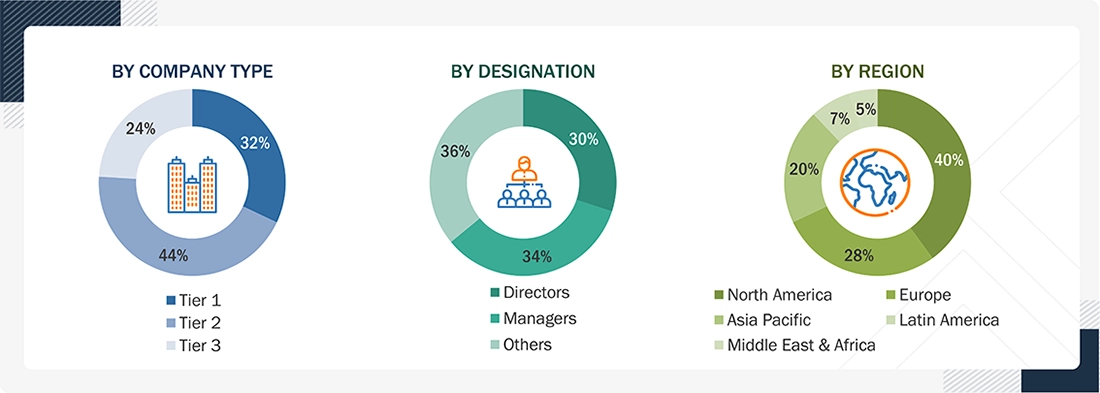
Note 1: Other designations include sales, marketing, and product managers.
Note 2: Tiers are defined based on a company’s total revenue. As of 2025: Tier 1 = >USD 1 billion, Tier 2 = USD 500 million to USD 1 billion, and Tier 3 = <USD 500 million.
To know about the assumptions considered for the study, download the pdf brochure
Market Size Estimation
The market size estimates and forecasts provided in this study are derived through a mix of the bottom-up approach (revenue share analysis of leading players) and top-down approach (assessment of utilization/adoption/penetration trends, by offering, function, application, deployment, tool, end user, and region).
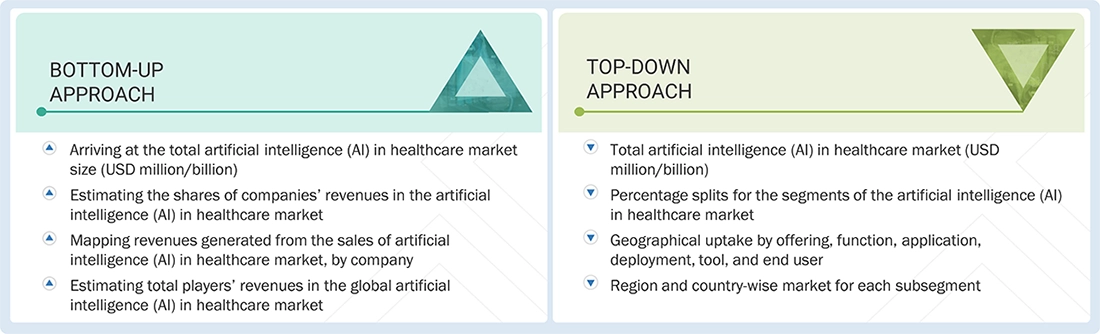
Data Triangulation
After arriving at the overall market size—using the market size estimation processes—the market was split into several segments and subsegments. To complete the overall market engineering process and obtain the exact statistics for each market segment and subsegment, data triangulation and market breakdown procedures were employed wherever applicable. The data was triangulated by examining various factors and trends on both the demand and supply sides of the artificial intelligence (AI) in healthcare market.
Market Definition
The artificial intelligence (AI) in healthcare market encompasses the application of AI technologies, such as machine learning, natural language processing, computer vision, and robotics, to improve healthcare delivery, enhance operational efficiency, and provide personalized care. These solutions address a wide range of use cases, including diagnostic imaging, predictive analytics, drug discovery, patient engagement, remote monitoring, and administrative workflows, enabling healthcare providers, payers, and pharmaceutical companies to drive innovation and improve outcomes.
Key Stakeholders
- Artificial intelligence (AI) in healthcare software vendors
- Artificial intelligence (AI) in healthcare service providers
- Independent software vendors (ISVs)
- Platform providers
- Technology providers
- System integrators
- Cloud service providers
- Healthcare IT service providers
- Hospitals and surgical centers
- Diagnostic imaging centers
- Academic institutes and research laboratories
- Forums, alliances, and associations
- Government organizations
- Institutional investors and investment banks
- Investors/Shareholders
- Venture capitalists
- Research and consulting firms
Report Objectives
- To define, describe, and forecast the global artificial intelligence (AI) in healthcare market based on offering, function, application, deployment, tool, end user, and region
- To provide detailed information regarding the factors influencing the growth of the market (such as the drivers, restraints, opportunities, and challenges)
- To strategically analyze micromarkets with respect to individual growth trends, prospects, and contributions to the overall artificial intelligence (AI) in healthcare market
- To analyze market opportunities for stakeholders and provide details of the competitive landscape for market leaders
- To forecast the size of the artificial intelligence (AI) in healthcare market in five main regions (along with their respective key countries): North America, Europe, the Asia Pacific, Latin America, and the Middle East & Africa
- To profile key players and comprehensively analyze their product portfolios, market positions, and core competencies in the market
- To track and analyze competitive developments such as product & service launches; expansions; partnerships, agreements, and collaborations; and acquisitions in the artificial intelligence (AI) in healthcare market
- To benchmark players within the artificial intelligence (AI) in healthcare market using the Company Evaluation Matrix framework, which analyzes market players on various parameters within the broad categories of business strategy, market share, and product offering.
Available customizations:
With the given market data, MarketsandMarkets offers customizations as per your company’s specific needs. The following customization options are available for the report:
Company Information
- Detailed analysis and profiling of additional market players (up to 5)
Geographic Analysis
- Further breakdown of the Rest of Europe artificial intelligence (AI) in healthcare market into Denmark, Norway, and others
- Further breakdown of the Rest of Asia Pacific artificial intelligence (AI) in healthcare market into Vietnam, New Zealand, Australia, South Korea, and others
Key Questions Addressed by the Report
What near-term strategies can companies adopt to scale revenue in the AI in healthcare market?
Companies should focus on developing integrated AI platforms that combine analytics, EHR, imaging, and workflow automation into a single ecosystem. Additionally, adopting AI-as-a-Service (AIaaS) and subscription-based models can unlock recurring revenue streams, especially as hospitals increasingly shift toward cloud-based deployments and scalable solutions.
How is AI transforming early diagnosis and clinical decision-making?
AI is significantly improving diagnostic accuracy and early disease detection, particularly in radiology, pathology, and genomics. Machine learning models analyze large datasets to identify patterns that enable early identification of diseases like cancer and cardiovascular disorders, ultimately improving patient outcomes and reducing treatment costs.
What role does cloud-based deployment play in accelerating AI adoption in healthcare?
Cloud-based AI solutions are driving adoption due to their scalability, cost efficiency, and real-time data accessibility. Healthcare providers can deploy AI tools across multiple facilities, enabling centralized data analytics, remote monitoring, and faster decision-making without heavy infrastructure investments.
How is AI enabling personalized medicine and precision healthcare?
AI enables personalized medicine by analyzing patient-specific data such as genomics, clinical history, and lifestyle factors. This allows healthcare providers to deliver tailored treatment plans and predictive care strategies, enhancing treatment efficacy and improving long-term patient outcomes.
What are the key growth drivers of the AI in healthcare market?
The market is driven by the growing volume of healthcare data, rising demand for improved diagnostic accuracy, increasing need for cost optimization, and advancements in machine learning and predictive analytics. Additionally, the shift toward value-based care and digital transformation in healthcare systems is accelerating adoption.
What are the major challenges limiting AI adoption in healthcare?
Key challenges include lack of standardized regulatory frameworks, shortage of skilled AI professionals, and resistance from healthcare practitioners toward adopting AI-driven systems. Data privacy concerns and integration complexities with legacy systems also pose barriers to large-scale deployment.
How are emerging technologies shaping the future of AI in healthcare?
Technologies such as natural language processing (NLP), computer vision, and generative AI are reshaping healthcare workflows by enabling automated clinical documentation, advanced imaging analysis, and predictive insights. These innovations are expected to enhance operational efficiency and clinical outcomes significantly.
What key trends should stakeholders monitor to stay competitive in this market?
Key trends include the rise of AI-powered clinical applications, voice-enabled assistants, predictive analytics, and AI-driven workflow automation. Additionally, increasing collaboration between healthcare providers and tech companies is accelerating innovation and expanding AI use cases across the care continuum.
Fact checked
Personalize This Research
- Triangulate with your Own Data
- Get Data as per your Format and Definition
- Gain a Deeper Dive on a Specific Application, Geography, Customer or Competitor
- Any level of Personalization
Let Us Help You
- What are the Known and Unknown Adjacencies Impacting the Artificial Intelligence (AI) in Healthcare Market
- What will your New Revenue Sources be?
- Who will be your Top Customer; what will make them switch?
- Defend your Market Share or Win Competitors
- Get a Scorecard for Target Partners

Custom Market Research Services
We Will Customise The Research For You, In Case The Report Listed Above Does Not Meet With Your Requirements
Get 10% Free CustomisationTESTIMONIALS

JAYANT RAJPUROHIT
Director of Market Insights, Data and Analytics
SFI Health,
Leading Pharmaceutical Companywww.sfihealth.com/

We at SFI Health approached MarketsandMarkets for an Opportunity Assessment on "Incidence and Prevalence of Focus Indications" as we wanted to know the most attractive HCPs like Physician, Functional MD, Naturopath and Pharmacist. The project was critical for us to ensure our focus on the right target which would enable sustainable growth and profitability for SFI Health. The business insights provided exceeded our expectations and we were extremely impressed. The team at MarketsandMarkets is highly professional and detail oriented and very well understood our business needs. MarketsandMarkets offers a unique combination of expertise and dedicated engagement model. We identified 2 new products to be launched in coming months, based on the research findings provided by MarketsandMarkets. We are happy with the services and would strongly recommend MarketsandMarkets to my peers in the industry.

BEATRIZ DE LA CALLE
Head of Commercial Analytics
Qualicaps,
Leading Pharmaceutical Companywww.qualicaps.com/

We partnered with MarketsandMarkets for an assessment study on hard empty capsules. The team was extremely professional in understanding our business requirements and we received timely responses to all our queries. The market intelligence and the recommendations has met our business requirements. We were extremely impressed to see the final study results; it really exceeded our expectations. The market intelligence offered by MarketsandMarkets, and clarity on next steps will help us achieve our business objective for the Year 2021. We are happy with the services and would strongly recommend MarketsandMarkets to my peers in the industry.

Bob Williams,
Senior Director Business Development & Innovation
Bracco Diagnostics Inc.,
Italian Multinational in life sciences sector and a World Leader in imaging diagnosticsimaging.bracco.com/us-en
We were pleased with targeted insights that MarketsandMarkets identified from a custom study on the 'Radiation Dose Management Solutions Market'. Your team identified and characterized the market participants as well as underlying trends accurately. This study was useful to Bracco in formulating business strategies for our dose monitoring product lines and we thank MarketsandMarkets for the job well done.
Cody Coonradt,
Market Development and Strategy Manager
3M Health Information Systems,
Leader in Health care Coding, Payment & Analytics Solutions.www.3m.com/3M/en_US/health-information-systems-us
The value for our organization comes from three things: depth of research, specificity of segments and being easy to work with. As important as the first two are, the third can't be underestimated. MarketsandMarkets, maybe more than any other research vendor, wants to know what is top of mind for our team and what big questions we are grappling to answer.
Their customer first approach and high value engagement model, have given us great analysis and excellent value for money
- US Artificial Intelligence (AI) in Healthcare Market
- Canada Artificial Intelligence (AI) in Healthcare Market
- Germany Artificial Intelligence (AI) in Healthcare Market
- UK Artificial Intelligence (AI) in Healthcare Market
- France Artificial Intelligence (AI) in Healthcare Market
- Italy Artificial Intelligence (AI) in Healthcare Market
- Spain Artificial Intelligence (AI) in Healthcare Market
- China Artificial Intelligence (AI) in Healthcare Market
- Japan Artificial Intelligence (AI) in Healthcare Market
- India Artificial Intelligence (AI) in Healthcare Market
- Brazil Artificial Intelligence (AI) in Healthcare Market
- Mexico Artificial Intelligence (AI) in Healthcare Market
Growth opportunities and latent adjacency in Artificial Intelligence (AI) in Healthcare Market






Aiden
Apr, 2026
We are currently evaluating how AI integrates with hospital systems using EDI, HL7, and FHIR standards. How mature is interoperability in real-world deployments, and what challenges should we expect?.
Ethan
Apr, 2026
We are exploring AI-led automation in operating rooms and sterile processing. Are there proven use cases delivering measurable efficiency or cost savings?.
Mason
Apr, 2026
As a company in automated medical claims processing, we want to understand how AI improves accuracy and fraud detection. What ROI benchmarks are realistic?.
Logan
Apr, 2026
From an acute hospital perspective, which departments see the fastest ROI from AI adoption?.
Lucas
Apr, 2026
We are assessing vendors in AI healthcare. How do large players compare with niche startups in terms of scalability and innovation?.
Oliver
Apr, 2026
With convergence of medical and computer science, what skillsets are most critical for AI adoption in healthcare?.
Gabriel
Apr, 2026
We are preparing internal presentations. Does the report include quantified AI impact and real-world use cases?.
Levi
Apr, 2026
How is AI impacting healthcare jobs—more automation or creation of new roles?.
Carter
Apr, 2026
How is AI improving care continuity between hospitals and post-acute settings?.
Blake
Apr, 2026
Radiology seems mature for AI. Is there still room for new entrants or is the market consolidating?.
Grant
Apr, 2026
We are exploring AI in ophthalmology. Are these solutions widely adopted clinically or still emerging?.
Parker
Apr, 2026
How is AI expected to shape the future of radiology in terms of diagnostic accuracy and workflow efficiency?.
Dylan
Apr, 2026
How can AI be effectively integrated into healthcare process management to improve hospital operational efficiency?.
Jordan
Apr, 2026
How is AI for imaging improving diagnostic precision and supporting faster clinical decision-making in healthcare systems?.
Trevor
Apr, 2026
Can AI applications used in manufacturing, such as predictive maintenance, be relevant for improving healthcare operational models?.
Logan
Apr, 2026
How is AI integration in MRI helping to reduce scan time while improving image quality and diagnostic outcomes?.
Seth
Apr, 2026
How are AI healthcare solutions enabling better integration of diagnostics, hospital operations, and supply chain management?.
Tyler
Apr, 2026
How is AI contributing to One Health research by linking human, animal, and environmental health data?.
Luke
Apr, 2026
How can AI improve patient monitoring and safety in ambulatory surgery and non-operating room anesthesia settings?.
Ashton
Apr, 2026
How is AI being used in hospital engineering systems to improve infrastructure reliability and equipment performance?.
Gavin
Apr, 2026
How is AI enhancing healthcare informatics and data integration for better clinical decision-making?.
Jace
Apr, 2026
What role does AI governance play in ensuring compliance, transparency, and ethical use of AI in healthcare?.
Brandon
Apr, 2026
How are industry associations influencing the standardization and adoption of AI in healthcare ecosystems?.
Easton
Apr, 2026
How is AI being applied in ophthalmology to enhance retinal imaging and early disease detection capabilities?.
Hudson
Apr, 2026
How is digital transformation accelerating the adoption of AI-driven solutions in healthcare operations and clinical decision-making?.
Rhett
Apr, 2026
How are AI and data science reshaping healthcare workflows, diagnostics, and predictive analytics across hospital ecosystems?.
Tristan
Apr, 2026
Can you provide more insights on Segmed and its role among top AI healthcare companies mentioned in the report?.
Preston
Apr, 2026
How is predictive AI being applied in cardiovascular disease detection and early clinical risk assessment?.
Colton
Apr, 2026
What is the current market size and competitive landscape for AI in healthcare, and how is it expected to evolve?.
Emerson
Apr, 2026
How is AI transforming radiology in terms of imaging accuracy, automation, and clinical efficiency?.
Maddox
Apr, 2026
How is AI helping bridge healthcare accessibility gaps and improving equity in underserved regions?.
Antonio
Apr, 2026
How are clinical applications of AI in healthcare driving improvements in diagnosis, treatment planning, and hospital operations efficiency?.
Dominic
Apr, 2026
How is AI being used in infection control systems to improve early detection, prevention, and hospital-wide safety management?.
Brandon
Apr, 2026
What are the most impactful use cases of AI in healthcare across diagnostics, imaging, operations, and patient management?.
Calvin
Apr, 2026
How is AI currently transforming the healthcare industry in terms of clinical decision-making, workflow automation, and predictive analytics?.
Justin
Apr, 2026
What is the role of medtech semantics in improving interoperability and structured data usage in AI-driven healthcare systems?.
Preston
Apr, 2026
Which AI-powered medical imaging tools are currently most effective in enhancing diagnostic accuracy and radiology workflows?.
Elliot
Apr, 2026
How is AI being applied in healthcare education and the medical industry to improve training, simulation, and clinical learning outcomes?.
Adrian
Apr, 2026
What are the key challenges faced by the AI healthcare market in Europe, especially around regulation, data privacy, and adoption barriers?.
Spencer
Apr, 2026
Can you provide more insights into the global medical AI market size, growth drivers, and future opportunities?.
Jonah
Apr, 2026
How is AI being used to connect quality management systems (eQMS) with IT and OT environments in healthcare organizations?.
Patrick
Apr, 2026
What are the current diagnostic and technological trends shaping the future of healthcare and medical AI applications?.
Caleb
Apr, 2026
How are healthcare and AI technologies converging to reshape diagnostics, treatment planning, and hospital efficiency?.
Mason
Apr, 2026
What is the role of AI in healthcare utilization analysis and cost optimization across hospital systems and payers?.
Cole
Apr, 2026
How is AI transforming healthcare utilization and cost trends across hospitals, payers, and clinical operations?.
Tyler
Apr, 2026
How is AI being applied in healthcare operations to improve efficiency, resource planning, and patient flow management?.
Luke
Apr, 2026
What are the key challenges and implementation barriers for AI adoption in healthcare systems at scale?.
Owen
Apr, 2026
How are emerging medical devices for skin care leveraging AI and digital technologies for improved diagnostics and treatment outcomes?.
Eli
Apr, 2026
How are healthcare professionals with EHR/EMR and clinical experience transitioning into AI-driven healthcare analytics and non-clinical roles?.
Mason
Apr, 2026
What are the most in-demand non-clinical career opportunities in healthcare driven by digital transformation and AI adoption?.
Ryan
Apr, 2026
How are EDI and FHIR standards improving healthcare data interoperability and enabling seamless system integration?.
Adam
Apr, 2026
How is AI improving healthcare data quality, analytics, and decision-making in clinical and operational environments?.
Caleb
Apr, 2026
What is the overall impact of AI on the HealthTech ecosystem in terms of innovation, efficiency, and patient outcomes?.
Logan
Apr, 2026
How is pathology being transformed through AI-enabled diagnostics and digital imaging technologies?.
Ethan
Apr, 2026
How is AI improving healthcare administration processes such as scheduling, billing, and operational efficiency?.
Ryan
Apr, 2026
How is bioproduction being optimized through digital transformation and AI-driven process improvements?.
Cole
Apr, 2026
What are the key funding opportunities and investment trends driving AI innovation in healthcare development?.
James
Apr, 2026
From a hospital procurement standpoint, what are the biggest hidden costs when implementing AI solutions in clinical workflows?.
Emily
Apr, 2026
How scalable are AI healthcare solutions across mid-sized hospitals compared to large health systems?.
Michael
Apr, 2026
What are the main barriers to clinician trust in AI-driven diagnostics, and how can companies address them?.
Olivia
Apr, 2026
From an investor perspective, where do you see the highest ROI segments within AI in healthcare over the next 5 years?.
David
Apr, 2026
How challenging is it to integrate AI solutions with existing hospital IT ecosystems, especially legacy systems?.
winsay
May, 2022
Interested about how AI will change the treatment process and its benefits. .
Payush
Nov, 2017
I was going through the ToC of AI in Healthcare market, I would like to understand, what are the requirements to perform in the fields of AI? .
Payush
Nov, 2017
I was going through the ToC of AI in Healthcare market, I would like to understand, what are the requirements to perform in the fields of AI? .
Riju
Dec, 2018
We have specific interests in global AI in healthcare market and the US AI in healthcare market. Any further details related to market size of AI for early disease detection (for global and USA) would be appreciated. .
Asghar
Feb, 2019
I am looking to purchase this report to see the implications of AI on the workforce in Norway..
Tanuj
May, 2019
I am interested in understanding the market size and related insights on computer-assisted physician documentation (CAPD), clinical documentation improvement (CDI), computer-assisted coding (CAC), ambient voice and voice assistants, NLP, and machine learning for clinical, operational, and financial healthcare scenarios in AI in healthcare..
Narayan
Dec, 2019
I am an automation enthusiast and would like to understand the impact of AI in healthcare. Could you provide me some brochure and sample to get into details..
Kevin
May, 2019
I am conducting a research project on AI in healthcare as a part of my MHA/MBA marketing course. Could you share some relevant information in the form of sample brochure and estimated cost of the report, post discount mentioned on the website?.
Vishal
Feb, 2019
We are redeveloping our chart for Artificial Intelligence in Healthcare Market. Does your report covers regional market insights..